Materials
Six Finishes, One Room: Choosing Closet Colors That Last
How wood grain, white and grey linen behave in real light, and the two-finish rule that keeps a run from looking busy.
Use one dominant finish for the carcass and at most one accent — a run in three finishes reads as a mistake no matter how good the individual colors are.
Finish is the decision people spend the most time on and regret the least often, provided they follow one rule: restraint in the number of finishes, not in the choice of them.
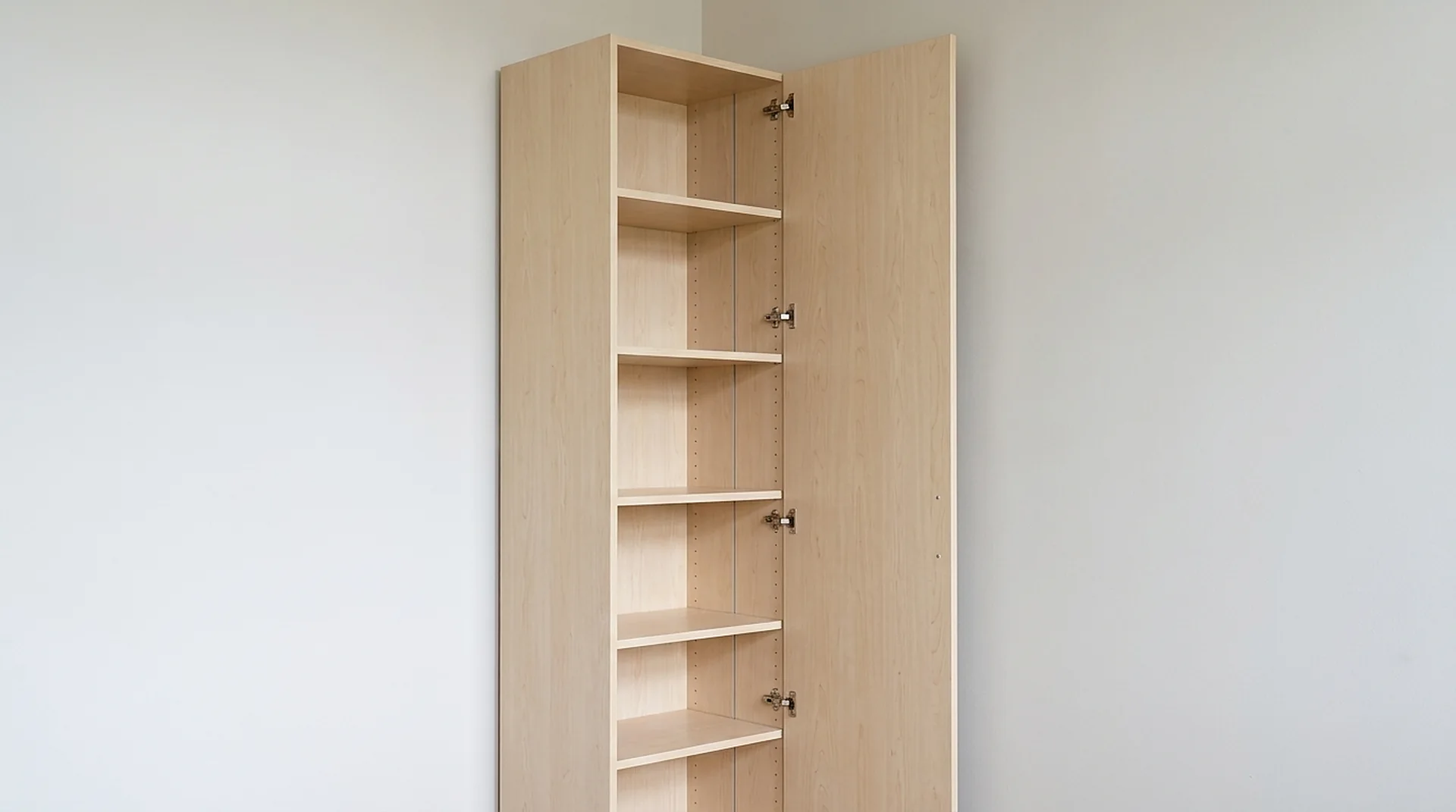
The program carries six finishes, and they fall into three families: three wood grains (Downy Wood Grain, Natural Oak, Logwood Grain), two solids (Matte White, High Gloss Black) and one textured (Grey Linen). Six is a deliberately short list — every one of them is available on cabinet, door and panel, so a decision made on a sample holds across the whole run.
What each finish is actually for
| Finish | What it is | Where it earns its place |
|---|---|---|
| Downy Wood Grain | Soft, low-contrast oak grain — warm in daylight, neutral under LED | The only decor the program also puts on kitchen cabinet fronts — which is what makes a matched closet-and-kitchen pair possible rather than a near-match |
| Natural Oak | Mid-tone oak with the most visible cathedral figure of the three grains | Walk-ins left open, where there is no door to hide behind: the carcass itself is what you see, edge by edge |
| Logwood Grain | Pale, straight-grained birch look; reflects more light than the other grains | Rooms that need to feel larger than they are — home offices, small reach-ins, and any run placed against a dark wall |
| Matte White | White at low sheen — the version that does not hold every fingerprint | Our most-specified finish, and the standing choice for laundry rooms, because low sheen keeps raking light from picking out seams and handprints |
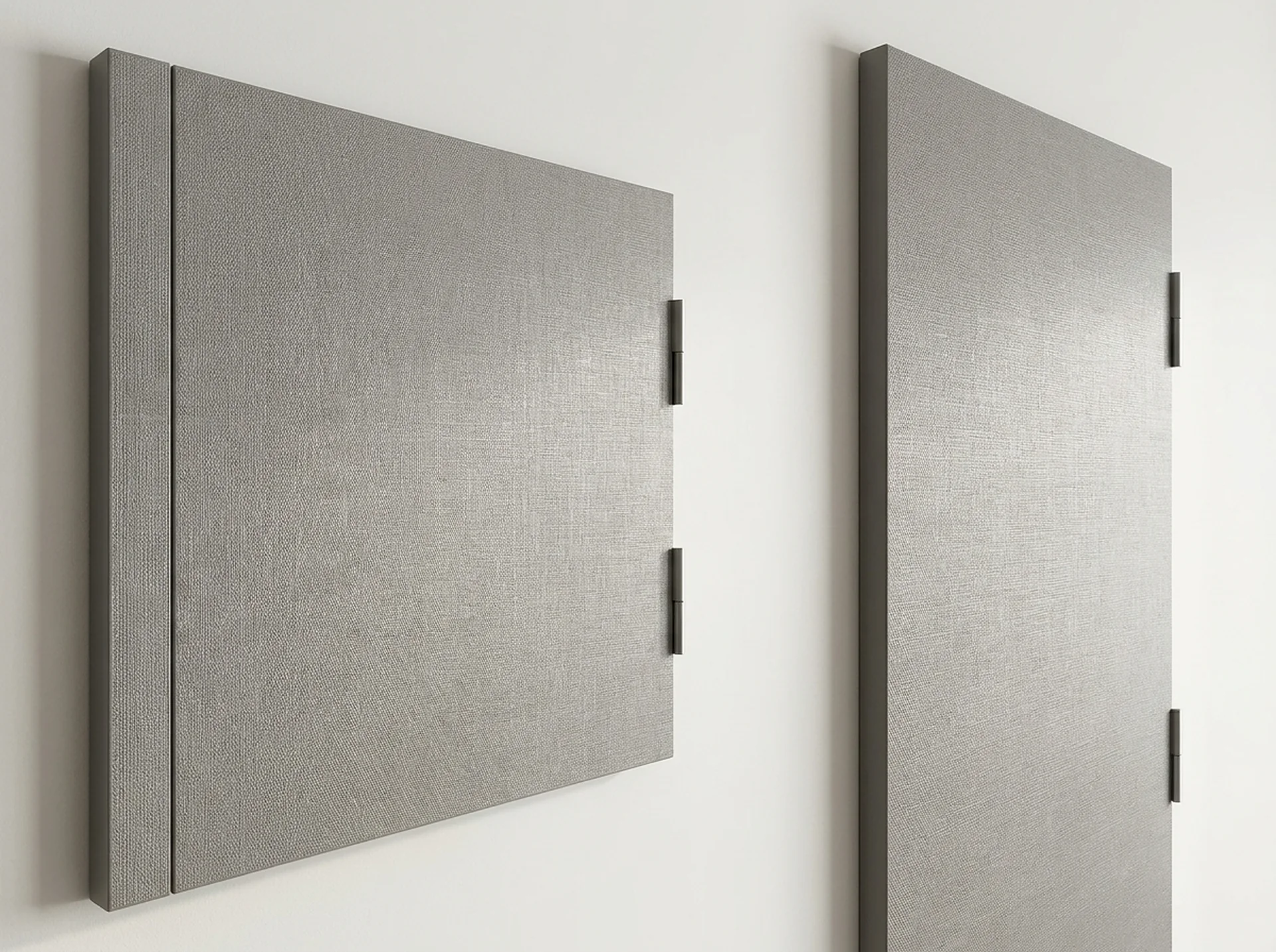
| Grey Linen | Fine woven texture in mid grey, shallow embossed | Runs longer than twelve feet — the texture is what stops a wall of cabinet reading as one flat gray slab |
| High Gloss Black | Mirror-finish door face | Door faces and island panels as an accent. Used against a wood-grain interior it reads as a display case; used everywhere it becomes a fingerprint surface |
White is not a default, it is a choice
White reflects the most light and makes a small closet read larger, which is why it dominates reach-in projects. It also shows every scuff at the toe kick and every fingerprint near a drawer pull. In a busy family closet a mid-tone wood grain hides daily life better.
Wood grain in artificial light
Wood-grain melamine reads differently under 3000K than under daylight. A warm grain can go orange under warm LED. Always look at a sample in the actual room, at the hour you use the closet, under the light you will install — not in a showroom at midday.

The two-finish rule
- Carcass and shelving: one finish, throughout.
- Drawer fronts or island: optionally a second, as accent.
- Interior of a glass tower: can differ, because glass frames it as a separate object.
- That is the limit. A third finish makes the run look assembled from leftovers.
Match the room it opens onto
A closet is seen from the bedroom more often than from inside itself. If the door stays open, the finish is part of the bedroom's palette, not the closet's. The same logic applies to a laundry or pantry run that reads from a kitchen — continuity across the opening usually beats a bolder choice inside it.
How to look at a sample properly
- Take the sample into the actual room, not the hallway.
- Look at it at the hour you use the closet — most people dress at 7am and again at 7pm, and those are different light.
- Hold it vertically against the wall, not flat on a table. Melamine reads differently at the angle it will actually be seen.
- Put a white shirt and a black jacket next to it. The finish has to let you tell navy from black, not just look pleasant on its own.
Matte, gloss and what shows
Matte hides fingerprints and micro-scratches and is the safer choice on anything touched daily — drawer fronts, door edges. Gloss reflects more light, which genuinely helps in a windowless reach-in, but every handprint shows. A common compromise is matte on the fronts and the lighter finish on the interior, where light bounce matters and hands rarely land.
Woodgrain direction
Grain runs vertically on doors and tall panels and horizontally on long shelves, which is how real timber would be used and what the eye expects. It matters most where two large surfaces meet: a door with horizontal grain beside a panel with vertical grain reads as a mistake even to people who cannot say why.
Batch matching
Decor batches vary slightly, the way paint batches do. If a project is phased — closet now, laundry in six months — say so at the measure and we will reserve the batch. Ordering the second room separately a year later is the one reliable way to end up with two rooms that nearly match.
Quick answers
About this topic.
How many finishes should one closet use?
One dominant finish, plus at most one accent on drawer fronts or an island. Three or more reads as unplanned.
Does white make a closet look bigger?
Yes, it reflects the most light, which helps in small reach-in closets. It also shows scuffs more readily than a wood grain.
Can I match my closet to my kitchen cabinets?
Often yes — panel matching across rooms is common and usually looks better than a contrasting choice when the two are visible together.
Start here
Tell us the room. We will tell you what fits.
A field measure, a dimensioned drawing and a fixed price — in that order, before anything is cut.