Doors
Glass Door Display Cabinet
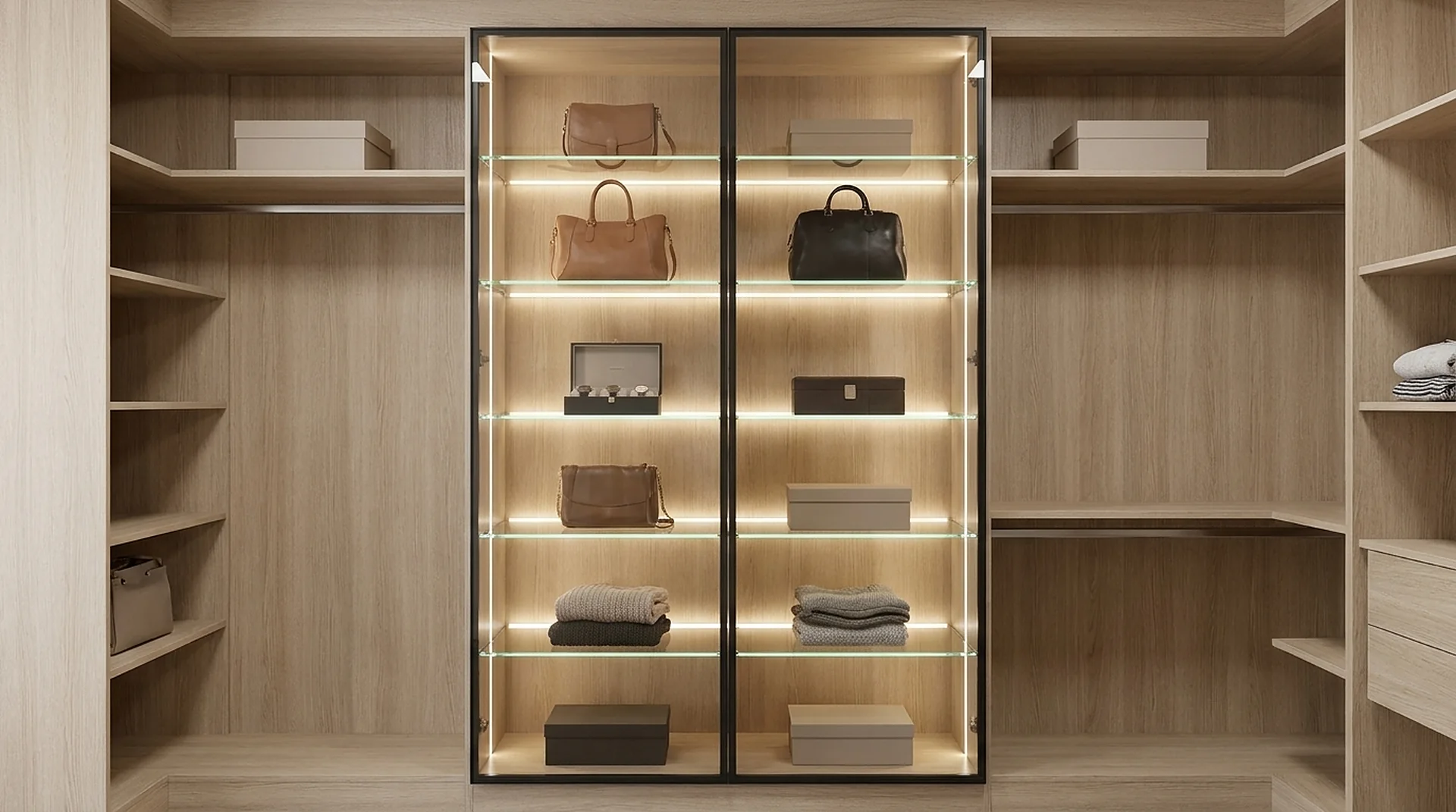
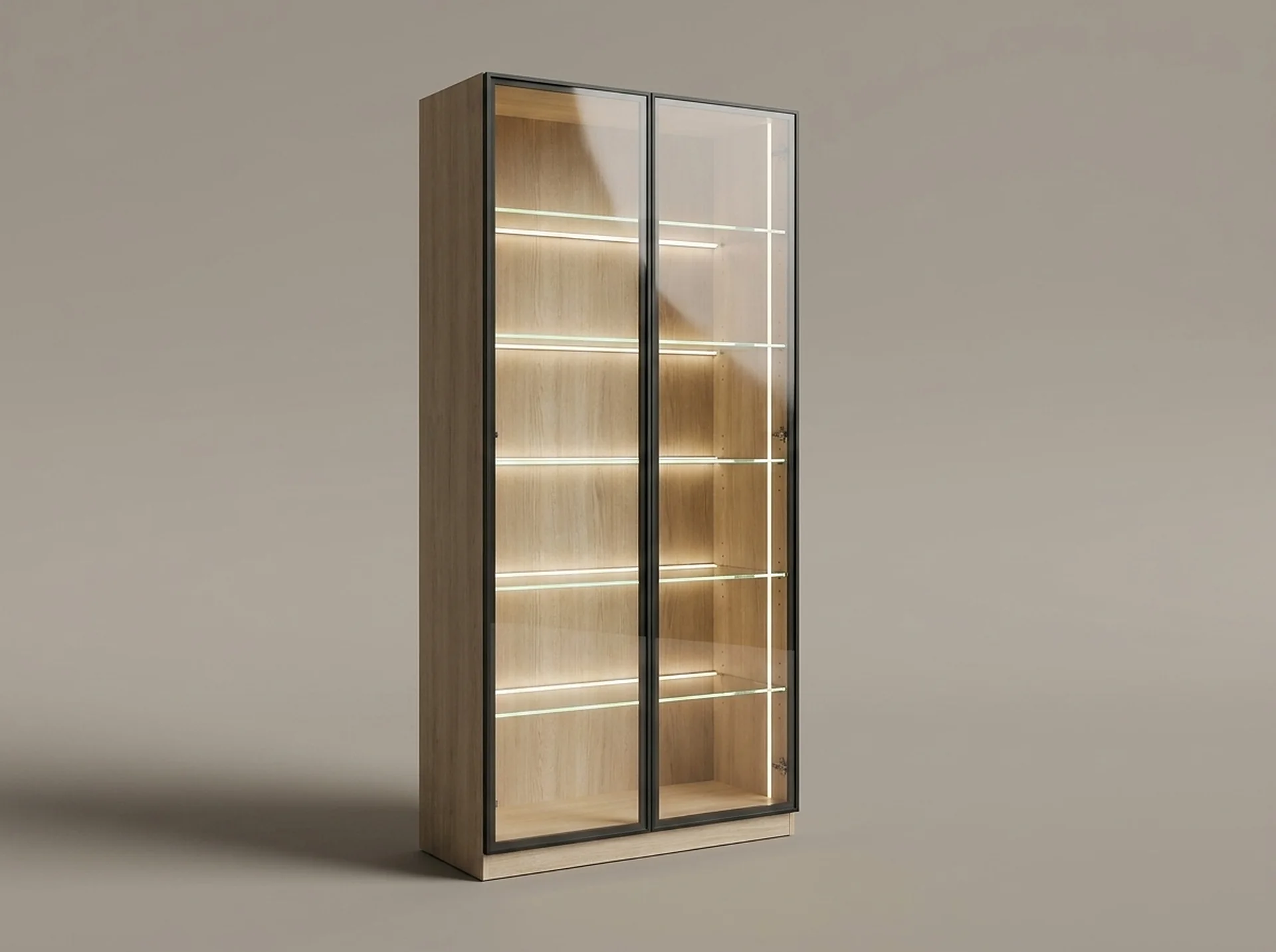
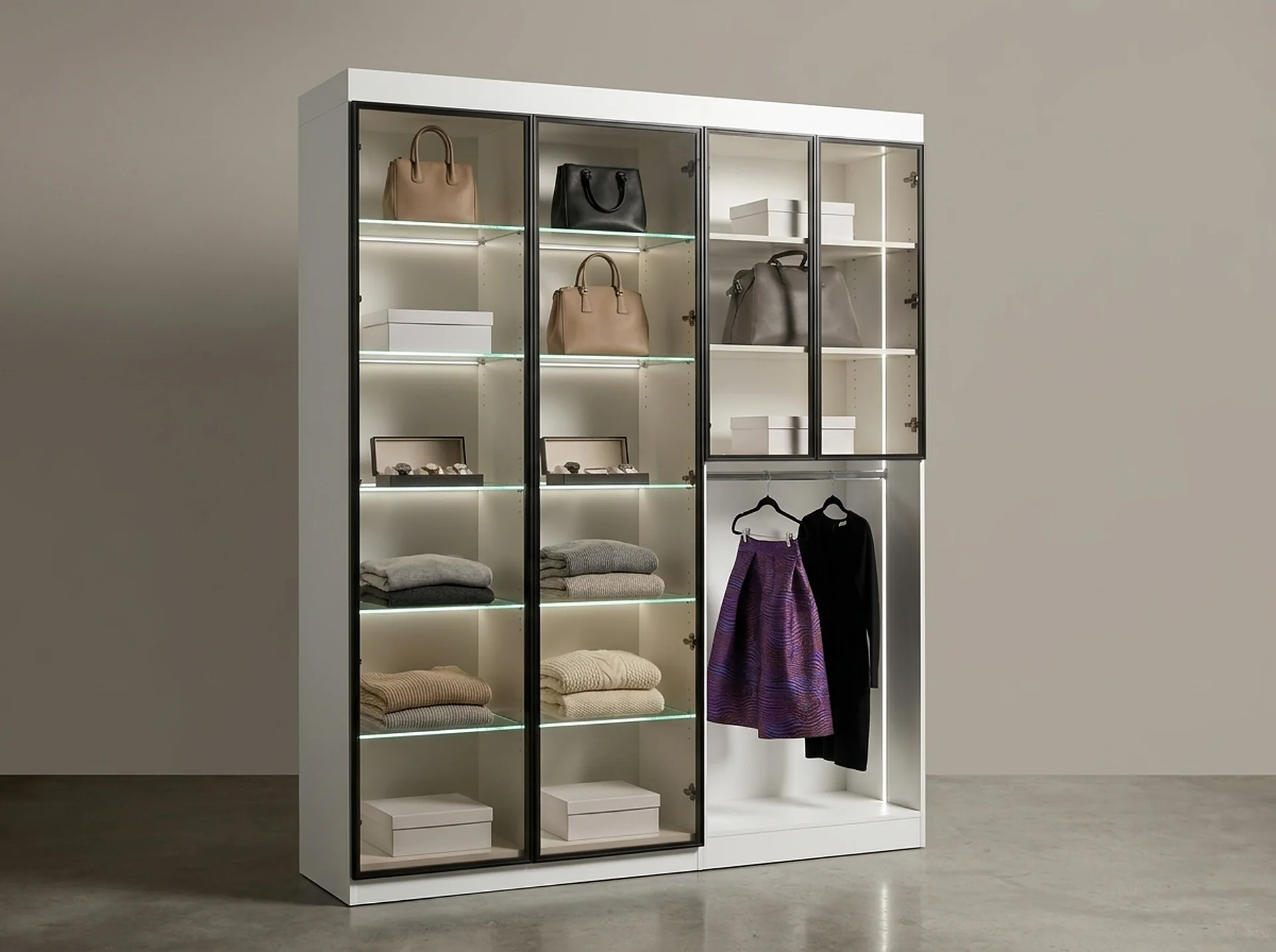
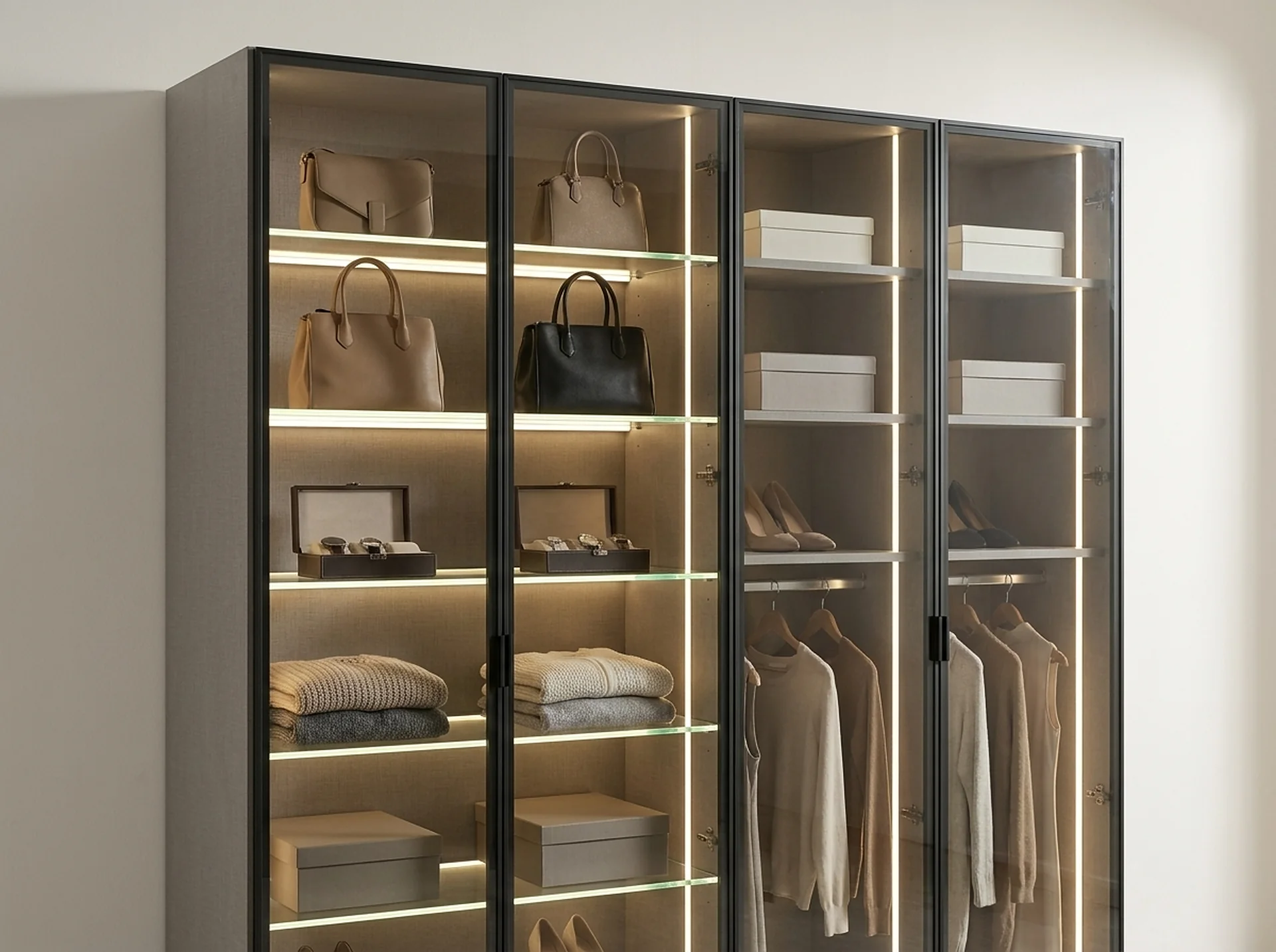
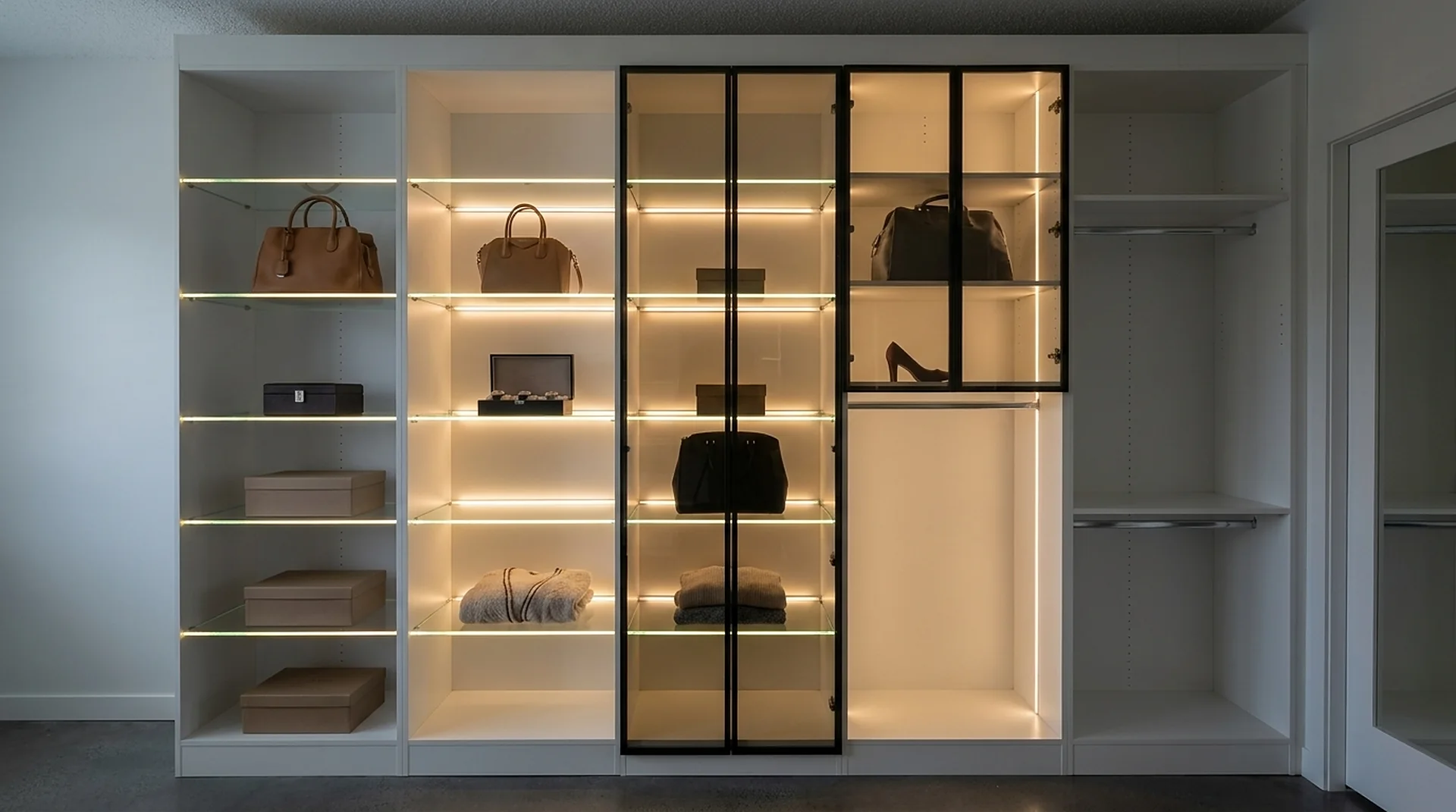
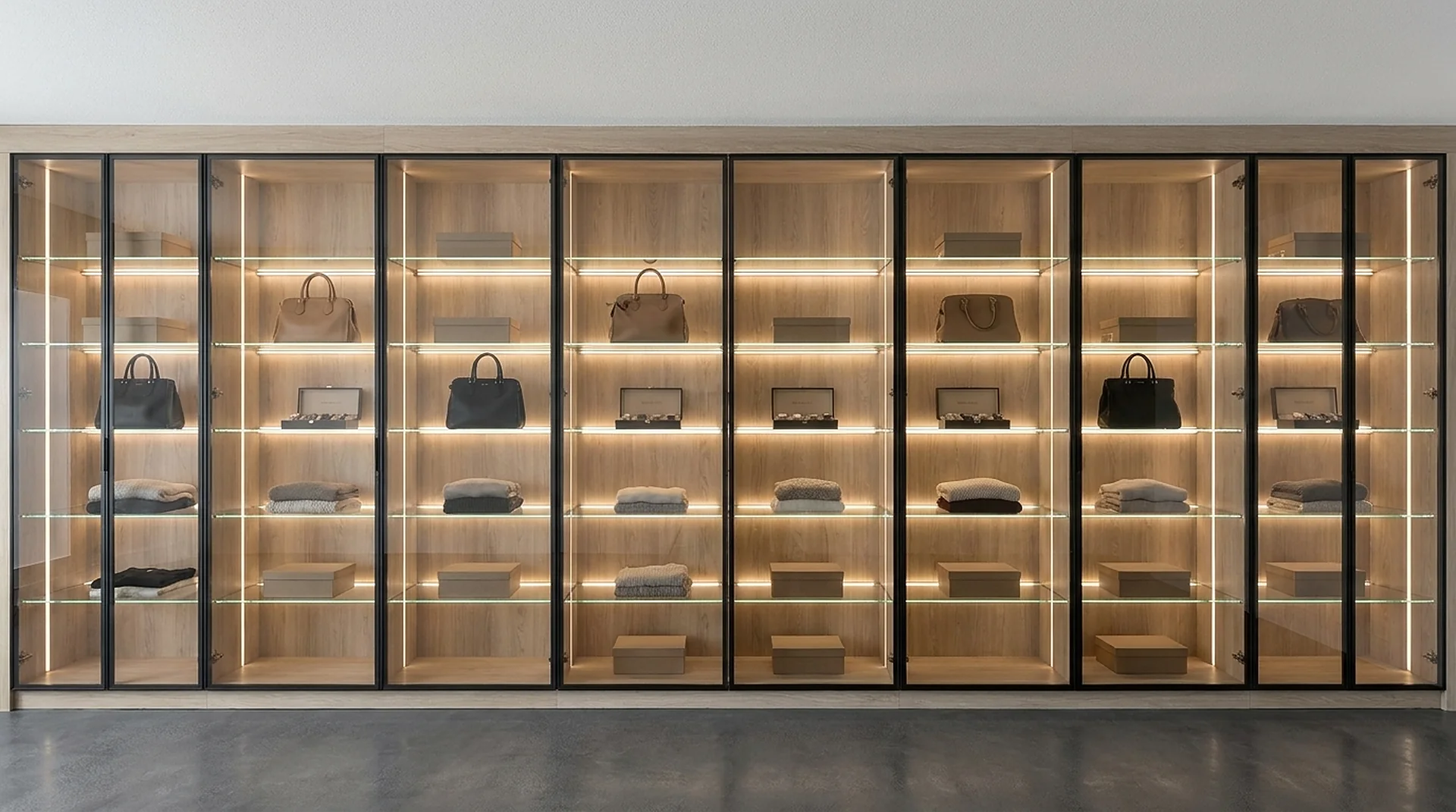
A black-framed glass tower with lit glass shelves, for the part of the wardrobe you want to look at.
In short
What it is for.
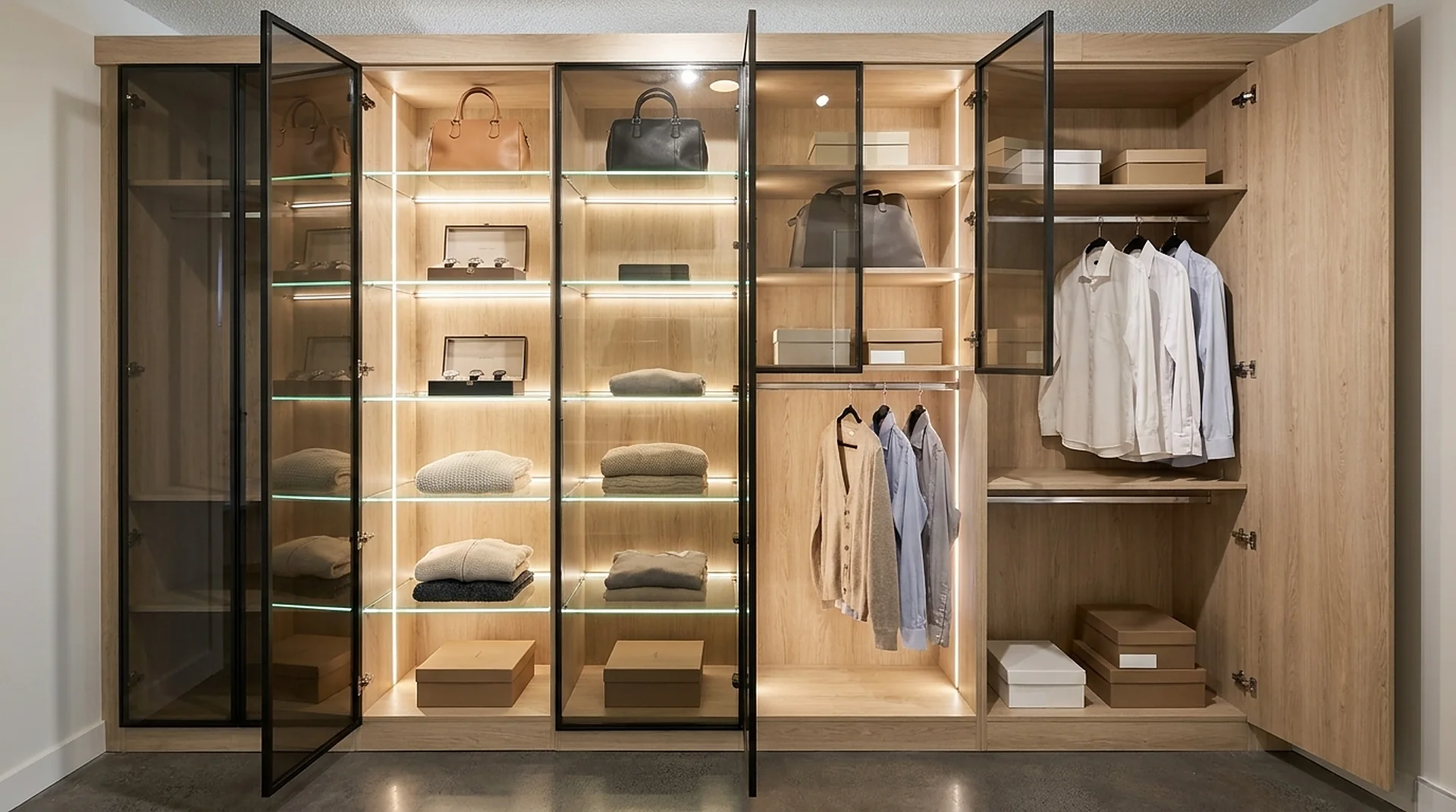
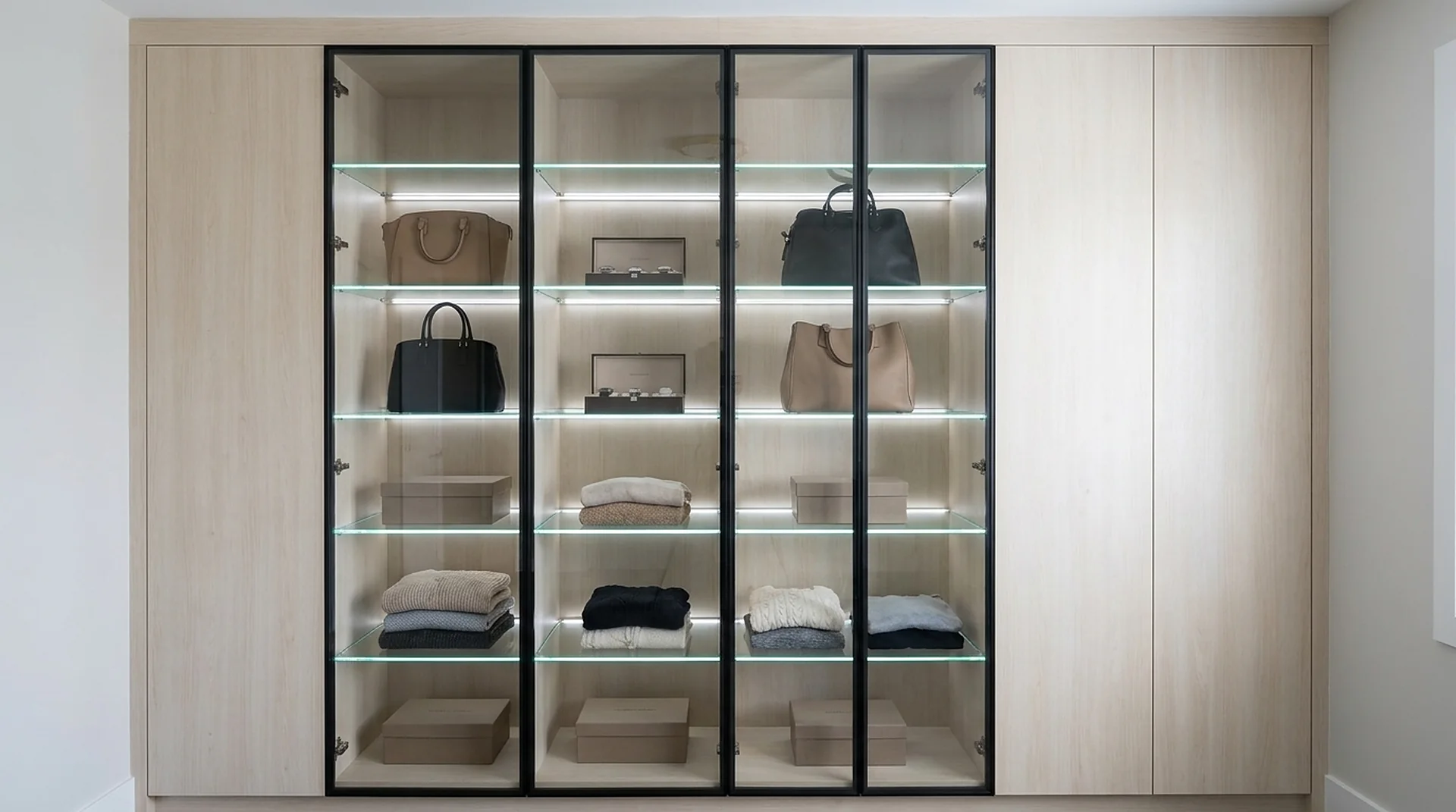
Handbags, watches, heels and hats behave differently to folded shirts — they want to be visible and dust-free at once. The Glass Door Display Cabinet answers that with a slim black frame, tempered glass shelves and an LED strip per shelf, so the contents are lit from the edge rather than washed out from above.
- Edge-lit glass shelvesAn LED strip at each shelf edge lights the object, not the panel behind it.
- Slim black frameA narrow aluminum frame keeps the glass area maximized and the sightline unbroken.
- Dust-closed, still visibleA closed door on a walk-in shelf is the difference between a collection and a cleaning job.
Specification
Built to these numbers.
| Frame | Slim aluminum, matte black |
|---|---|
| Glass | Tempered, clear or smoked |
| Shelving | Tempered glass, adjustable |
| Lighting | LED strip per shelf, warm or neutral white |
| Hinges | Soft close, concealed |
Doors
How this one is specified.
A display bay is the most expensive front in the program, so it is specified where something is actually displayed — bags, watches, a shoe collection — and not as a default. Used well it breaks up a long run of closed fronts; used everywhere it turns a closet into a shop window and every untidy shelf into a feature.
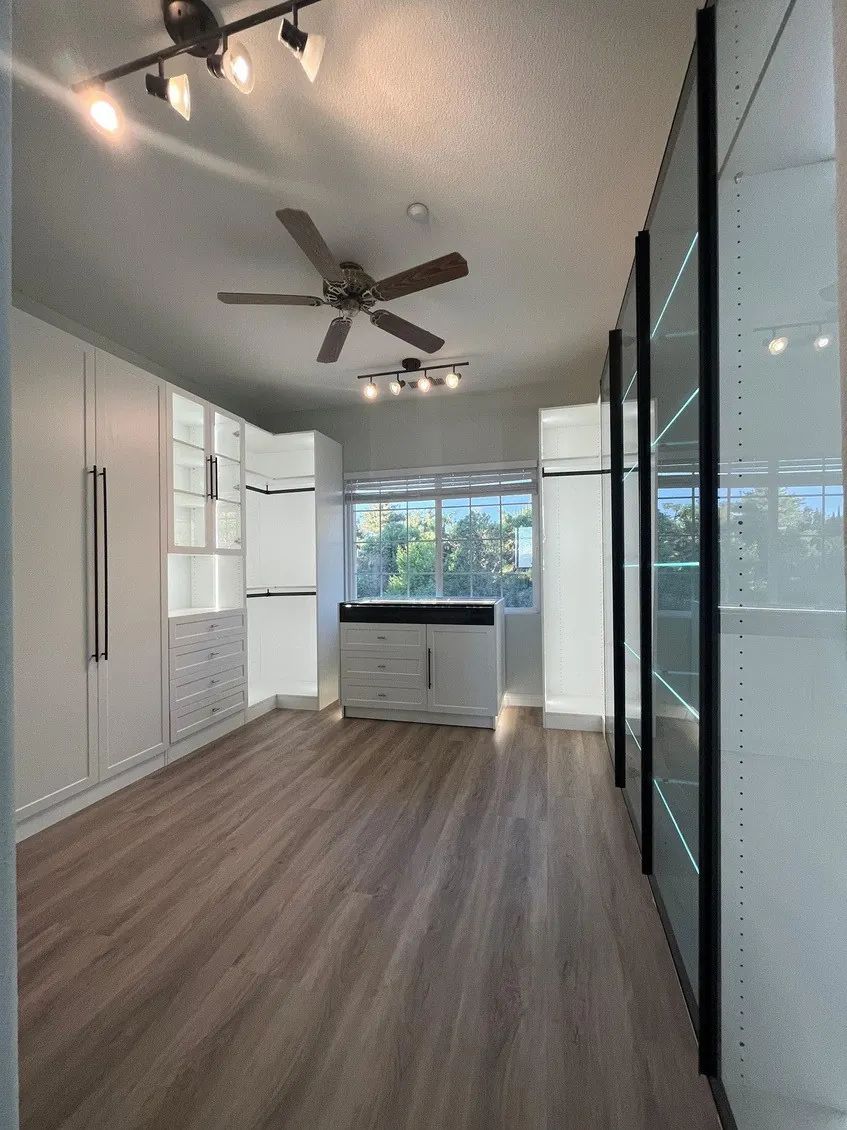
The lighting is the part that does the work. An LED strip runs at each shelf edge rather than from the ceiling, so the light falls on the contents instead of putting your own shadow on them, in warm or neutral white. Tempered glass shelves let that light pass down through the bay rather than stopping at the top one.
The frame is slim matte black aluminum, chosen because a wide frame turns a display bay into a window frame. Glass is tempered throughout, clear or smoked, and the hinges are concealed and soft-close — a display door is the one door in a closet that gets opened gently and closed carelessly.
Every size above is built in any of the six finishes; pulls, LED strips and pull-out hardware come from the accessories and hardware catalog.
Further reading: Walk-In Closet Trends 2026, Closet Doors: Slab, Shaker, Glass or None, Closet Lighting: LED Strips and Sensors.
Visualized
In a finished room.
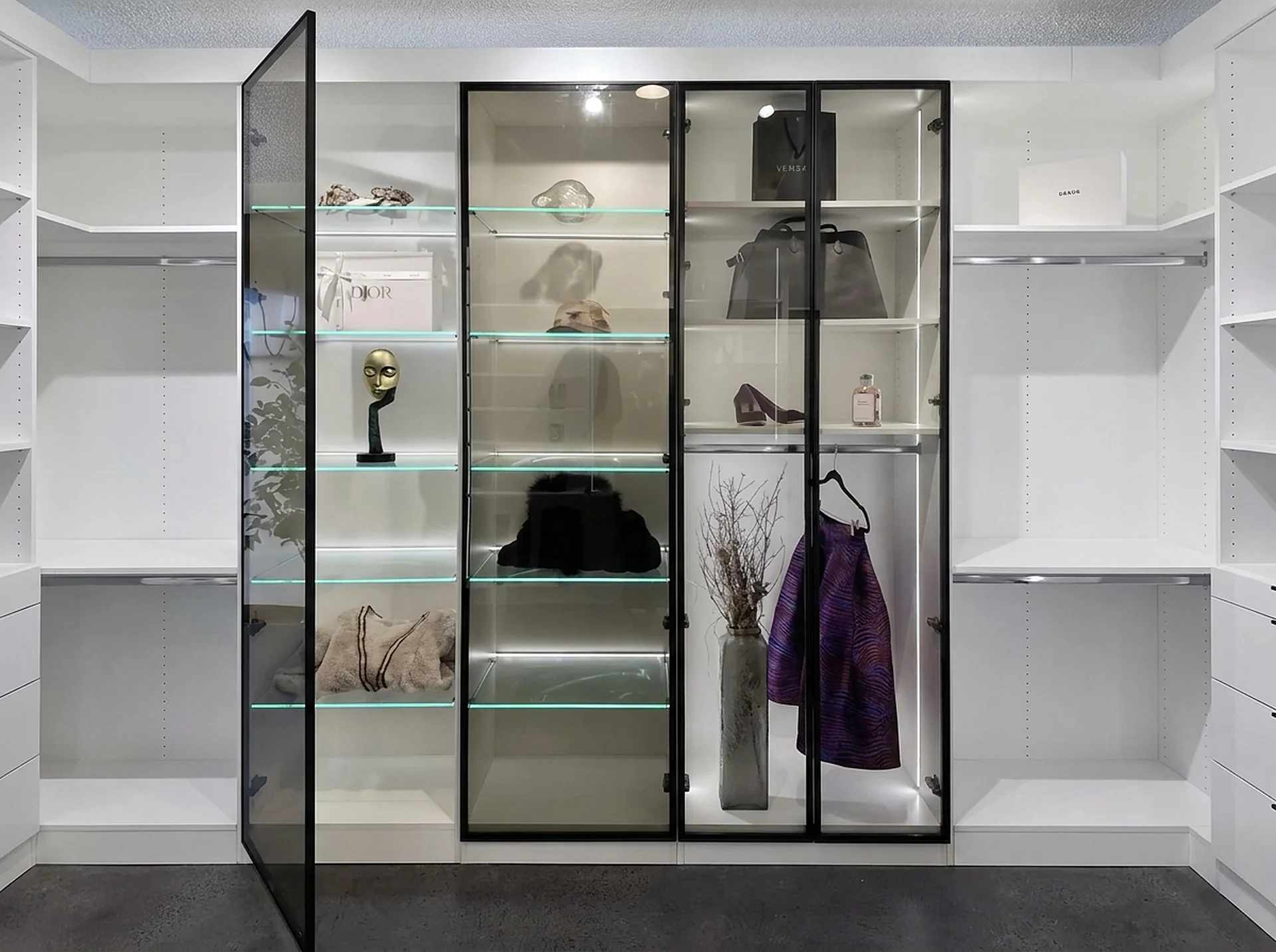
The glass door display cabinet working in a finished room.
Gallery
Every angle.
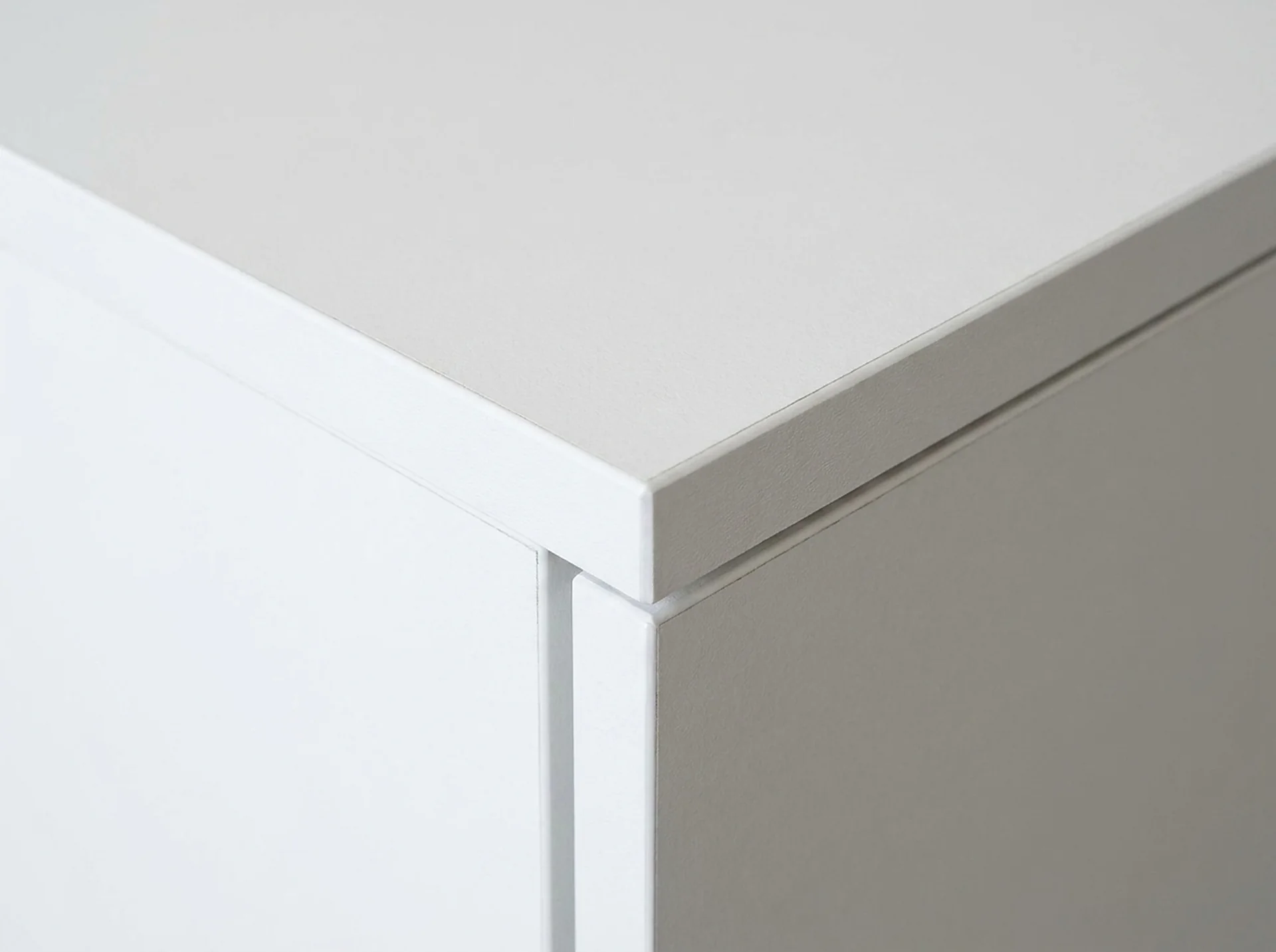
10 images of the glass door display cabinet — in room, in studio, in use, and in close-up.
Film
Twenty-four seconds.
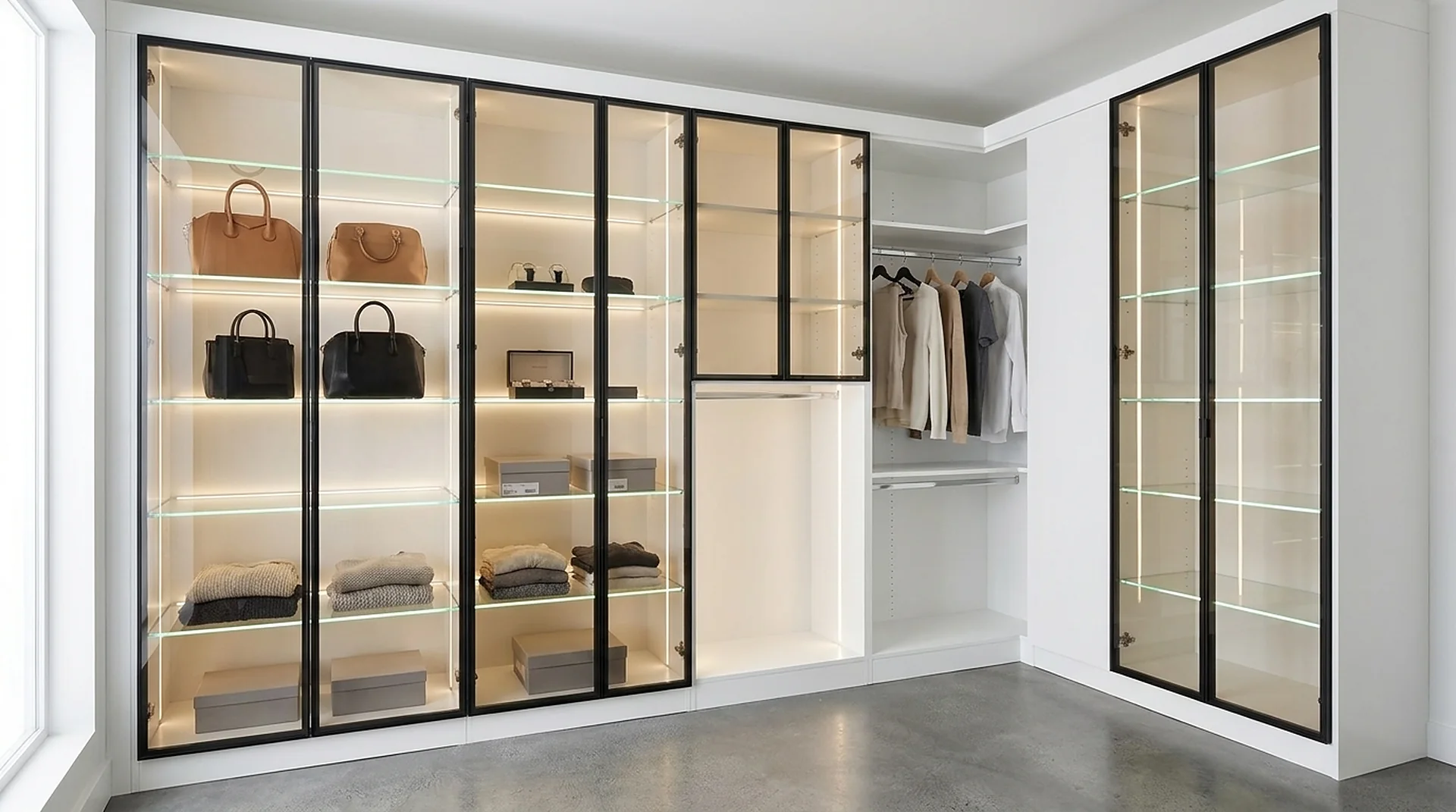
A slow pass across the glass door display cabinet.
24 secDetail
Closer in.
Questions
About the Glass Door Display Cabinet.
Is the glass in a display cabinet tempered?
Yes, throughout — both the door glazing and the shelves are tempered safety glass, in clear or smoked. Tempered shelves also let the LED light pass down through the bay instead of stopping at the top shelf, and they are adjustable on the same pin pattern as the melamine shelving.
Should the glass be clear or smoked?
Clear glass shows the object; smoked glass shows the arrangement. That is the whole decision, and it depends on what is behind the door. Clear is right for a collection you have curated — handbags in a row, watches on a tray — because the edge-lit shelf then does its job and the cabinet reads like a display case. Smoked is the kinder choice when the shelves hold real life as well as showpieces: it softens what is inside, hides dust between cleans and keeps a busy shelf from competing with the rest of the room. One practical note either way: a glass door is the one front in the closet that shows fingerprints, so it wants to sit where you push it rather than where you grab it, and a handle earns its place here more than on a melamine door.
Where should a glass display cabinet go in a closet?
Where something is genuinely displayed, and as one bay in a run of closed fronts. Specified everywhere it turns every untidy shelf into a feature.
Pairs with
Usually specified alongside.
Start here
Tell us the room. We will tell you what fits.
A field measure, a dimensioned drawing and a fixed price — in that order, before anything is cut.