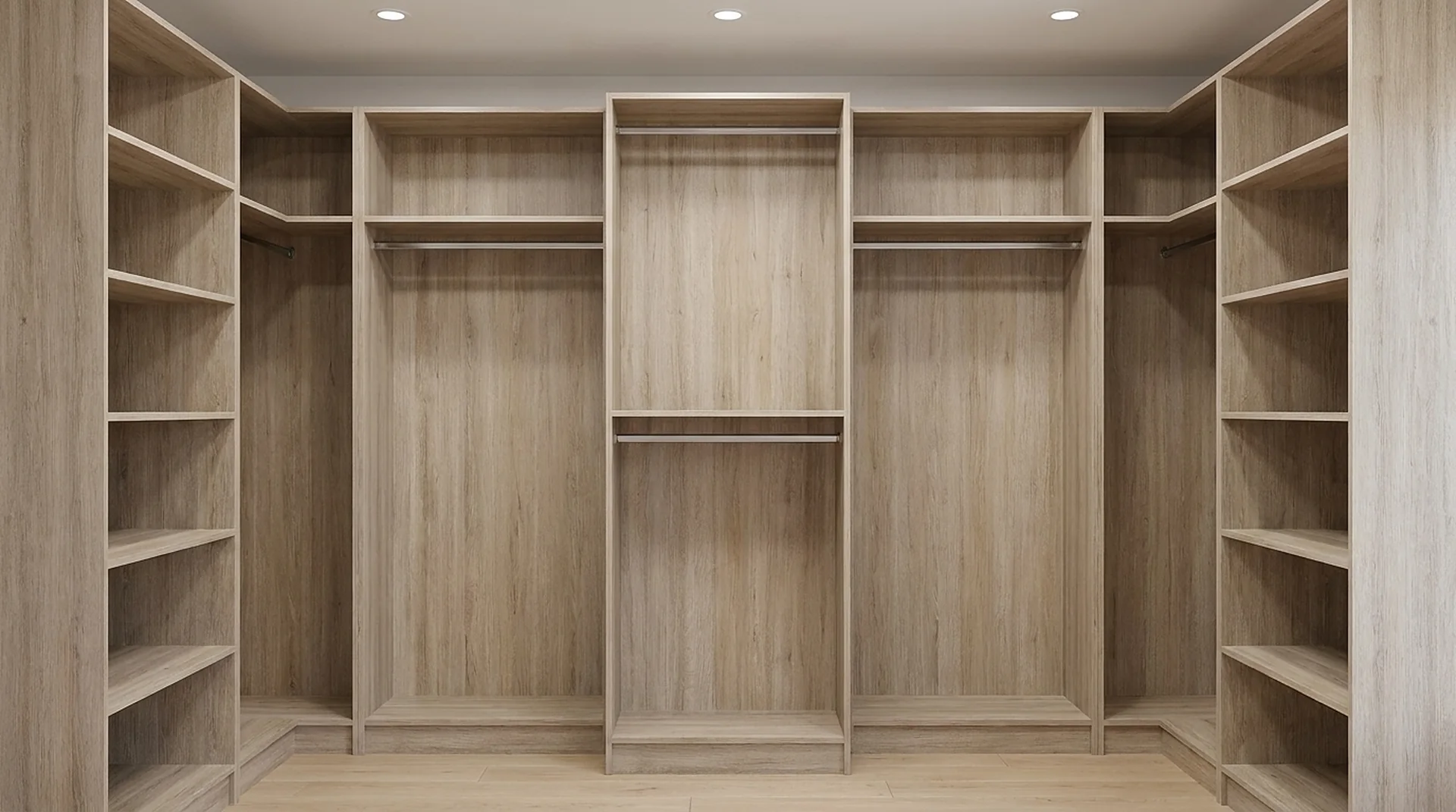
Towers
Clothes Rail Closet
Single or double hanging in a 30- or 36-inch bay, with the rail height set by what you actually own.
In short
What it is for.
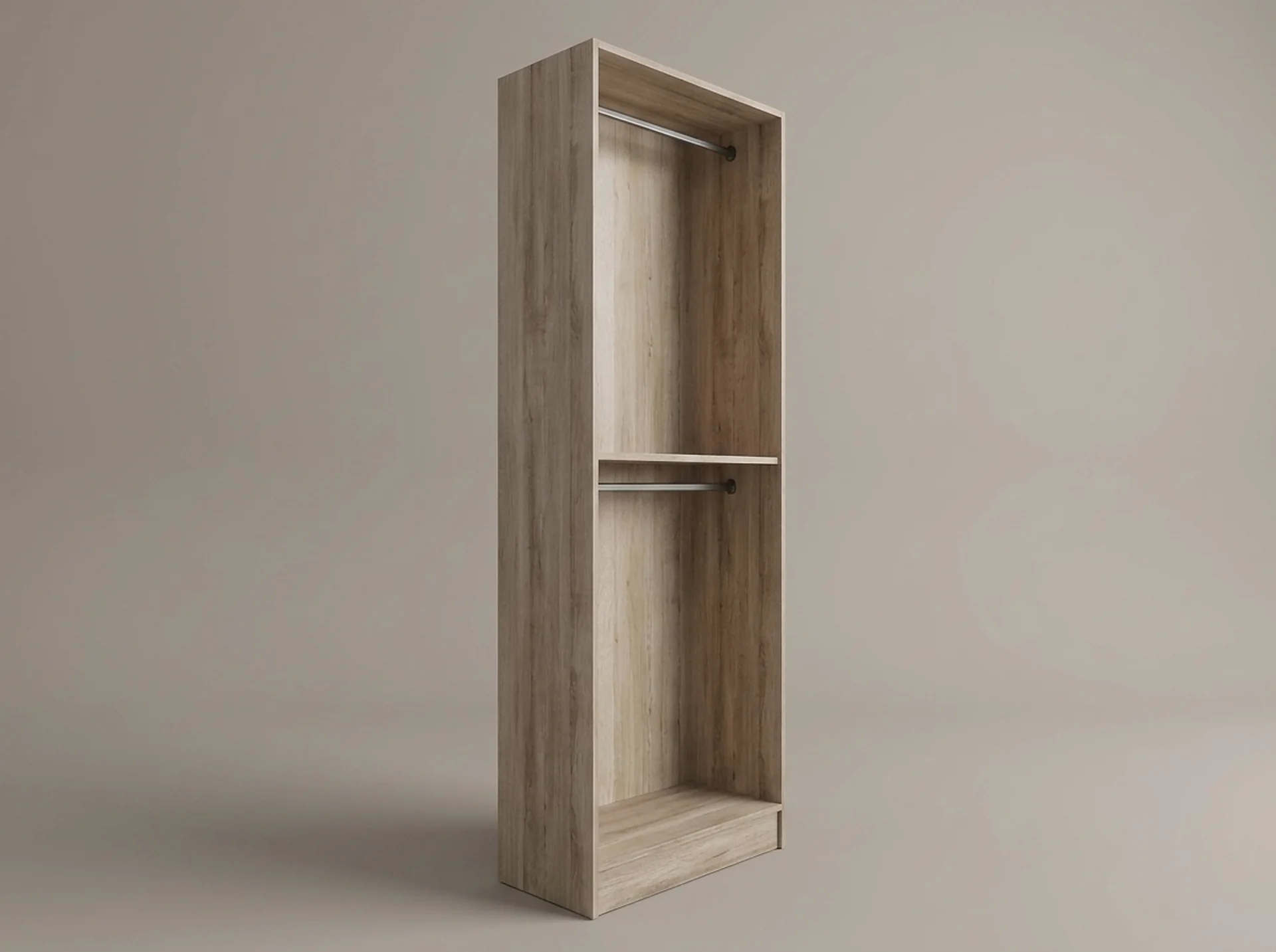
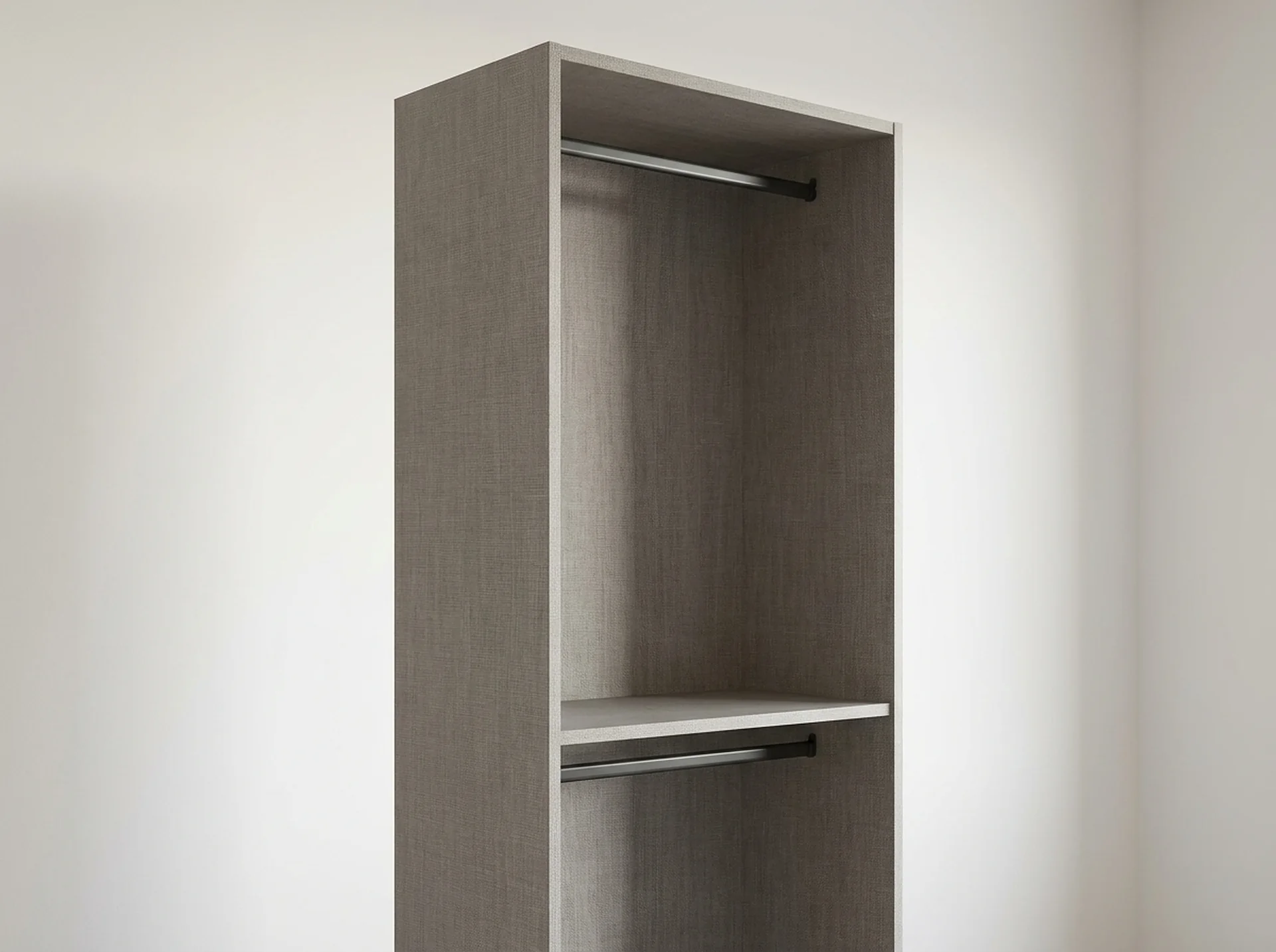
A hanging bay is the one part of a closet where a two-inch mistake costs you a whole row of clothes. The Clothes Rail Closet is supplied in 30 and 36 inch widths in both depths, and the rail position is set on site — double-hung for shirts and folded trousers, single-hung where dresses and coats need the full drop.
- Rail height set on siteDouble-hung gives roughly 42 inches of drop per level; single-hung at the top of the 84-inch cabinet gives up to about 78. The decision is made against your wardrobe, not a catalog default.
- 24-inch depth clears a hangerA standard hanger is about 17 inches wide. At 15 inches deep, garments sit at an angle; at 24 they hang square, and sleeves stop rubbing the door.
- Rated rail, not a dowelAn aluminum rail on end supports, sized for a full bay of winter coats.
Specification
Built to these numbers.
| Cabinet height | 84 in |
|---|---|
| Widths | 30 in and 36 in |
| Depths | 15 in and 24 in |
| Hanging | Single or double, set at installation |
| Rail | Aluminum, end-supported |
| Panel | 3/4 in cabinet-grade melamine |
Towers
How this one is specified.
A hanging bay is the one place in a closet where a two-inch error costs a whole row of clothes, so the rail position is set on site rather than in the factory. Double hanging gives roughly 42 inches of drop per level and suits shirts, jackets and folded trousers; single hanging is specified where coats and long dresses actually live.
Depth is not a preference here, it is clearance. A standard hanger is about 17 inches across and the shoulder of a coat is wider still, so a hanging bay is built at 24 inches. At 15 inches the garment touches the door and wears at the shoulder — which is why the 15-inch depth in this program is offered for shelving bays, not for the rail.
The rail itself is an aluminum section on end supports, sized for a full bay of winter coats rather than a handful of shirts. Bays come in 30 and 36 inch widths only: wider than 36 and an unsupported rail begins to deflect under a loaded winter run, which is the failure people remember from a wooden dowel.
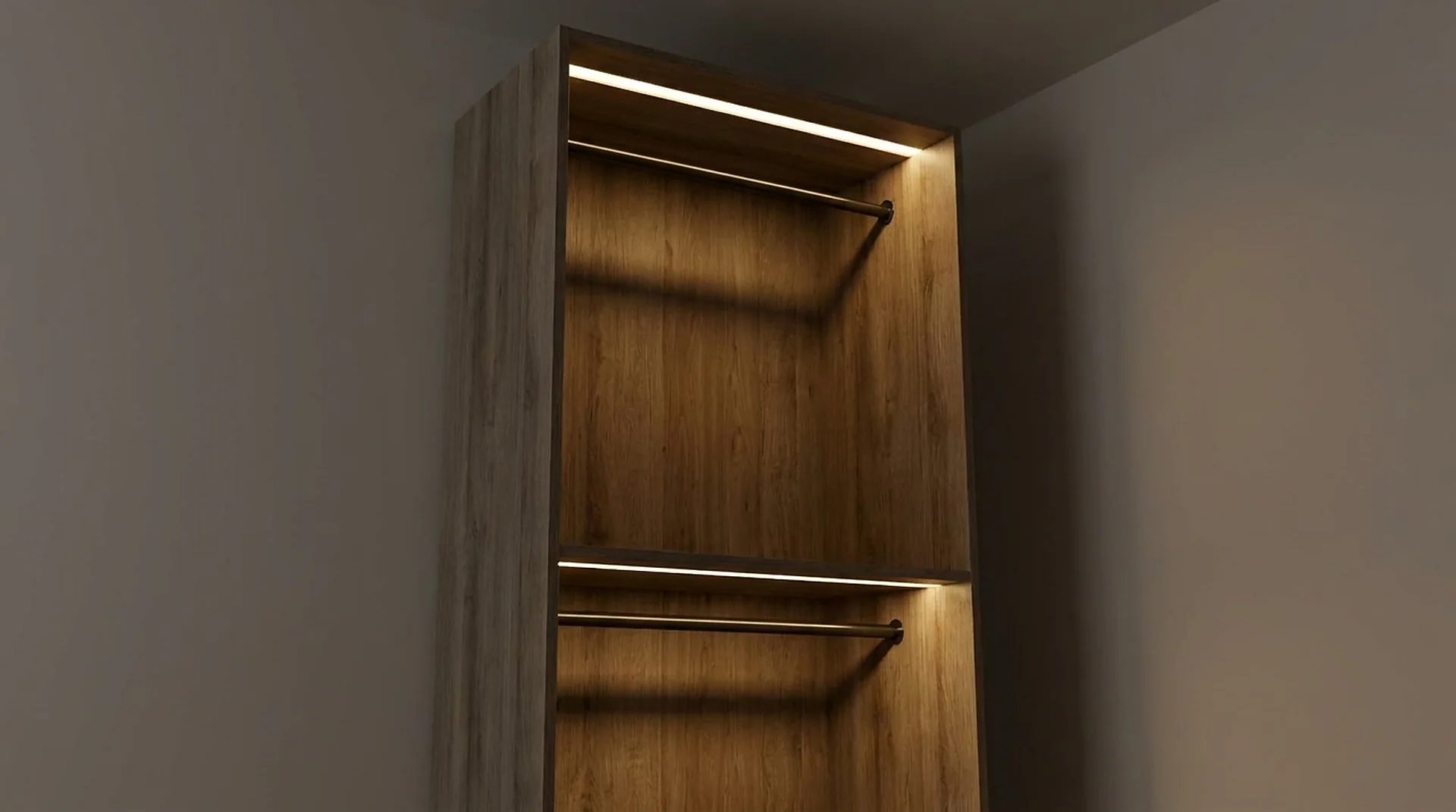
Every size above is built in any of the six finishes; pulls, LED strips and pull-out hardware come from the accessories and hardware catalog.
Further reading: Closet Rod Height and Wall Distance, How Much Hanging Rod Do You Need?.
Visualized
In a finished room.
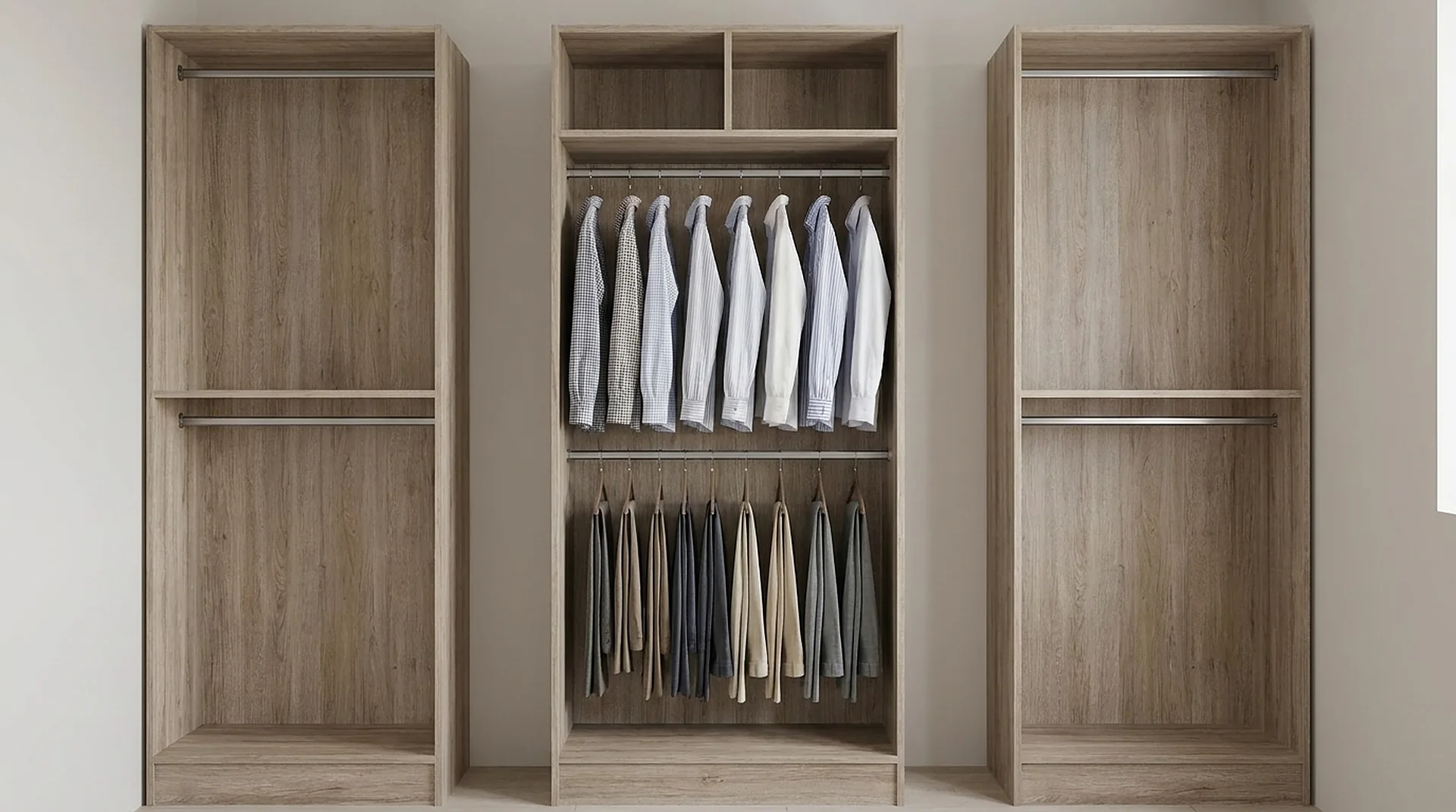
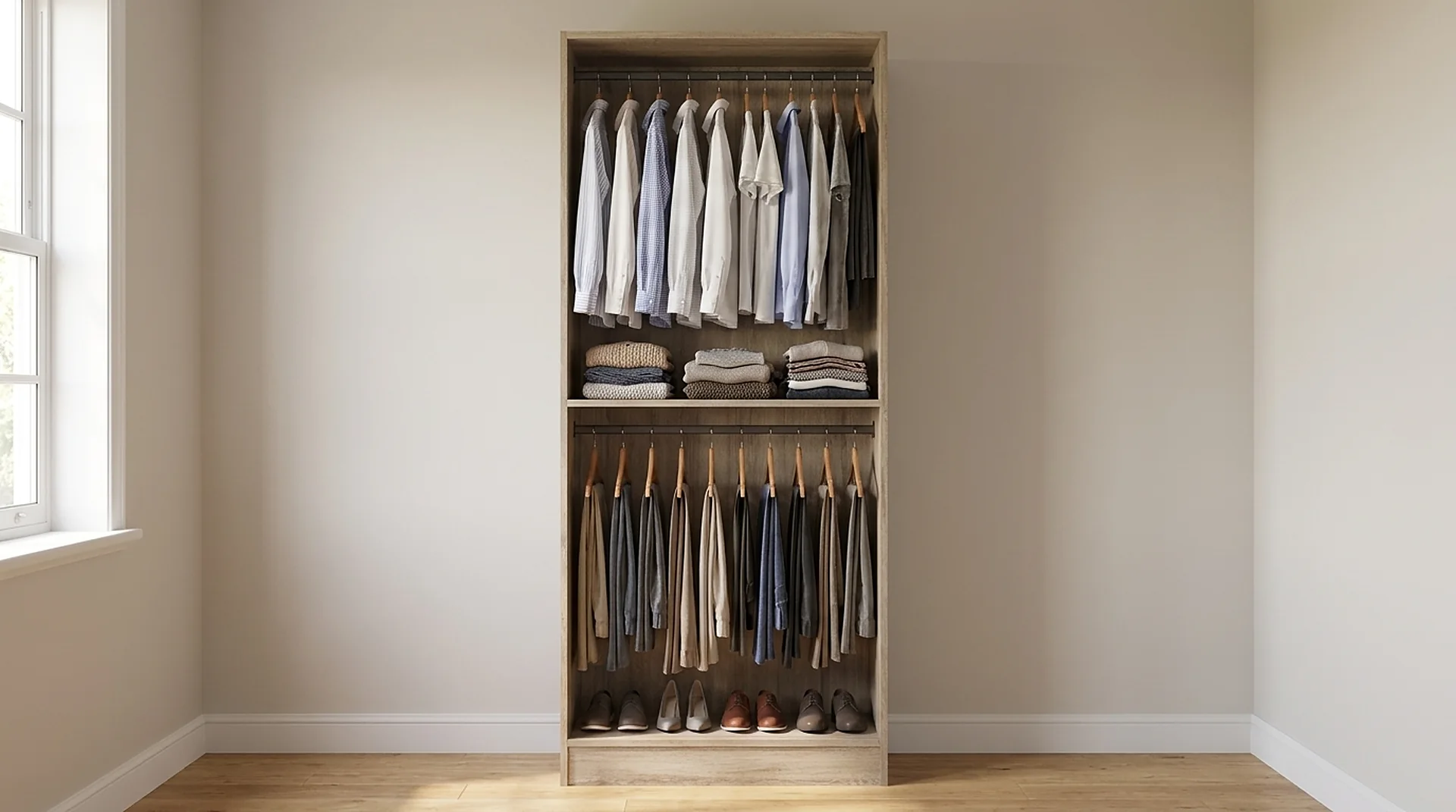
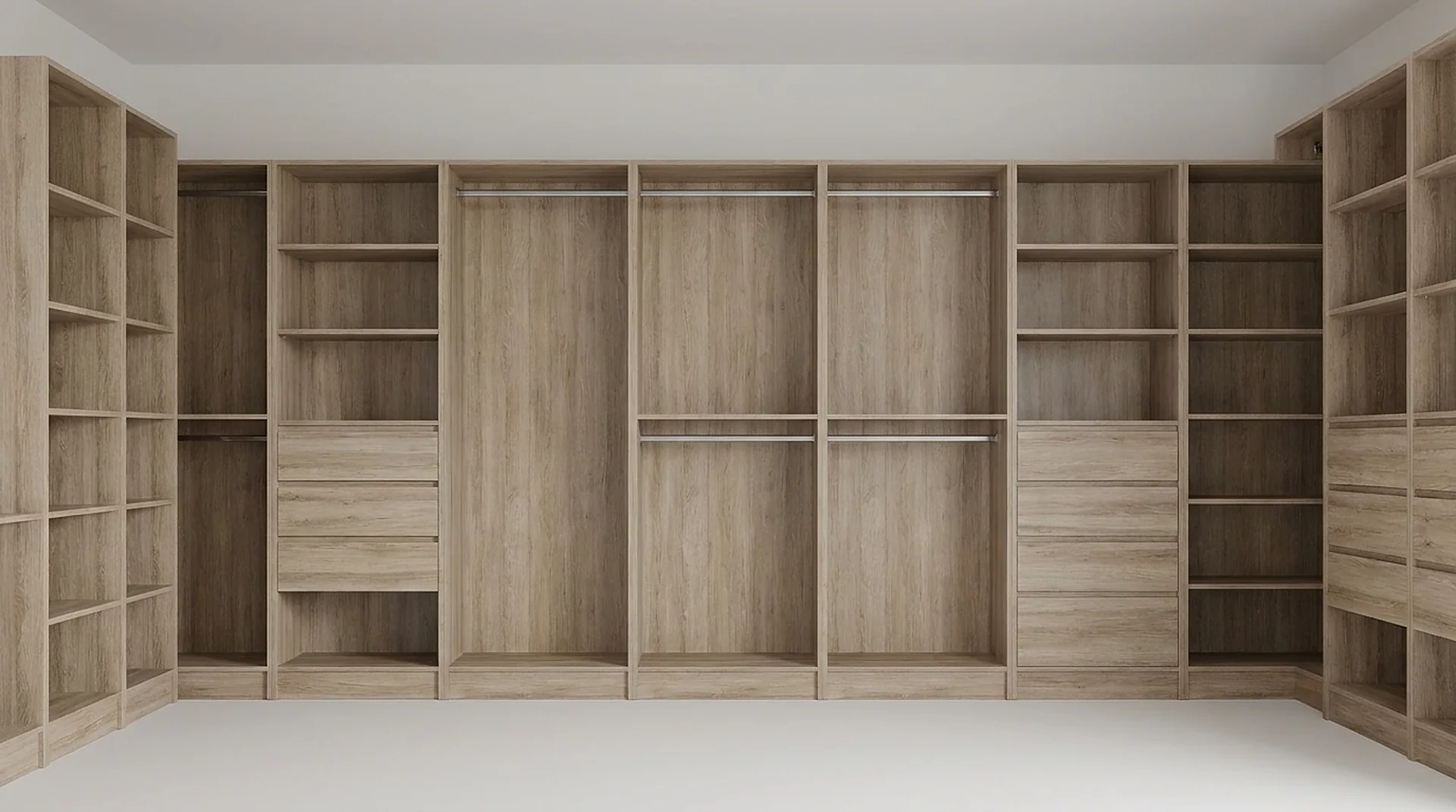
The clothes rail closet working in a finished room.
Sizes
Every cataloged size.
All dimensions in inches. Any size in this table is a stock component — not a special order.
| SKU | Width | Depth | Height |
|---|---|---|---|
| SC30HD15 | 30" | 15" | 84" |
| SC36HD15 | 36" | 15" | 84" |
| SC30HD24 | 30" | 24" | 84" |
| SC36HD24 | 36" | 24" | 84" |
Gallery
Every angle.
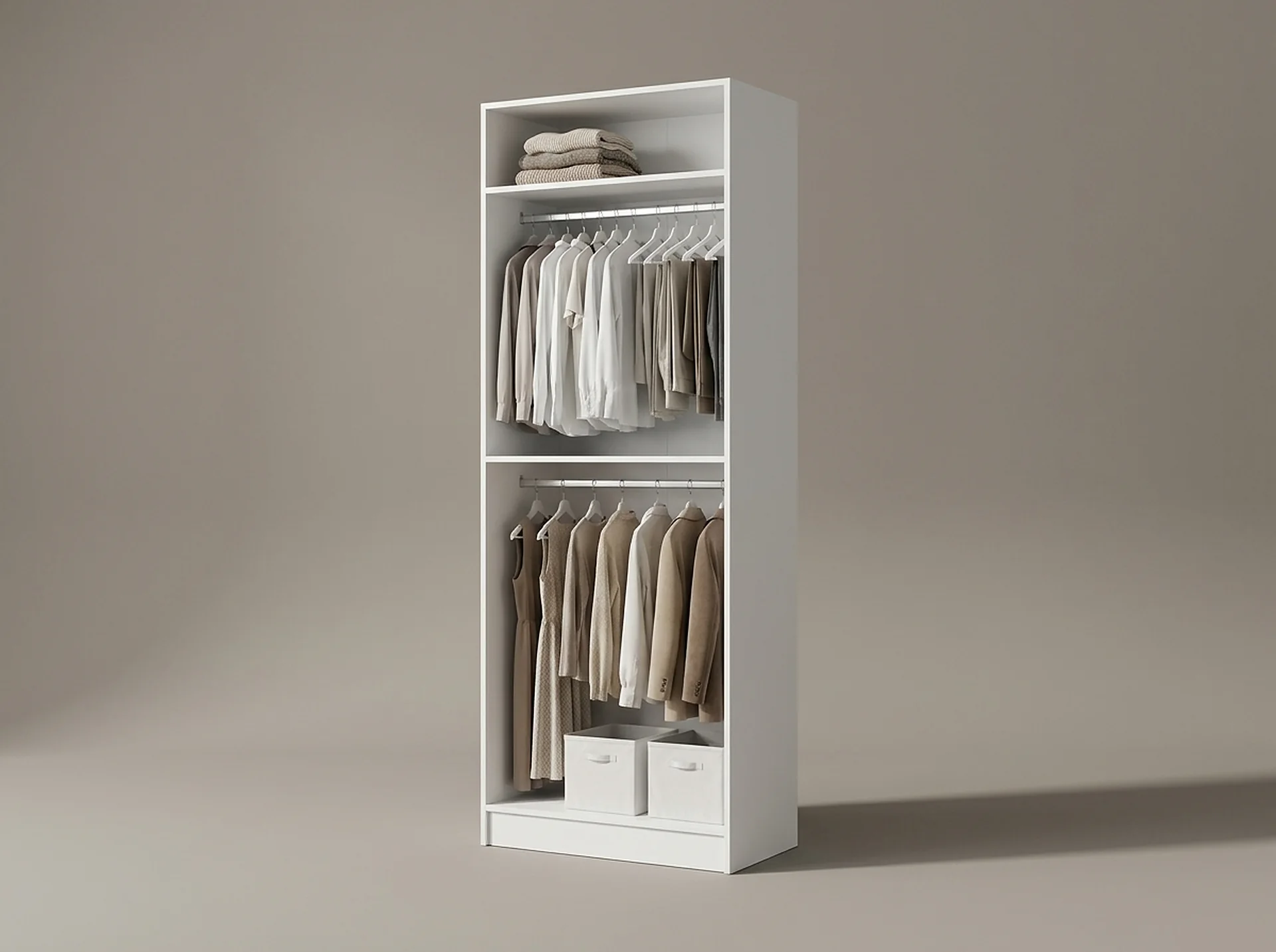
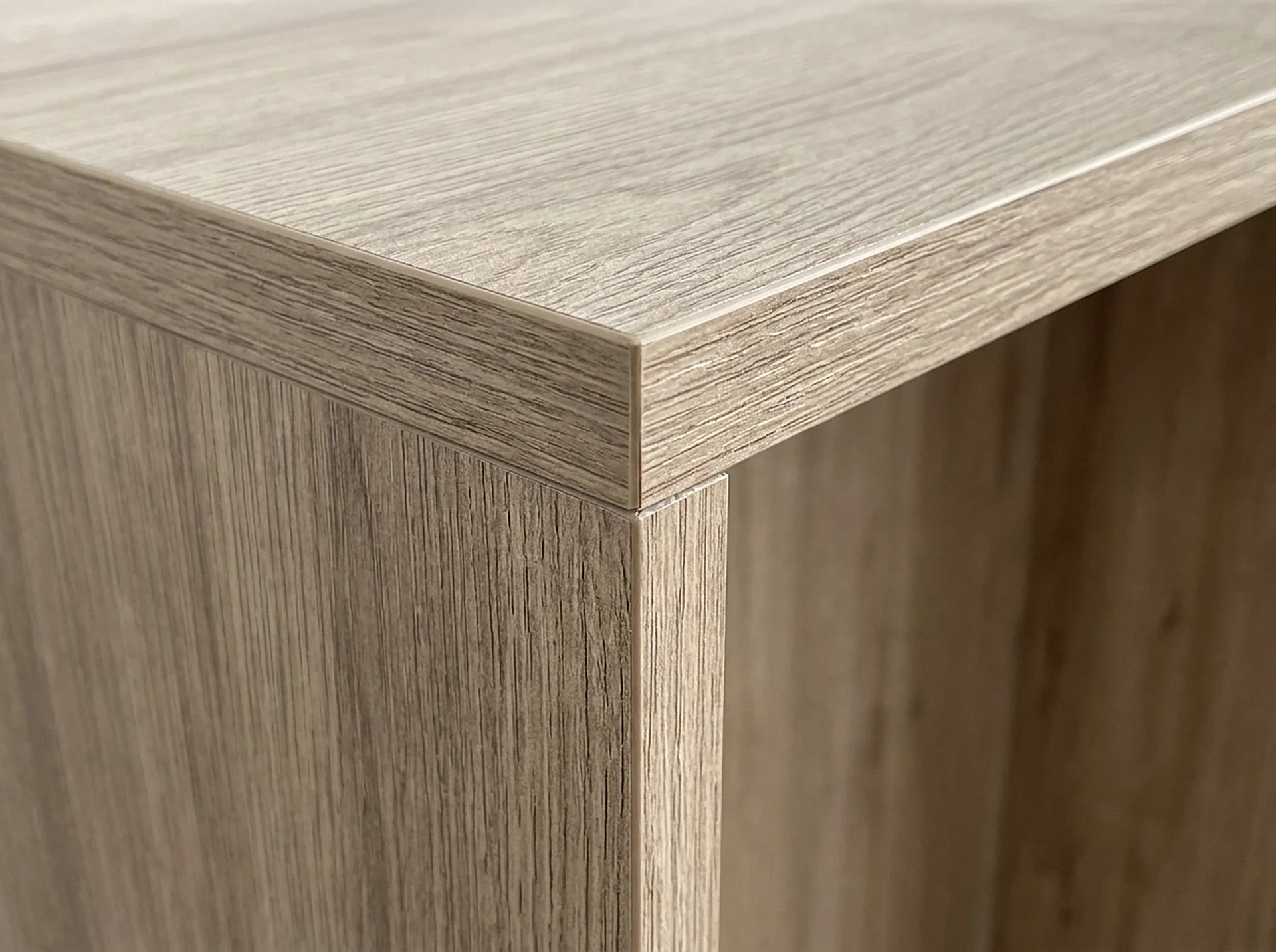
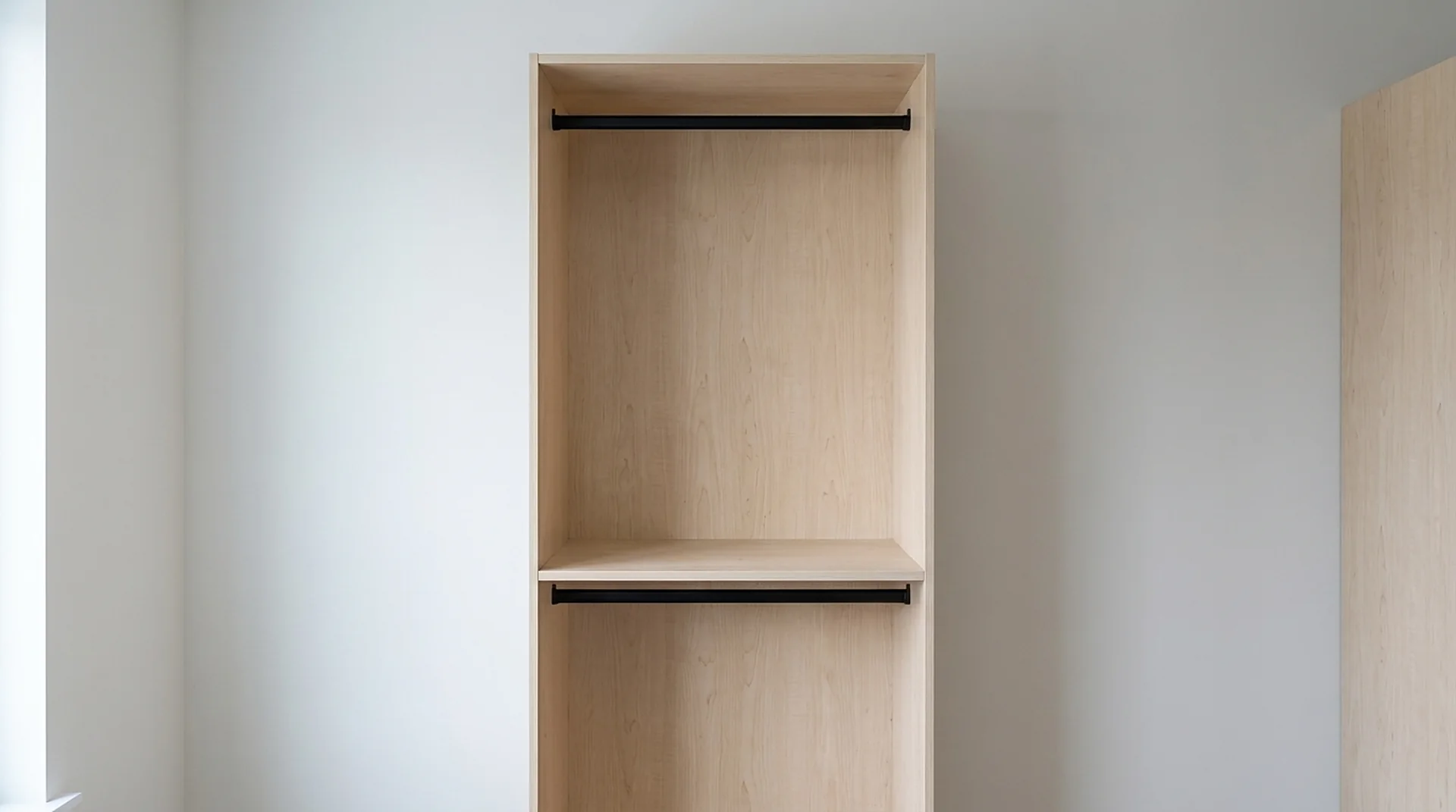
10 images of the clothes rail closet — in room, in studio, in use, and in close-up.
Film
Twenty-four seconds.
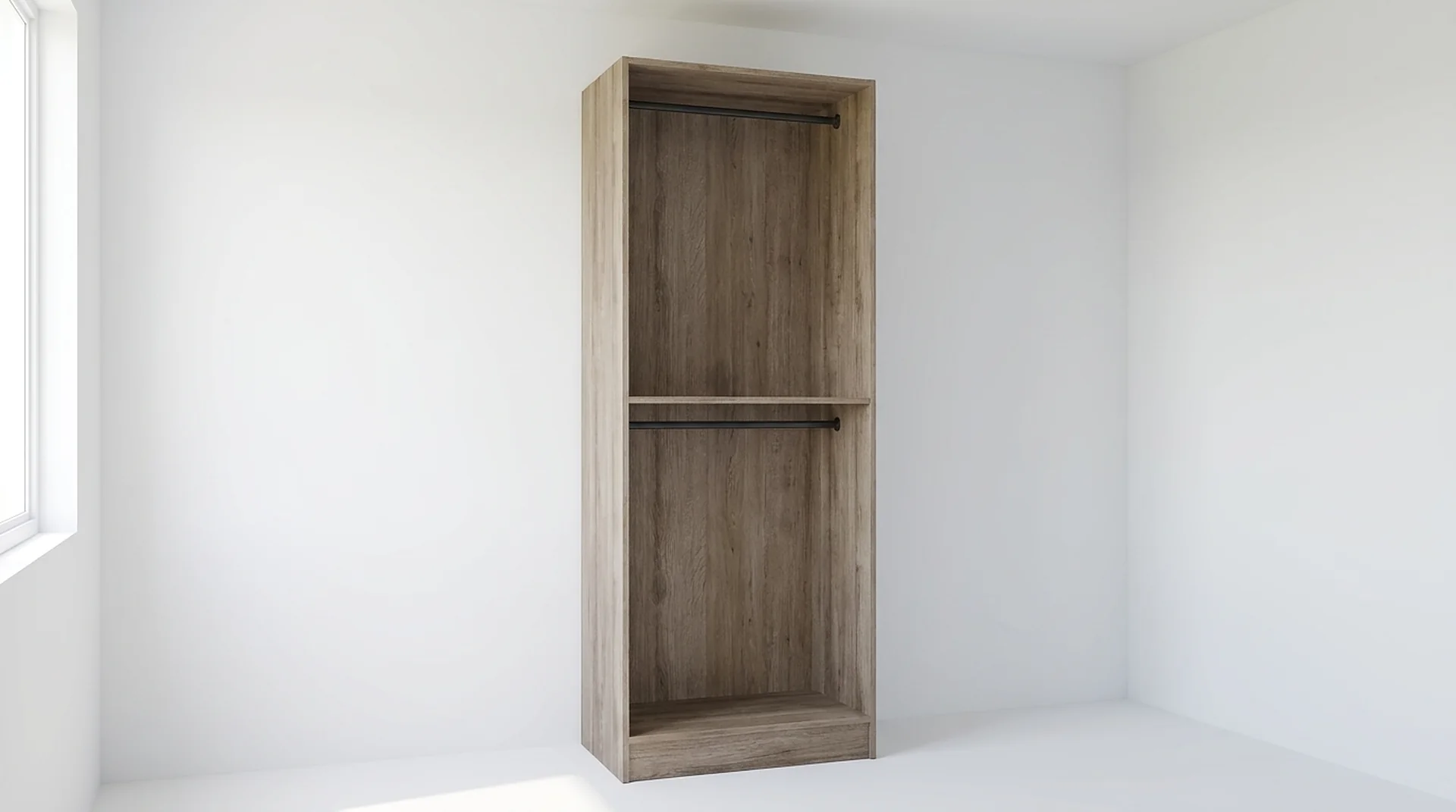
A slow pass across the clothes rail closet.
24 secDetail
Closer in.
Questions
About the Clothes Rail Closet.
What is the difference between single and double hanging?
Single hanging is one rail; set at the top of the 84-inch cabinet it leaves up to about 78 inches of drop for dresses and long coats. Double hanging is two rails with about 42 inches each, which roughly doubles the capacity for shirts, jackets and folded trousers.
Which depth should a hanging bay be, and how much clearance do hanging clothes need?
24 inches. A standard hanger is about 17 inches wide, so a 15-inch-deep bay forces garments to sit at an angle. 15-inch depth is for shelving and shallow reach-in closets.
How wide can a hanging bay be?
30 or 36 inches. Beyond 36 an end-supported rail starts to deflect under a full winter load, which is the sag people remember from a wooden dowel.
How much drop does double hanging give?
Roughly 42 inches per level. That suits shirts, jackets and folded trousers; coats and long dresses need a single-hung bay instead.
Pairs with
Usually specified alongside.
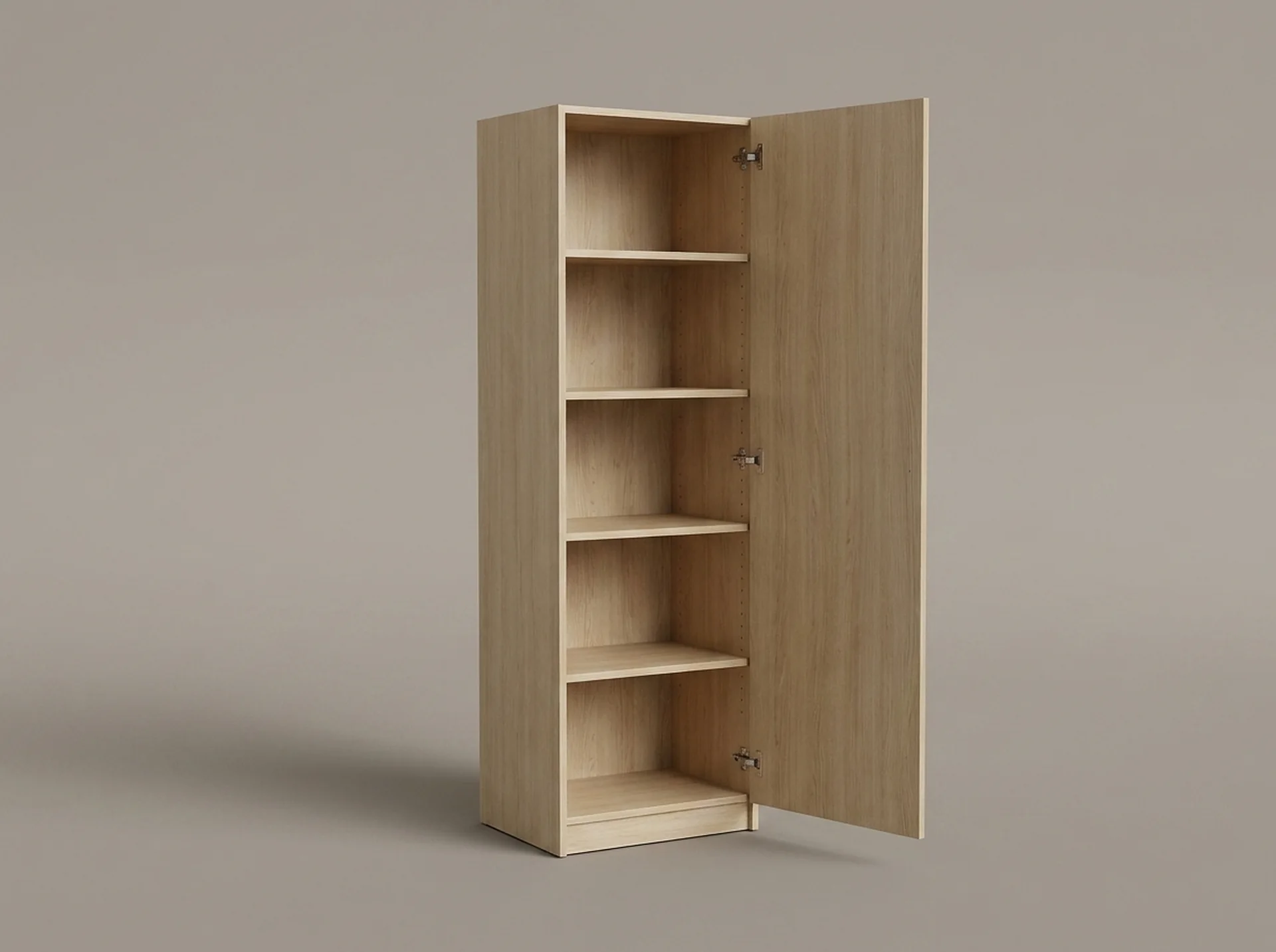 TowersShelf Closet TowerThe backbone of every ClosetX layout: an 84-inch tower of adjustable shelves in five widths and two depths.View component
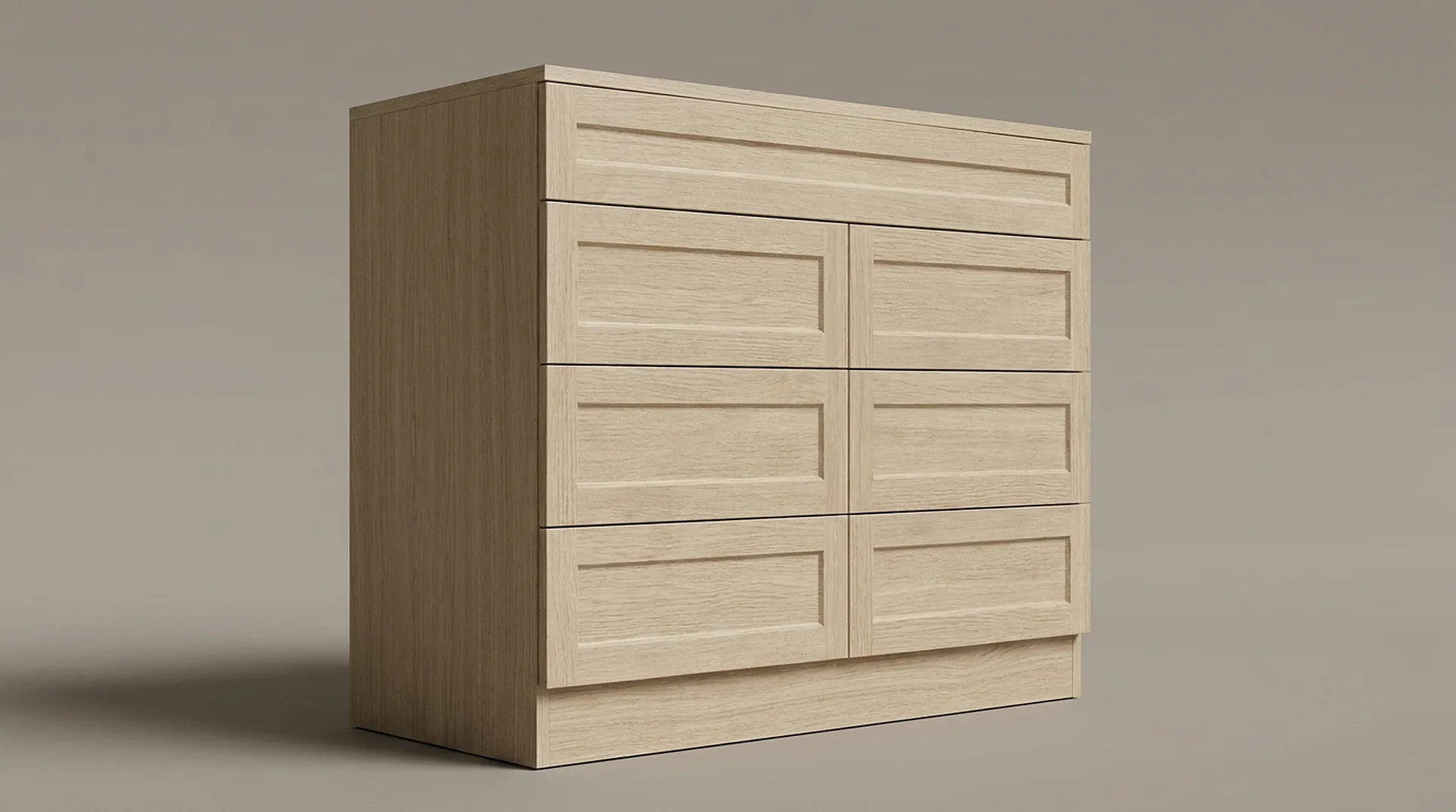 DrawersCloset DrawersTwo heights, three widths, on soft-close runners — installed inside the tower, not bolted on afterwards.View component
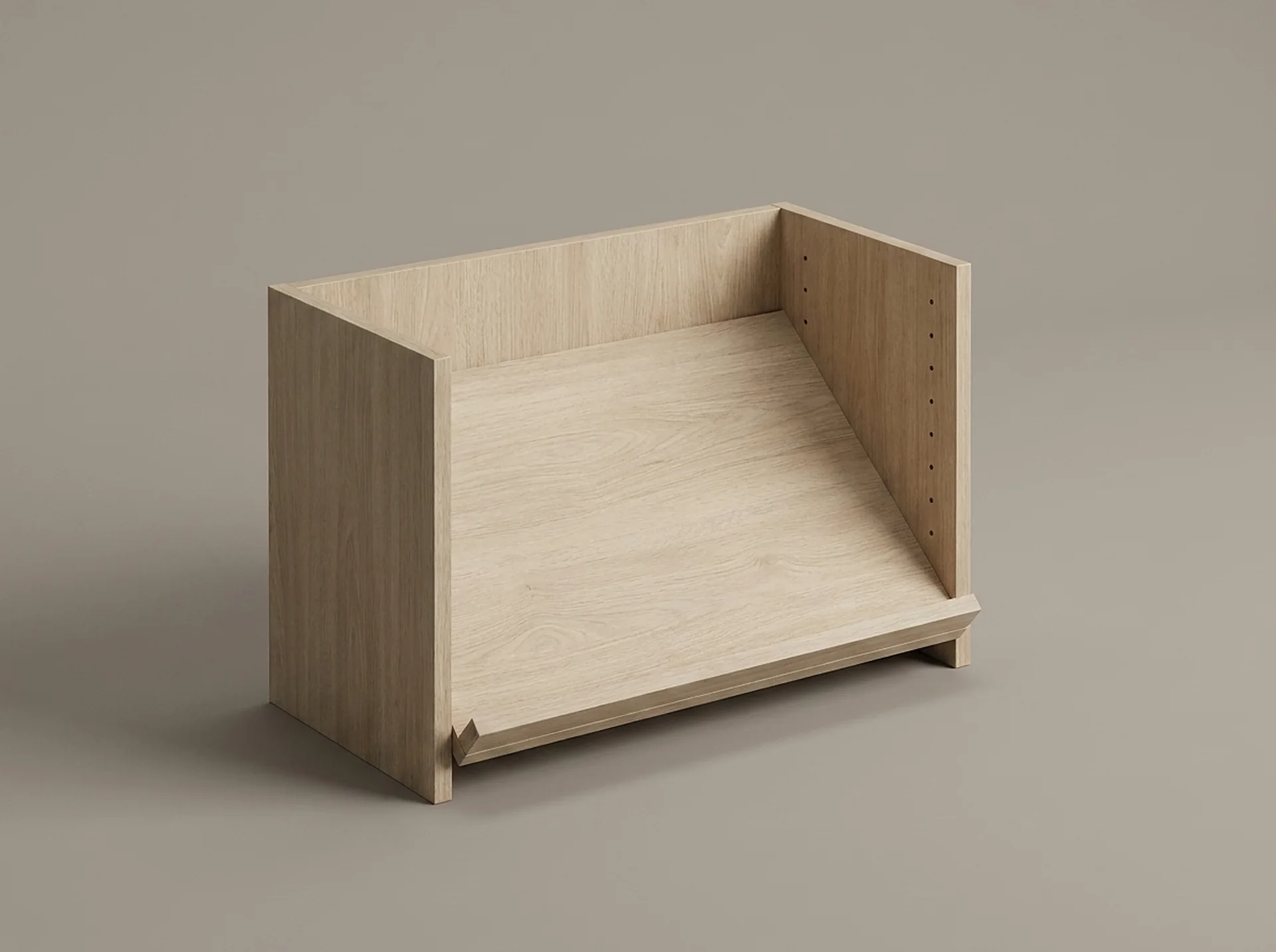 StorageShoe RackAn angled shelf with a front lip, so shoes face out and stay where you put them.View component
Start here
Tell us the room. We will tell you what fits.
A field measure, a dimensioned drawing and a fixed price — in that order, before anything is cut.