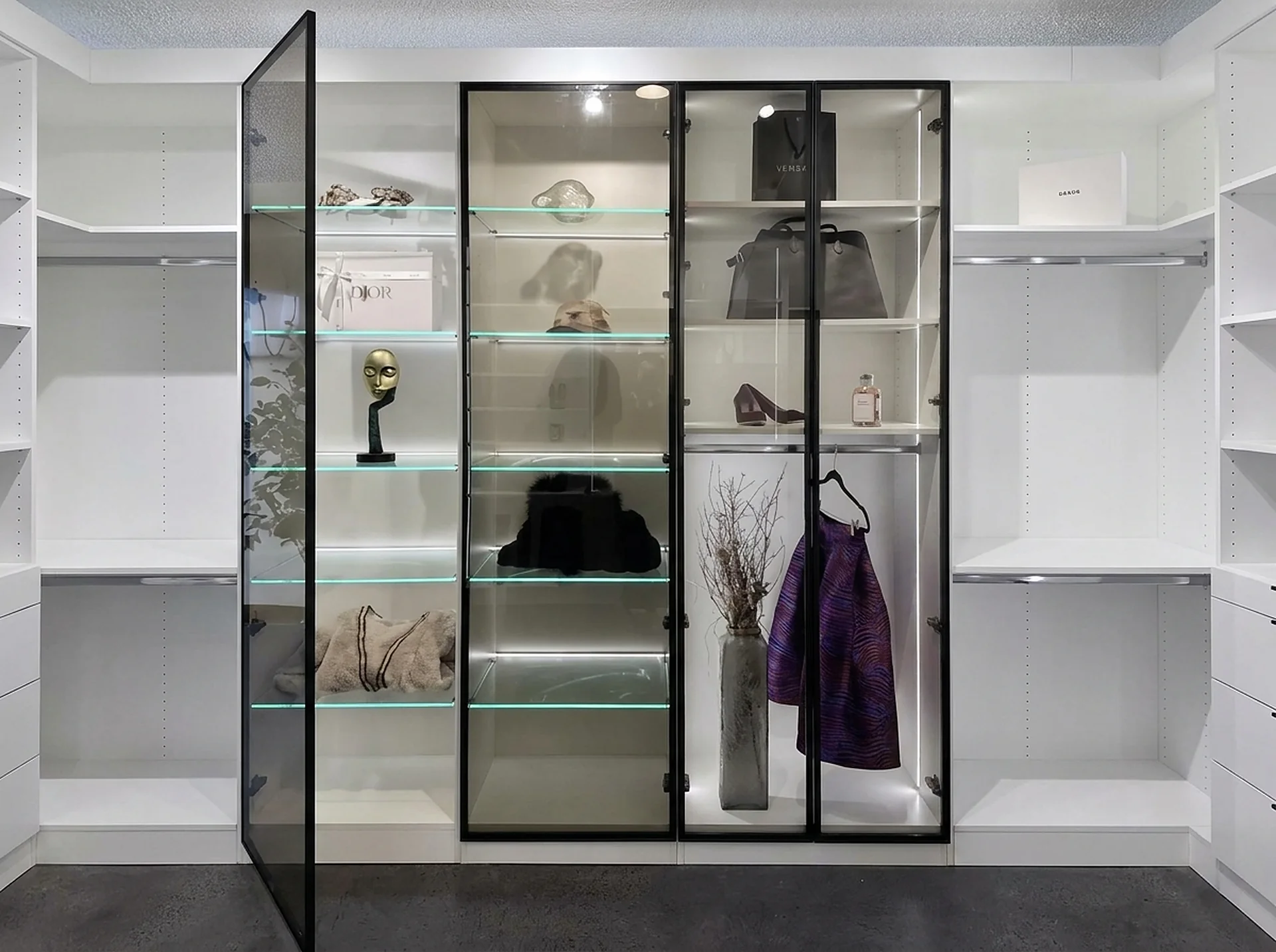
Design
Closet Lighting: LED Strips, Sensors and What to Avoid
Colour temperature that shows fabric honestly, where strips belong, and the fitting that ruins a closet.
Light a closet at 3000–3500K and mount the strip at the front edge of the shelf above, facing down — lighting from the back wall throws every garment into its own shadow.
Closet lighting has one job: let you tell navy from black at 6am. Most closets fail it, usually because of a single ceiling fitting behind where you stand.
Colour temperature
Below 3000K everything skews warm and white shirts read cream. Above 4000K the room goes clinical and wood finishes look grey. The 3000 to 3500K band shows fabric colour honestly and still feels like a room in a house. Aim for a CRI of 90 or better — that number, not the wattage, is what makes colours separate.
Position beats brightness
A strip at the front underside of each shelf washes the garments below it. A strip at the back wall lights the wall and leaves the clothes in shadow. A single ceiling downlight behind you puts your own shadow exactly where you are looking. Position is most of the result.
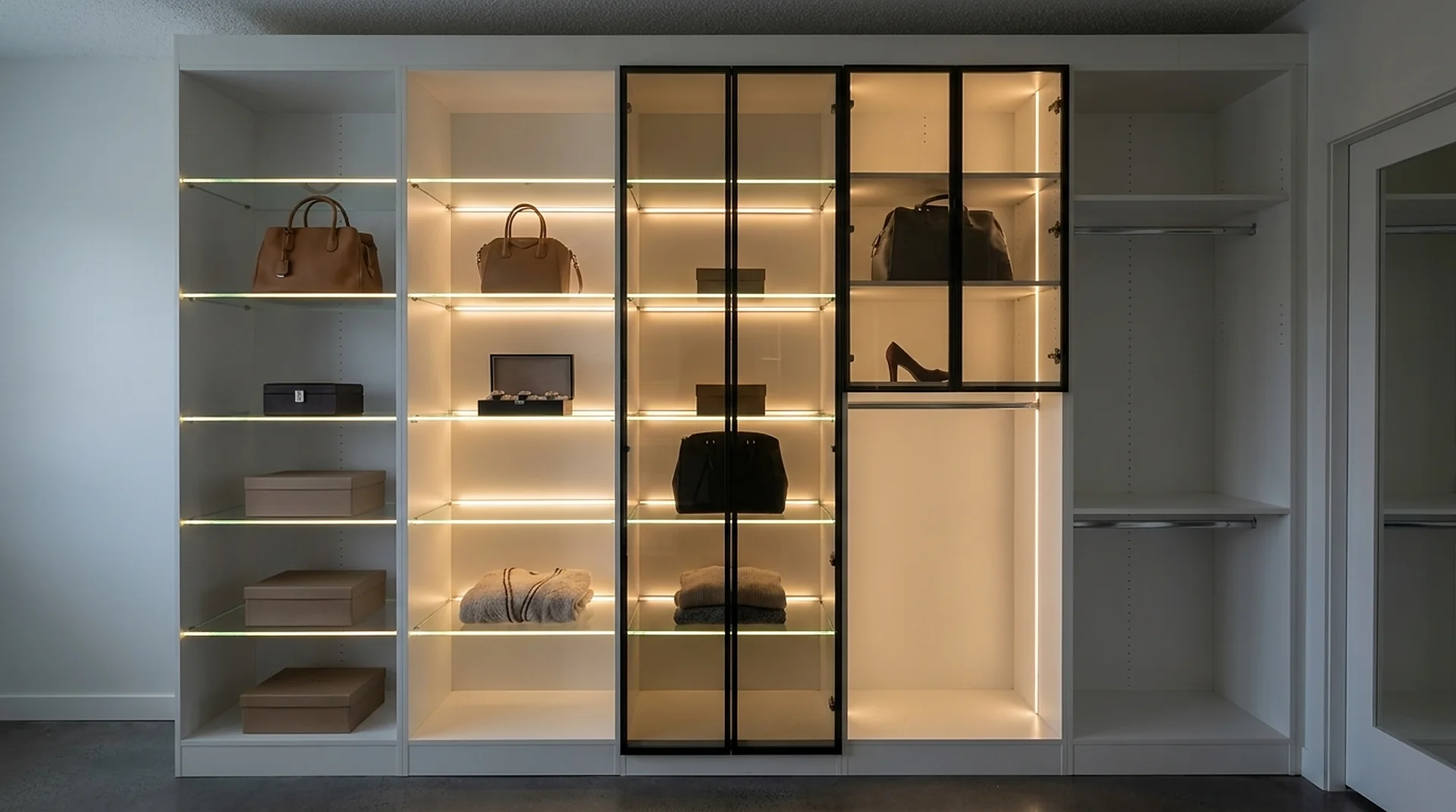
Where lit glass is worth it
A glass display tower with lit shelves is the exception to the front-edge rule: glass transmits, so the light travels down through the stack instead of stopping at the first shelf. It is the right piece for watches, bags and the part of the wardrobe you want to look at rather than store.
Sensors
Door-jamb switches are reliable and cheap and turn the light off when the door closes. Motion sensors are better in open runs and walk-ins with no door — set the timeout to at least three minutes, or the light dies while you are standing still choosing a shirt.
What to avoid
- Bare halogen or any hot fitting near fabric.
- A single central ceiling light as the only source.
- Strips mounted at the back wall.
- Mixed colour temperatures in one room — it reads as a fault, not a feature.
Quick answers
About this topic.
What colour temperature is best for a closet?
3000K to 3500K with a CRI of 90 or higher, so navy and black separate and whites do not read cream.
Where should LED strips go in a closet?
At the front underside edge of the shelf above, facing down onto the garments. Back-wall mounting leaves clothes in shadow.
Do closet lights need a separate switch?
A door-jamb switch or a motion sensor is preferred. Set sensor timeouts to three minutes or more.
Start here
Tell us the room. We will tell you what fits.
A field measure, a dimensioned drawing and a fixed price — in that order, before anything is cut.