Buying
Custom Closet vs Modular Wardrobe: What Actually Differs
A flat-pack modular wardrobe and a built-to-measure closet are not the same product at two prices. Here is where they genuinely diverge.
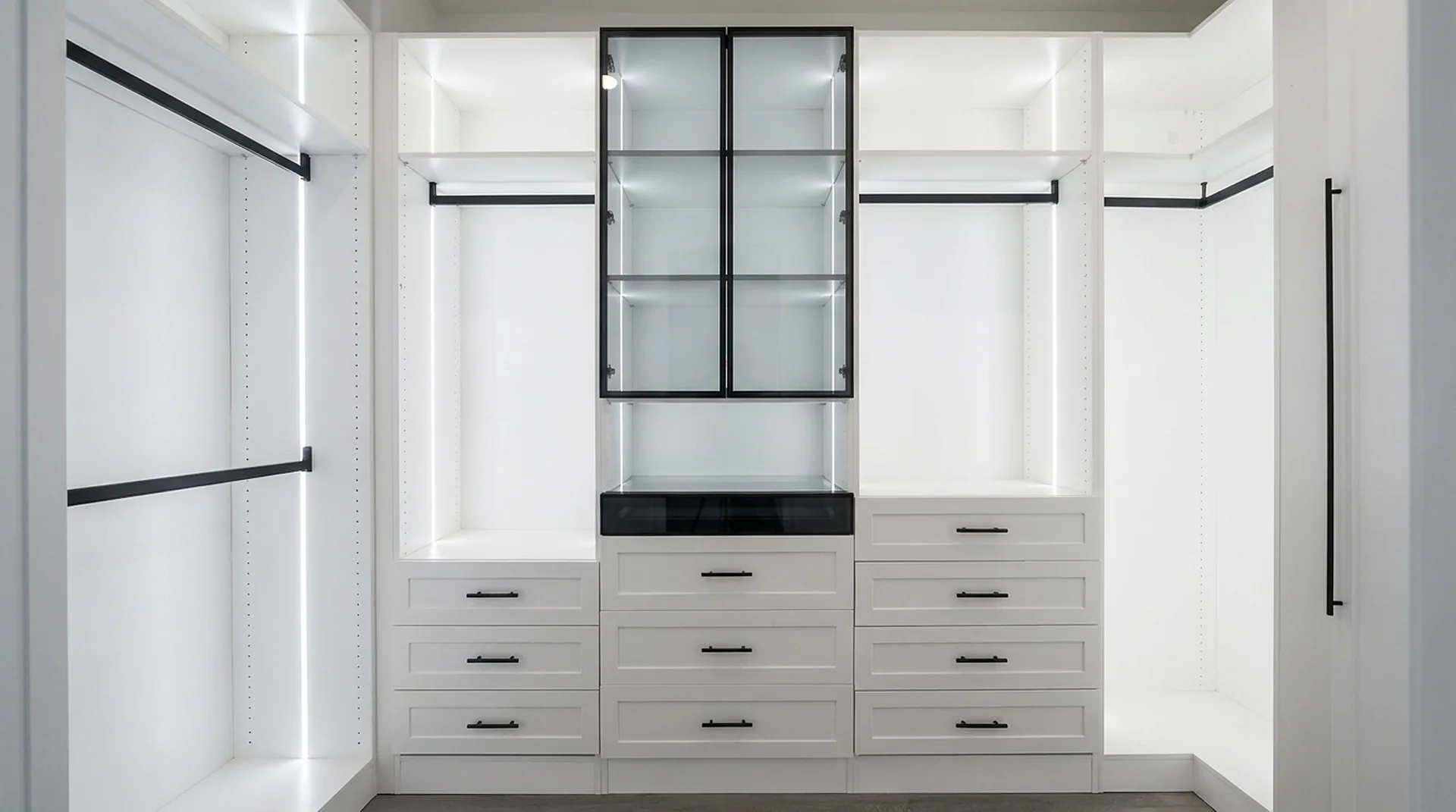
A modular wardrobe is built from fixed module widths and stands in front of the wall; a custom closet is cut to the wall it lives on. Everything else follows from that one difference.
This comparison gets argued as cheap versus expensive, which misses what is actually being decided. Both approaches put cabinetry in a closet. They differ in how they meet the room, and the room is the part you cannot change.
Fixed modules meet an unfixed wall
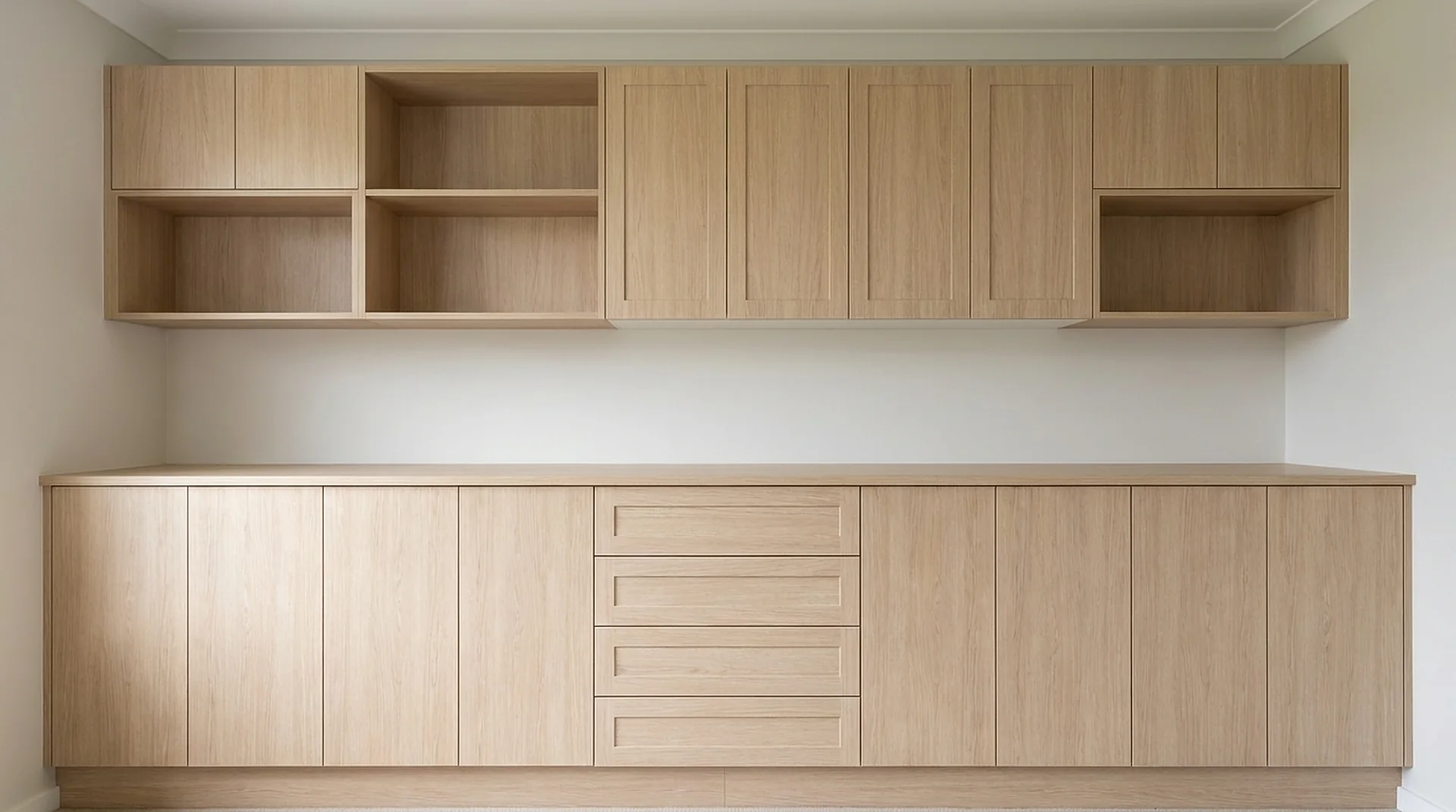
Modular systems are sold in a small set of module widths. A closet opening is whatever the framer left it. When the two do not divide evenly you get a filler gap — usually at one end, sometimes split at both — and that gap is dead storage for the life of the closet. On a 9-foot wall a few inches of filler is a shelf you paid for and never received.
A built-to-measure run is scribed to the wall, so the leftover goes into the cabinets rather than beside them. In an older house this matters more than in a new build: walls that are out of square by half an inch over eight feet are ordinary, and a rigid module cannot absorb that.
Depth is decided for you
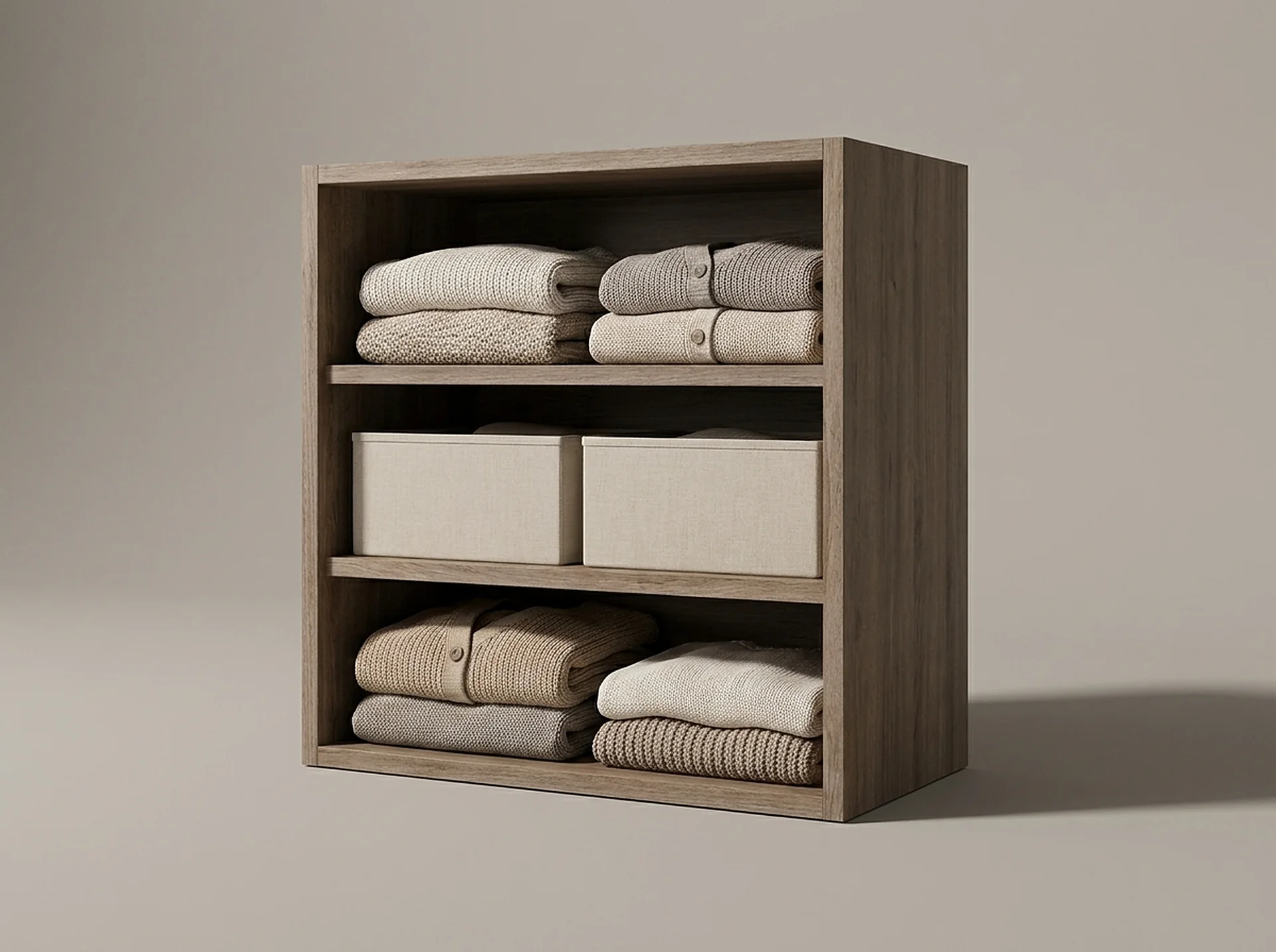
Modular wardrobes are commonly offered at around 22 to 24 inches deep because that suits a freestanding box in the middle of a bedroom wall. In a reach-in that depth is wrong: you stand outside the closet and the back of the shelf goes beyond comfortable reach. We build reach-in shelving at 15 inches for exactly this reason, and keep 24 inches for hanging bays where the garment needs it.
The ceiling gap
Freestanding units stop where the tallest module stops. The strip between the top of the wardrobe and the ceiling collects dust and one suitcase. A custom run goes to 84 inches and takes a 12-inch ceiling cabinet above it, which converts that strip into seasonal storage and makes the wall read as cabinetry rather than furniture.
Where the modular route is the right answer
It genuinely is, in three cases, and we will say so on a call:
- You are renting. Nothing scribed to a wall leaves with you.
- The room is temporary. A guest room that becomes a nursery in two years does not want fitted cabinetry yet.
- The opening is already standard. If the wall happens to divide cleanly into module widths and 24-inch depth suits the use, the filler problem does not arise.
What the comparison actually costs
Assembly time is the line most comparisons leave out. A flat-pack run is a weekend of work plus leveling on a floor that is not level, and the result is only as square as the person assembling it. Our number for an installed reach-in is $1,200 to $3,000, and a walk-in with an island typically runs $4,500 to $12,000 — quoted from a dimensioned drawing, installed, with the field measure taken before the price is set rather than after.
| Item | Modular wardrobe | Built-to-measure run |
|---|---|---|
| Width | Fixed module widths | Cut to the opening |
| Filler gap | Usual | None — scribed |
| Typical depth | ~22-24 in | 15 in reach-in / 24 in hanging |
| Top of run | Stops below ceiling | 84 in plus ceiling cabinet |
| Out-of-square walls | Shimmed | Scribed and leveled |
| Moves with you | Yes | No |
The honest test
Measure your opening and divide it by the module widths on offer. If it divides cleanly and 24-inch depth suits what you hang, a modular system will serve you. If it leaves a gap, that gap is the thing you are choosing between — not the price.
Quick answers
About this topic.
Is a custom closet worth it compared with a modular wardrobe?
It is worth it when the opening does not divide cleanly into module widths or when 24-inch depth is wrong for the use. Both produce filler gaps or unreachable shelf depth that last as long as the closet does.
Can a modular wardrobe go to the ceiling?
Only if a module happens to reach it. A built-to-measure run is designed to 84 inches with a 12-inch ceiling cabinet above, which is what closes the dust strip.
What does an installed custom closet cost?
A reach-in in the ClosetX program typically runs $1,200 to $3,000 installed and a walk-in with an island $4,500 to $12,000, quoted as a fixed price from a dimensioned drawing.
Start here
Tell us the room. We will tell you what fits.
A field measure, a dimensioned drawing and a fixed price — in that order, before anything is cut.