How-to
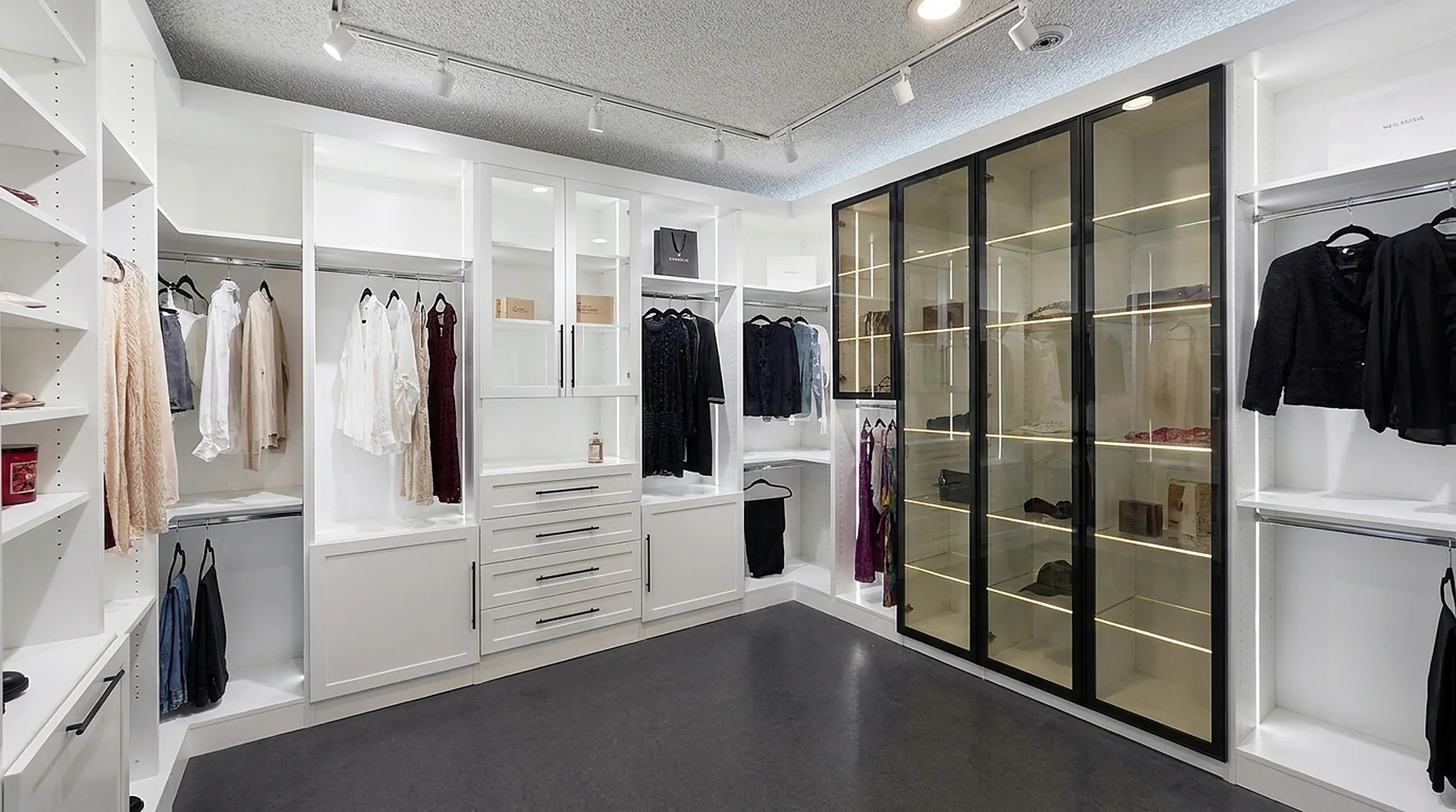
How to Clean and Care for a Melamine Closet
A melamine closet needs a damp cloth, the right humidity and clean storage for wool. What to use, what to avoid, and what actually keeps moths out.
To care for a melamine closet, wipe the panels with a damp cloth and mild soap, rinse and dry them, and never use steel wool or abrasive or acidic cleaners. Keep the room below 60 percent relative humidity, dry spills quickly, and store wool clean and in airtight containers, because moisture and moths do more damage than everyday use.
ClosetX closets are built from 3/4-inch cabinet-grade melamine: a decor layer fused to an engineered-wood core, with every exposed front face edge-banded. The care below follows from that construction, and every rule in it comes from a manufacturer, the EPA or a university extension program.
Cleaning melamine shelves and panels
The fused face is hard and wipes clean, so routine cleaning is short. Wilsonart's laminate care guide gives the method: use a damp cloth or sponge and a mild soap or detergent, then rinse thoroughly with warm water and wipe dry.
The same guide is specific about what to avoid. Steel wool and other abrasive pads damage laminate, and acidic or abrasive cleaners should not be used on it. A soft cloth does the job; a scouring pad only dulls the surface you are trying to clean.
Edges and spills
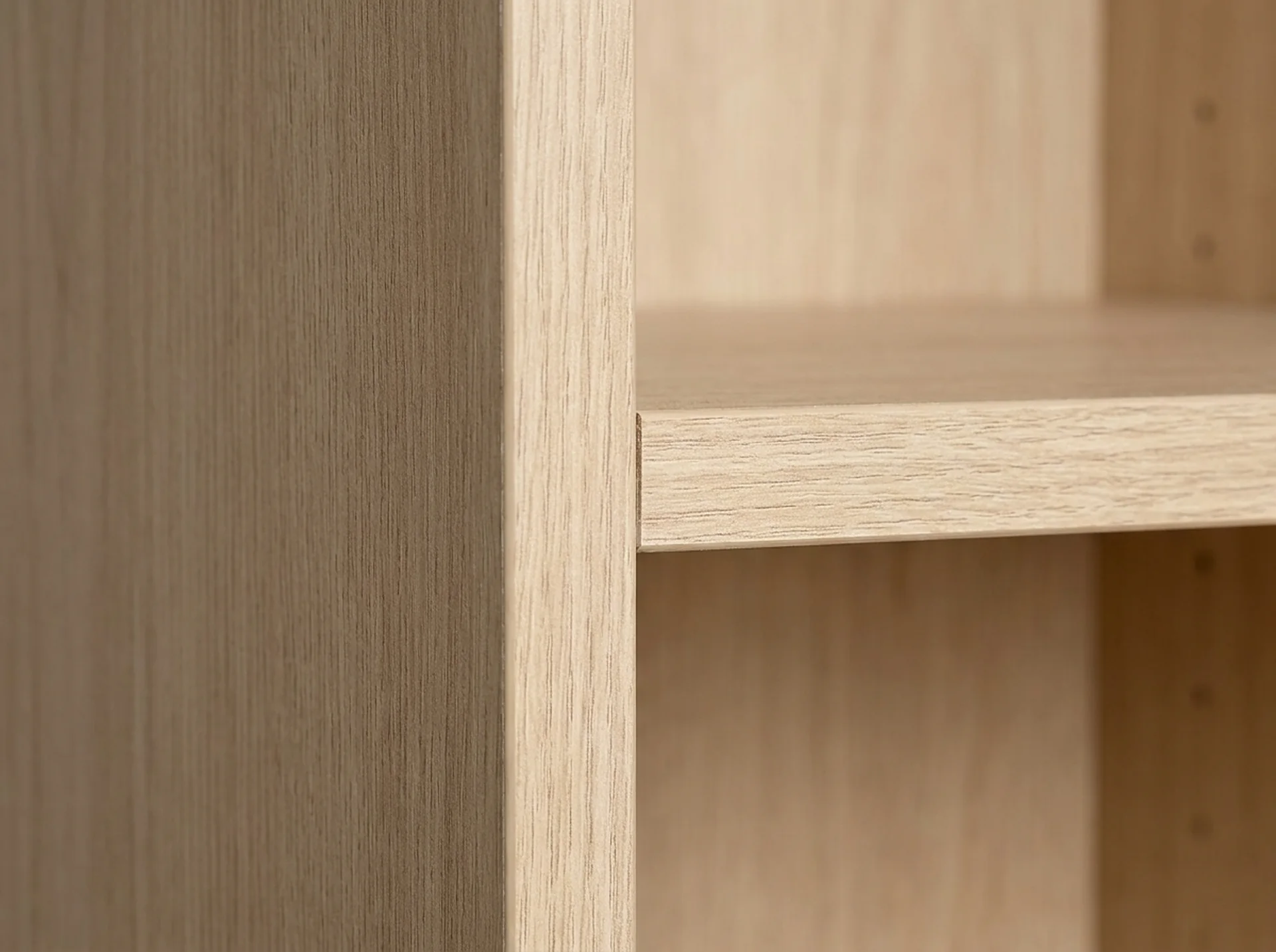
The surface is rarely where melamine fails. A cut edge is raw core until it is banded, and an unbanded edge chips and takes on moisture, which is why every exposed front face in the ClosetX program is edge-banded. The finish is a sealed surface, not one rated for standing water, so wipe spills up instead of leaving them.
Speed matters beyond the panel. The EPA's guide to mold and moisture notes that if wet or damp materials are dried within 24 to 48 hours of a leak or spill, in most cases mold will not grow.
Humidity in the closet
A closet is a small closed room, and its air follows the rest of the house. The EPA recommends keeping indoor humidity below 60 percent relative humidity, ideally between 30 and 50 percent. An inexpensive hygrometer on a shelf shows whether a closet stays in that range through the summer.
Wilsonart's technical data for thermally fused laminate sets the limits for the panel itself: it is for interior use only and should not be subjected to extremes in humidity, to temperatures higher than 275°F for substantial periods, or to intense, continuous, direct sunlight. In a closet the practical version is a room that does not stay damp and shelves that are not in constant direct sun.
Keeping moths out of stored clothes
Clothes moths feed on wool: clothing, carpets, rugs, furs and stored woolen items. According to the University of California's clothes moth guidance, they will also feed on synthetics or cotton blends if those fabrics contain wool.
For storage the guidance is plain: items should be clean and pest free and placed in an airtight container. If a closet already has moths, remove and clean all of the clothes and fabric stored inside, then thoroughly vacuum and wash the inside of the closet, especially all cracks and crevices, before the cleaned clothes go back.
That last step is easier in a panel closet than in a painted one with shelf cleats: adjustable shelves lift off their pins, and the melamine behind them wipes down like the shelves do.
What about cedar?
Aromatic eastern red cedar contains an oil that can kill small larvae, but it does not affect large larvae, and after several years the wood loses that quality. The same University of California guidance calls the effectiveness of cedar chests and cedar closet floors debatable. Clean clothes and airtight storage are what it relies on instead.
A closet care routine at a glance
| Task | How | Source |
|---|---|---|
| Routine cleaning | Damp cloth or sponge and mild soap; rinse with warm water; wipe dry | Wilsonart laminate care guide |
| What to avoid | Steel wool, abrasive pads, acidic or abrasive cleaners | Wilsonart laminate care guide |
| Spills and leaks | Dry within 24 to 48 hours | EPA |
| Humidity | Below 60 percent, ideally 30 to 50 percent | EPA |
| Panel limits | No extreme humidity, no sustained heat above 275°F, no continuous direct sun | Wilsonart TFL technical data |
| Wool storage | Clean, pest free, in an airtight container | University of California IPM |
| Moth problem | Clean all clothes; vacuum and wash the closet, especially cracks and crevices | University of California IPM |
Quick answers
About this topic.
How do you clean melamine closet shelves?
Use a damp cloth or sponge with a mild soap or detergent, rinse with warm water and wipe dry. Do not use steel wool, abrasive pads or acidic or abrasive cleaners, which damage the laminate surface.
What humidity is best for a closet?
The EPA recommends keeping indoor humidity below 60 percent relative humidity, ideally between 30 and 50 percent. A closet shares the air of the house, so the same range applies.
Do cedar closets keep moths away?
Only partly. Cedar oil can kill small larvae but not large ones, and cedar loses that quality after several years; University of California guidance calls cedar chests and closet floors debatable. Clean clothes in airtight storage work better.
What should you do if your closet has clothes moths?
Remove and clean all clothes and fabric stored in the closet, then thoroughly vacuum and wash the inside of the closet, especially cracks and crevices, before putting the cleaned clothes back.
Start here
Tell us the room. We will tell you what fits.
A field measure, a dimensioned drawing and a fixed price — in that order, before anything is cut.