Design
Seven Closet Design Mistakes We Are Asked to Fix
The errors that show up again and again on drawings — and the measurement that catches each one before anything is cut.
Almost every closet we are asked to fix has one of seven problems, and all seven are visible on the drawing. None of them are taste. They are decisions made without a number.
We see finished closets that disappointed their owners often enough to know the pattern. The failures repeat, and they repeat because the drawing was approved before anyone asked what a particular bay was for. Here they are in the order we encounter them.
1. Double hanging the entire run
Double hanging is efficient — two rods at about 40 and 82 inches nearly double the rod length in one bay. Run it end to end, though, and there is nowhere for a coat, a dress or a garment bag. Every closet needs at least one bay at 66 inches. The fix after installation means taking a section apart; the fix on the drawing costs nothing.
2. Shelving built at hanging depth
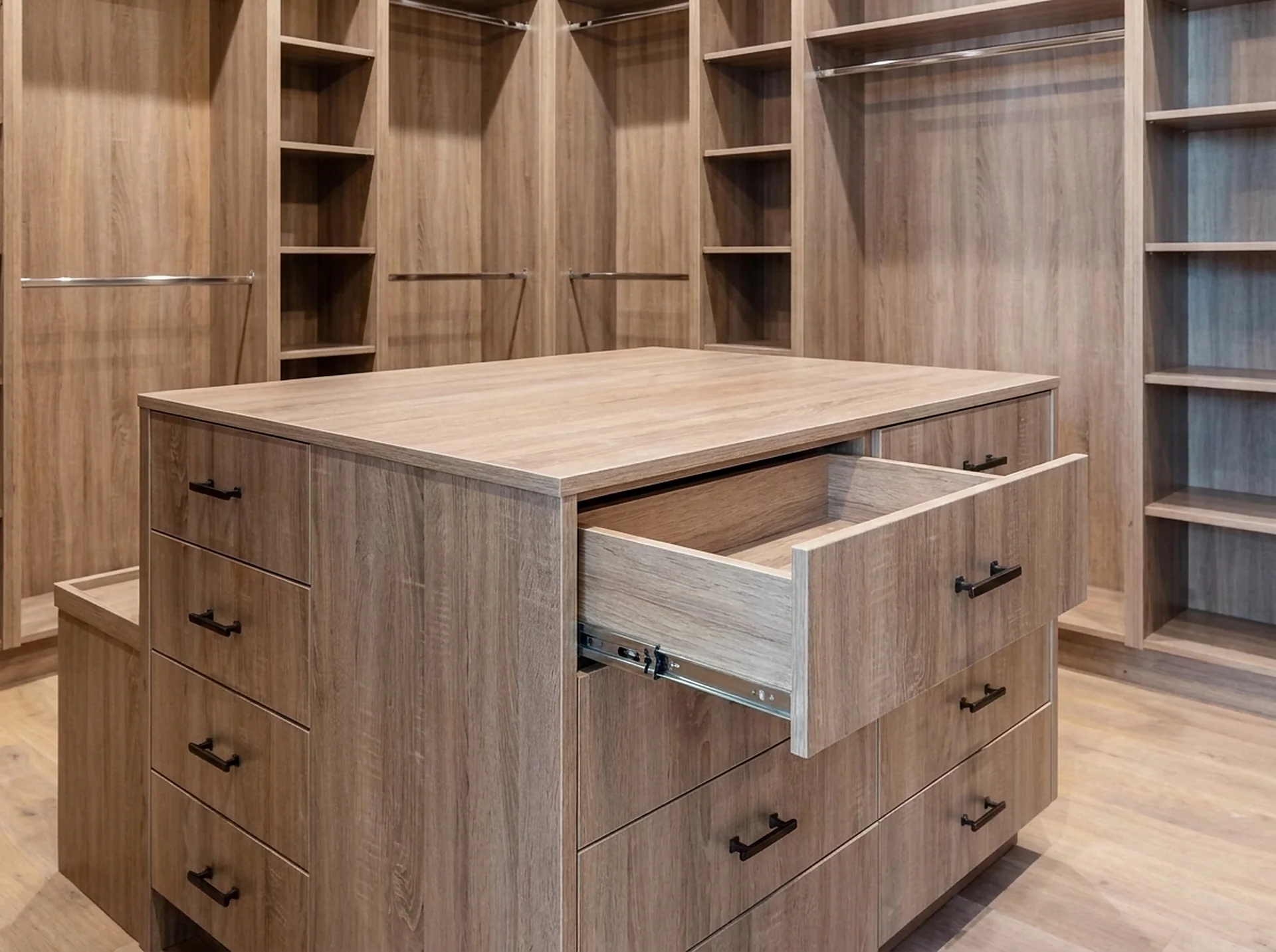
A hanging bay has to be 24 inches deep because a shoulder on a hanger is about 22. Shelves do not, and at 24 inches the back of the shelf is past comfortable reach — it becomes the place things go to be forgotten. Shelving belongs at 15 inches. The step between the two depths also makes a narrow room read as wider.
3. Leaving shoes to the floor
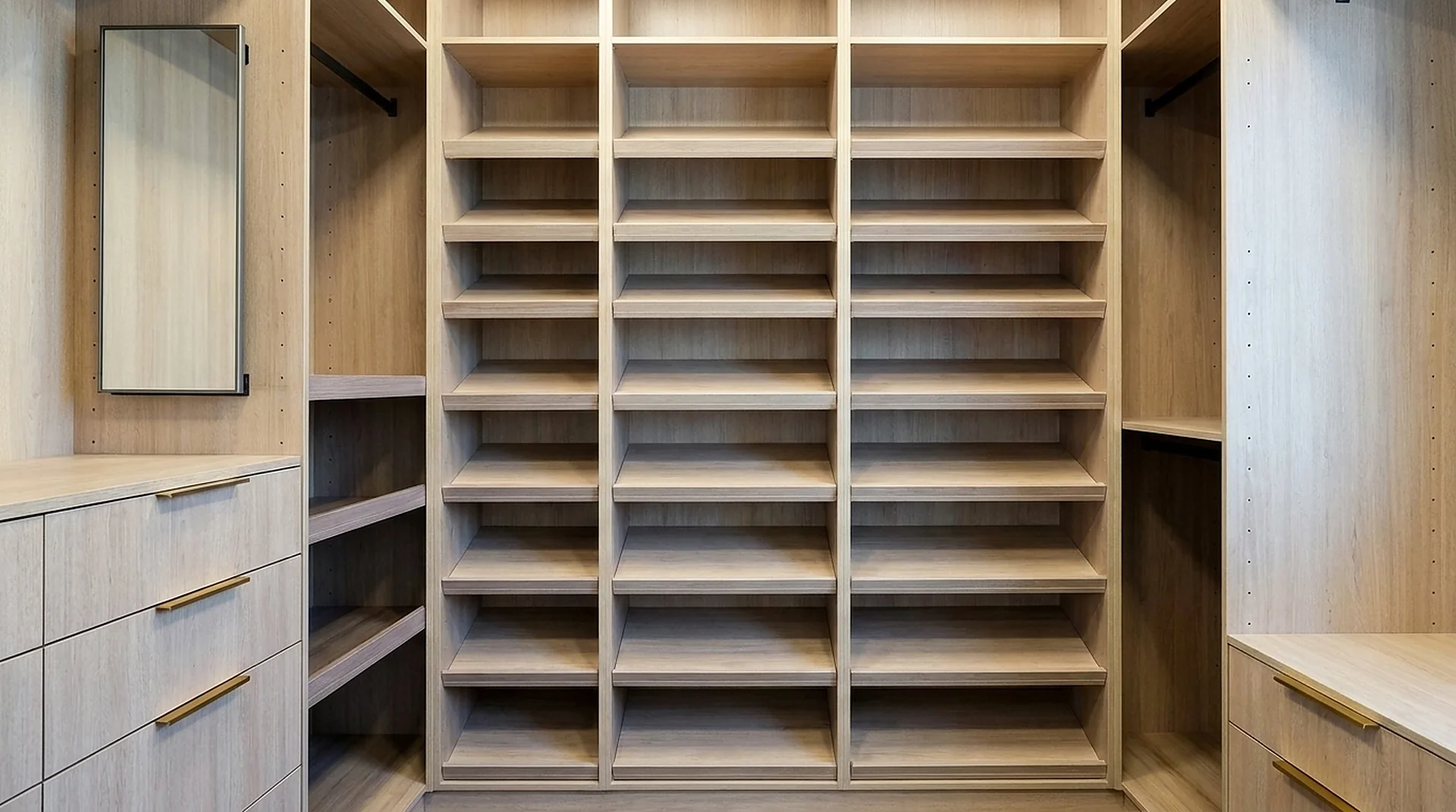
Shoes on the floor is the single most common reason a closet stops working within a year. They spread, they block the lower rod, and they make the room look untidy no matter how the clothes are kept. Angled or flat shelving at 15 inches holds them in view, and a closet that shows what it holds is the one that stays organized.
4. Designing for the clothes you own today
Wardrobes change with seasons, jobs and years. A closet planned to the exact garment count of the day it was measured is full on day one. Adjustable shelving and one bay left deliberately underused are what let a closet absorb change without a rebuild.
5. No light inside the closet
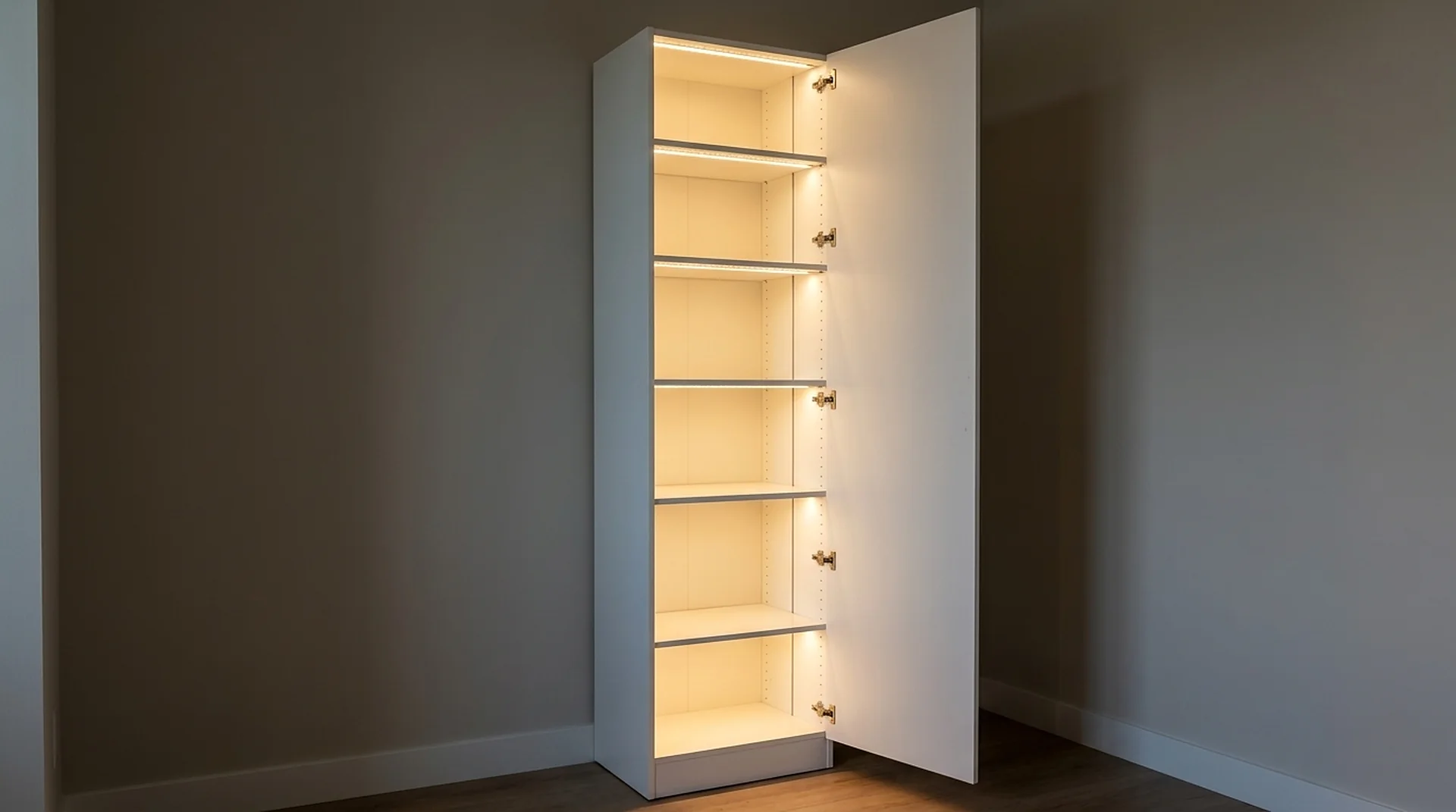
A ceiling fixture outside the door puts the person standing in the closet between the light and the clothes. Every deep bay then reads as a shadow, and color is impossible to judge. LED strip under the shelf above each hanging bay solves it, and it has to be planned before the cabinetry — retrofitting means channels cut into finished panels.
6. Forgetting where the door swings
An inward-swinging door takes the first four feet of wall out of service: a drawer bank cannot open there and a hanging bay behind it is reachable only with the door shut. Rehanging it to swing outward is usually the cheapest square footage anyone buys during a closet project.
7. Drawers in a corner
In an L-shaped run, drawers set in the return will collide with the adjacent cabinet or open into the walkway. Corners want shelving, a hanging return or a dedicated corner unit. Drawers belong on a straight run where they have their full swing.
The one question that catches all seven
| Mistake | Catches it | Number |
|---|---|---|
| Double hang end to end | Is there a long-hang bay? | 66 in |
| Deep shelving | How deep are the shelves? | 15 in |
| Shoes on the floor | Where do the shoes go? | 15 in shelf |
| Planned to today | Which shelves are adjustable? | — |
| No interior light | Where is the light? | under-shelf LED |
| Door swing | Which way does the door open? | first 48 in |
| Corner drawers | What is in the corner? | no drawers |
Ask for an elevation with every bay dimensioned and labeled with what it holds. All seven mistakes become visible on that one drawing, and every one of them is free to fix while it is still a drawing.
Quick answers
About this topic.
What are common closet design mistakes?
Double hanging the whole run with no 66-inch long-hang bay, building shelves at 24 inches instead of 15, leaving shoes to the floor, planning to today's wardrobe, no light inside the closet, ignoring which way the door swings, and putting drawers in a corner.
What is the most common closet mistake?
Double hanging end to end. It looks efficient on a drawing and leaves nowhere for coats, dresses or garment bags.
How deep should closet shelves be?
15 inches. Hanging bays need 24 inches for shoulder clearance, but at that depth the back of a shelf is past comfortable reach.
Do custom closets need lighting?
Interior light matters more than most people expect. A fixture outside the door puts you between the light and the clothes, so deep bays stay in shadow and color is hard to judge.
What are some common closet remodel mistakes to avoid?
A remodel adds three constraints a new build does not have, and all three are inherited rather than chosen. The opening is already framed, so measure the room you have rather than the one on the plan. The door swing is already fixed, so check its arc against the new run before the layout is signed. And the rod height is already set at the builder's 66 inches, which is the single number most worth changing — two rods at roughly 40 and 82 turn 36 inches of rod into 72.
Start here
Tell us the room. We will tell you what fits.
A field measure, a dimensioned drawing and a fixed price — in that order, before anything is cut.