Design
Shoe Storage: How to Store Shoes So You Can See Them
Angled shelves, spacing by shoe type, and why the shoe wall is the first thing to overflow.
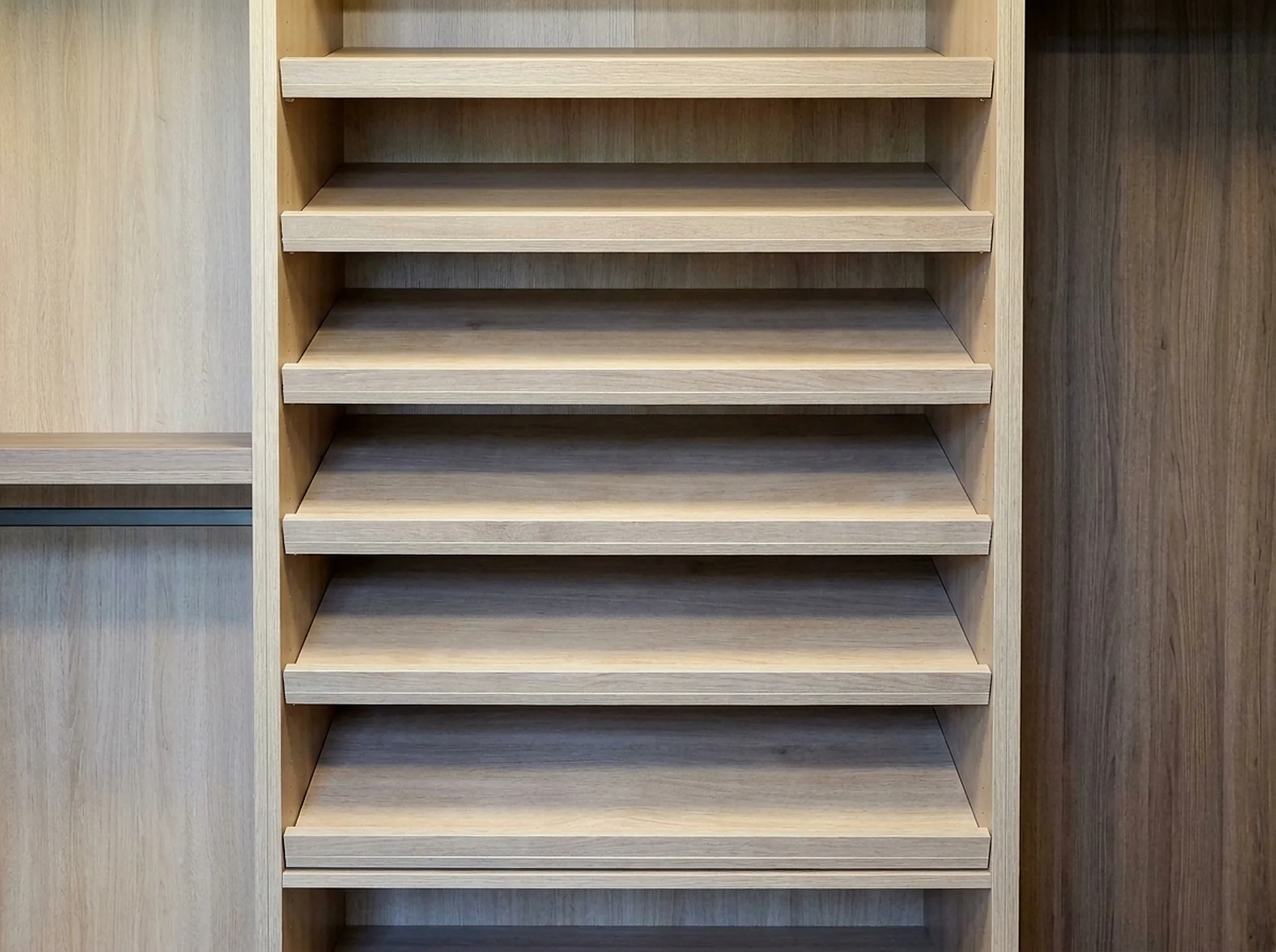
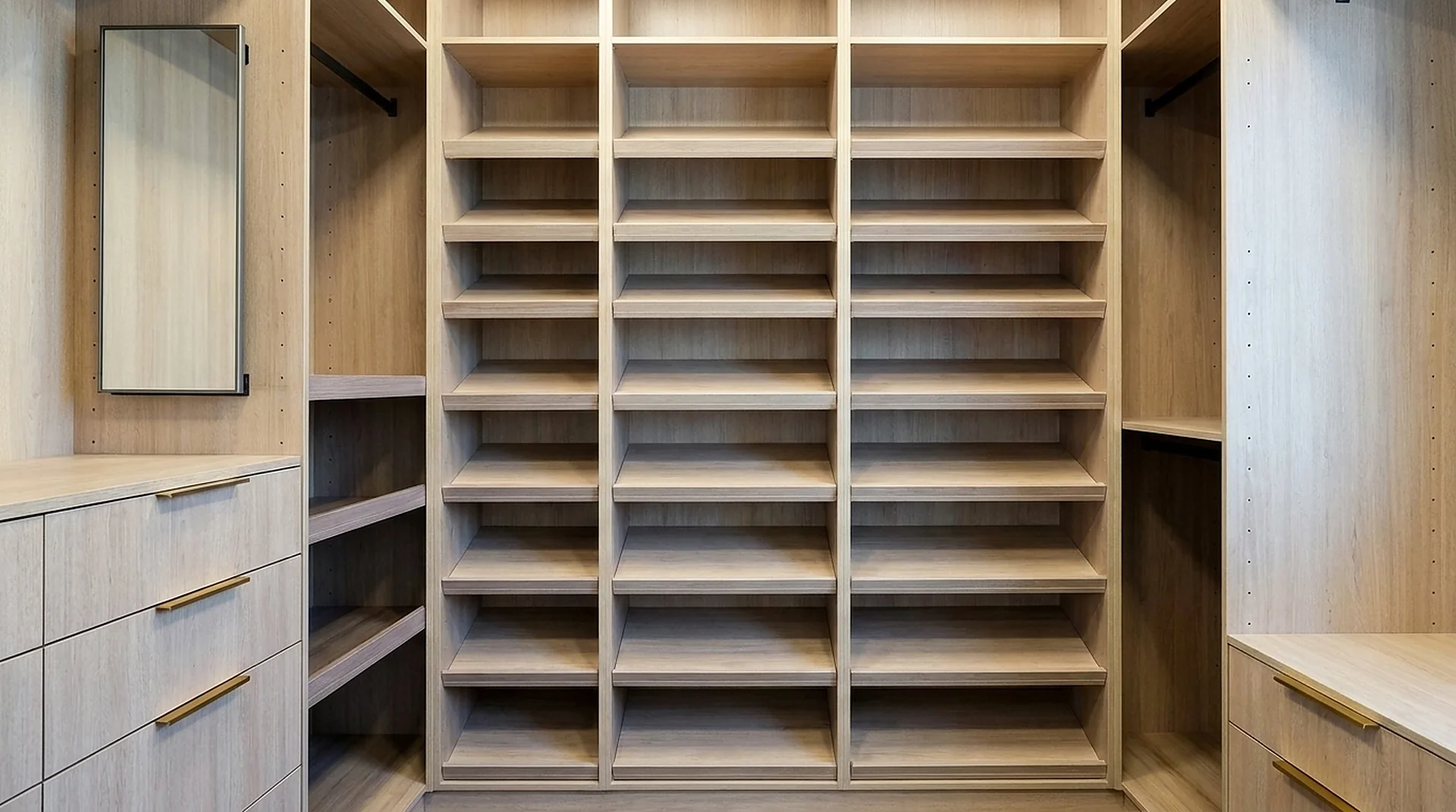
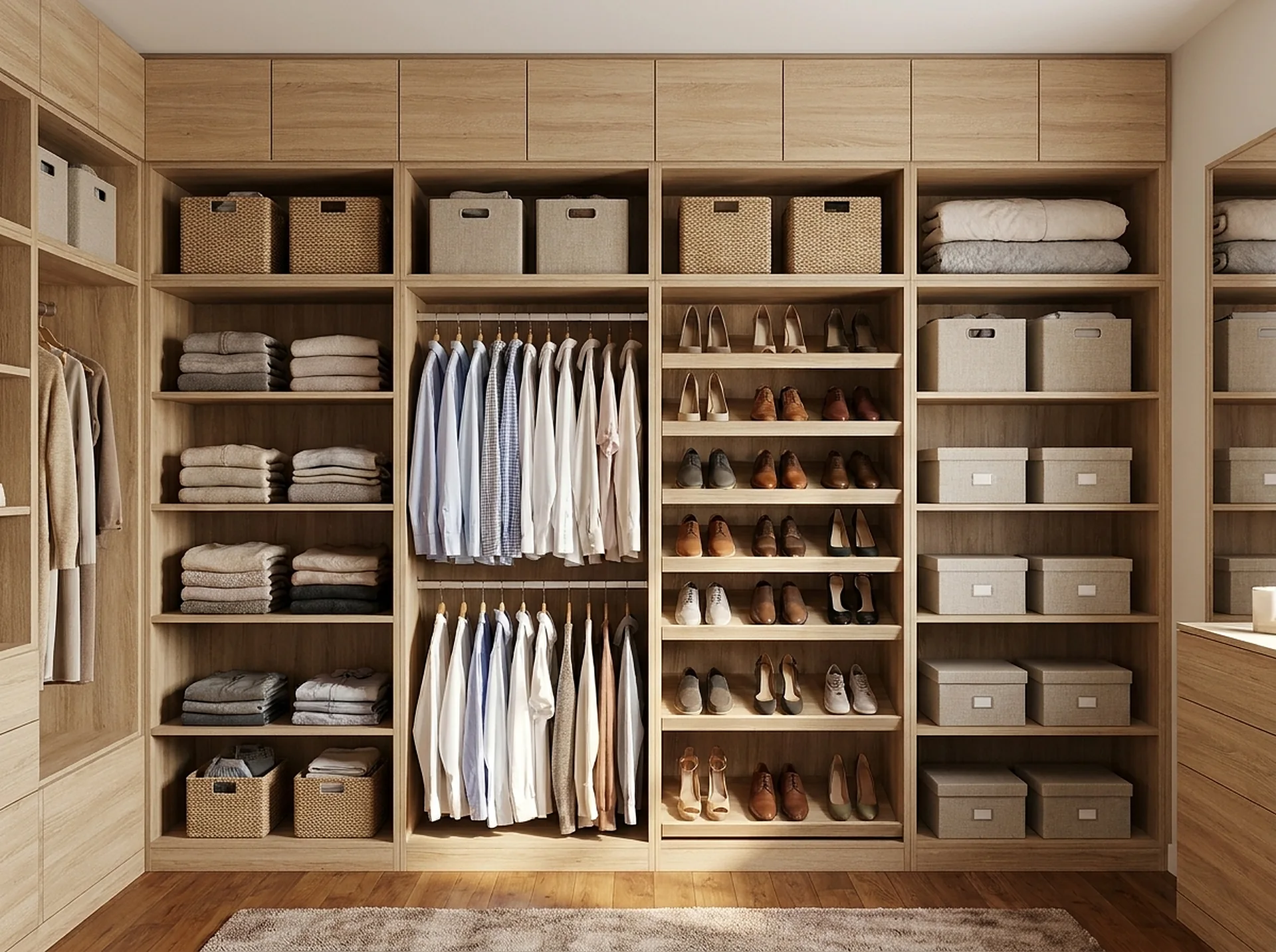
Store shoes on an angled shelf with a front retaining lip: the whole shoe faces you, so you stop pulling out three pairs to find one.
Shoes are the category people most underestimate, and the one that spills onto the closet floor first. The fix is not more shelves — it is shelves at the right angle and the right spacing.
Angled, with a lip
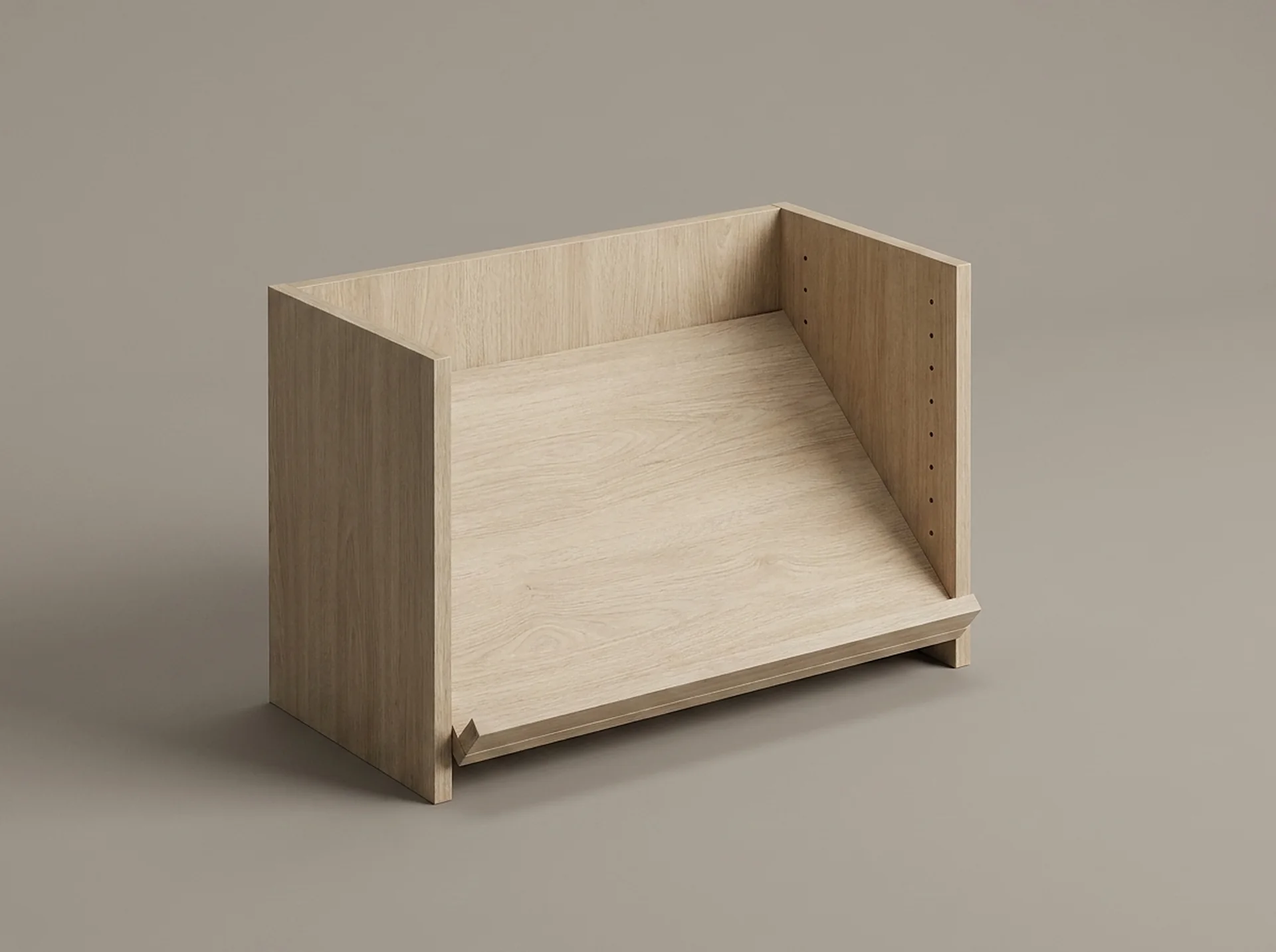
A flat shelf presents a row of toe caps that all look alike. Tilt the shelf forward and add a front lip and you see the whole upper — the color, the style, the wear. Retrieval stops being a search. The lip is what stops the shoe sliding off, so it is structural, not decorative.
Spacing by type
| Shoe type | Shelf spacing | Pairs per 36-inch shelf |
|---|---|---|
| Flats, loafers, sneakers | 8 – 10 in | 6 – 8 |
| Heels | 10 – 12 in | 6 – 8 |
| Ankle boots | 12 – 14 in | 4 – 6 |
| Tall boots | 18 in or hanging | 3 – 4 |
Tall boots are a separate problem
Boots that stand above 14 inches do not belong on a shoe shelf. They either need a dedicated tall bay with an 18-inch clear opening, or they hang from clips under a rod. Forcing them onto a standard shelf wastes the two shelves above.
Count honestly
Count the pairs you have worn in the last twelve months, not the pairs you own. Then add a third. The closet should be designed for the working wardrobe with room to grow, not for the archive — the archive belongs in a ceiling cabinet in labeled boxes.
How many pairs fit in a run
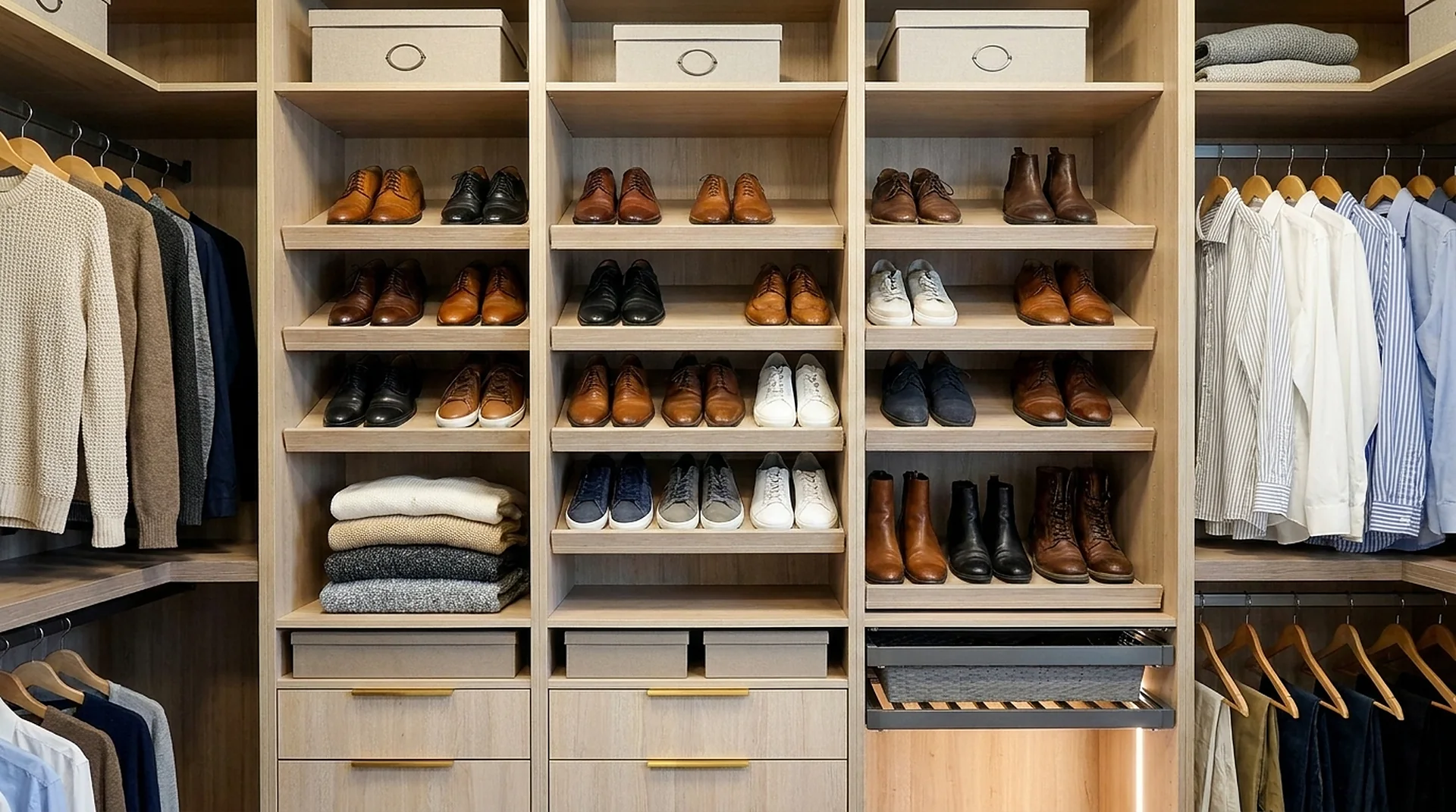
A 36-inch angled shoe shelf holds about five to six pairs of most adult shoes, so a 36-inch bay with six angled shelves carries roughly 30 to 36 pairs in about three square feet of floor. That is the densest storage in a closet by a wide margin, which is why a dedicated shoe bay usually beats spreading shoes along the bottom of every hanging run.
Keep boxes or not
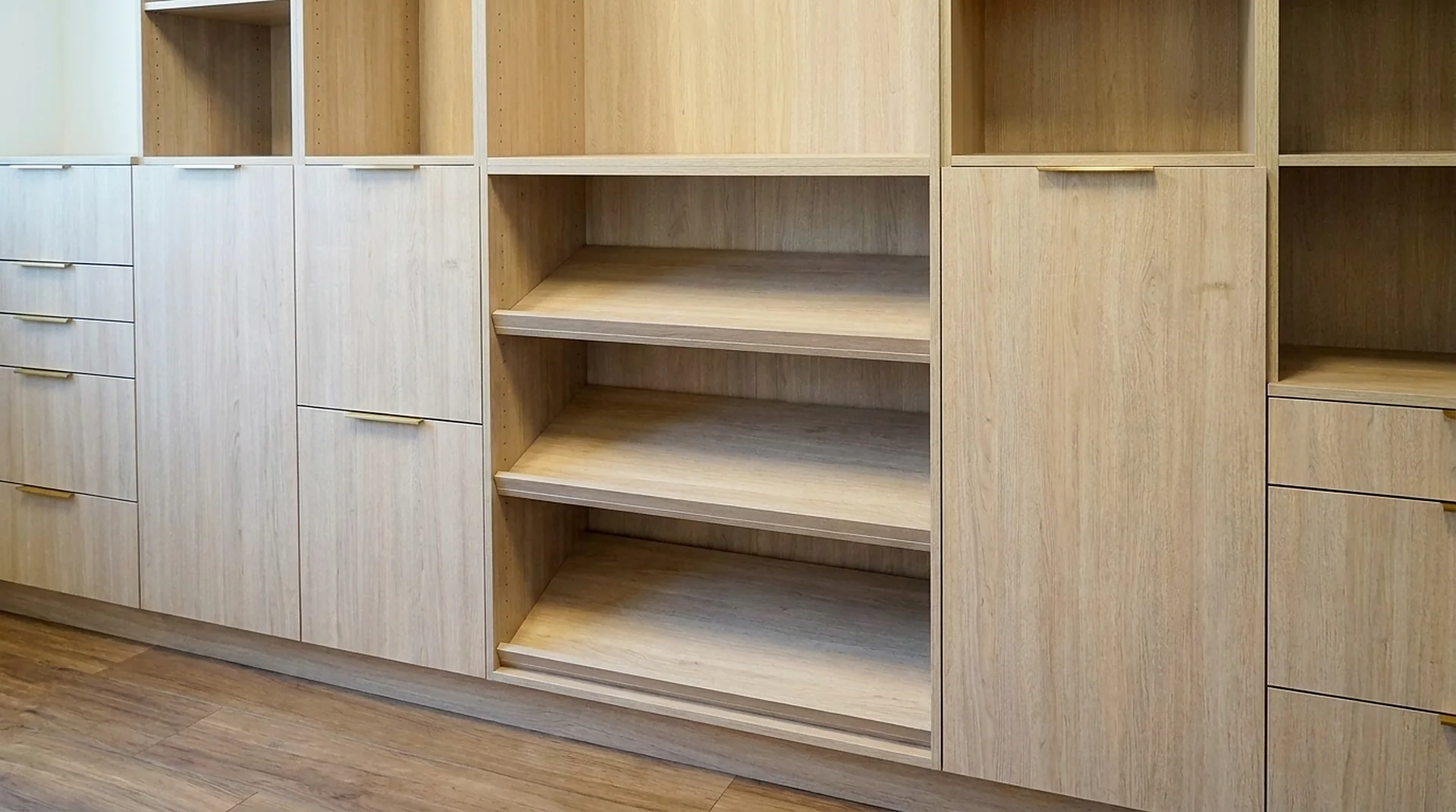
Boxes protect but they hide, and a closet you cannot see into is a closet you stop using properly. If boxes are staying, they need either a photograph on the end or a clear front — otherwise every retrieval becomes a search. For the pairs worn weekly, open angled shelving wins outright.
The floor rule
Nothing on the closet floor. Once shoes live on the floor they migrate, they collect dust that a shelf would not, and they make vacuuming a two-stage job. Leaving the floor clear is not tidiness for its own sake — it is what keeps the rest of the system working.
Seasonal rotation
Sandals and winter boots do not need to share a shelf in August. A ceiling cabinet or the top shelf of a tower is the right home for the out-of-season half, in labeled bins, which frees the reachable shelves for what you are actually wearing this month.
Quick answers
About this topic.
How much space do I need per pair of shoes?
About 5 to 6 inches of shelf width per pair, with 8 to 10 inches of height for flats and 12 for ankle boots.
Are angled shoe shelves better than flat ones?
Yes for visibility. An angled shelf with a front lip shows the whole shoe rather than just the toe.
Where should tall boots go?
In a dedicated bay with an 18-inch clear opening, or hanging from clips under a rod. They do not fit standard shoe shelf spacing.
What is the best way to store shoes in a closet?
In a dedicated bay of 15-inch angled shelves rather than along the bottom of every hanging run. Off-season pairs go up in a ceiling cabinet above the 84-inch line, and tall boots get a bay of their own.
Start here
Tell us the room. We will tell you what fits.
A field measure, a dimensioned drawing and a fixed price — in that order, before anything is cut.