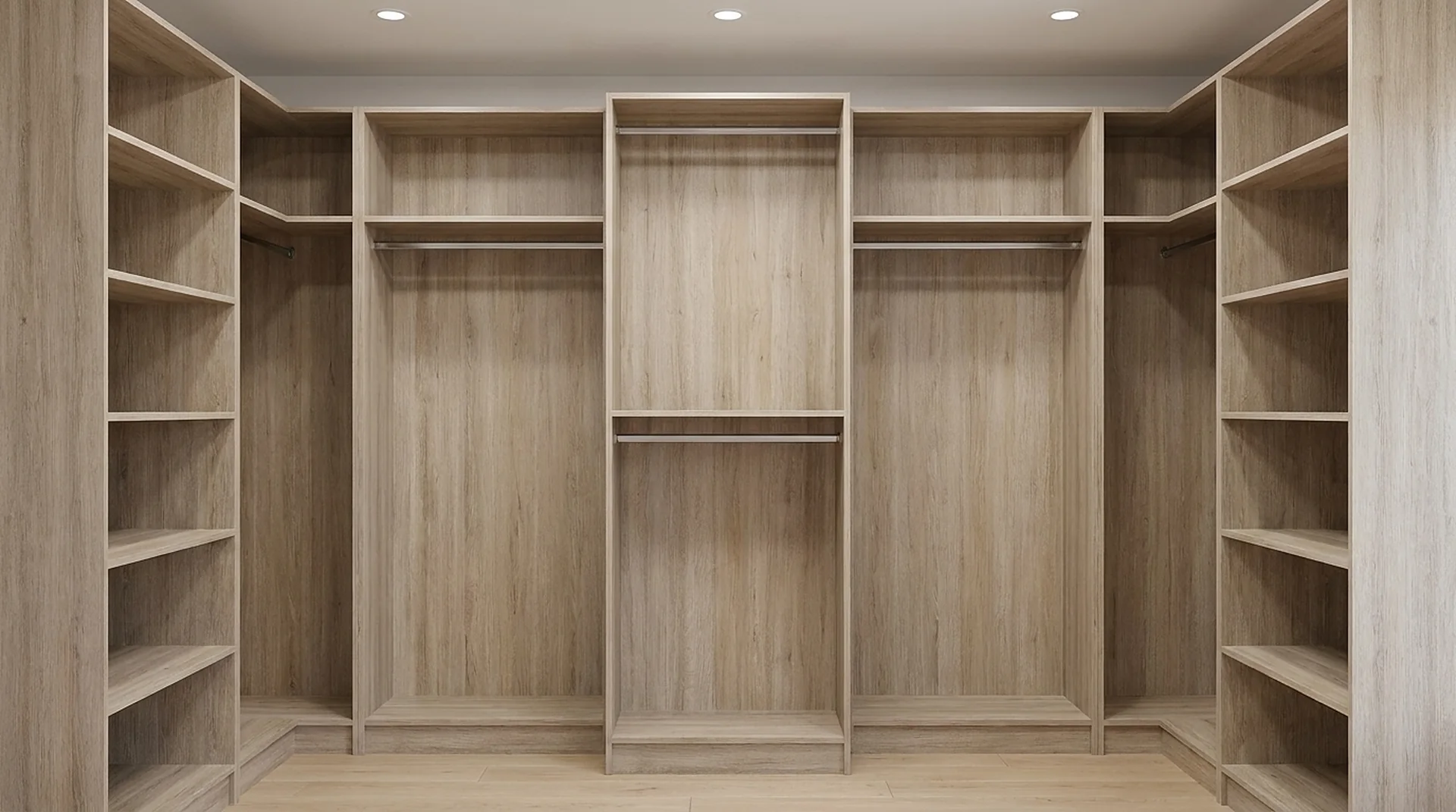
Planning
Closet Rod Height and Distance From the Wall
Where the rod actually goes: 12 inches out from the back wall, 40 and 82 inches up for a double-hang bay, 66 for long garments — and what each number is protecting.
Set the rod 12 inches out from the back wall — the center of a 24-inch-deep bay — and at 40 and 82 inches above the floor for a double-hang bay, or a single rod at 66 inches where coats and dresses hang. Those three numbers place almost every rod in a closet.
Rod height gets written about often. Rod distance from the wall almost never does, and it is the one that produces the complaint: a rod set too close and every shoulder rubs the back panel; set too far forward and the garments foul the door. Both numbers come from the same place — the width of a shoulder on a hanger.
Distance from the wall: 12 inches
A shirt on a standard hanger is about 22 inches across the shoulders. That is why hanging bays on this site are 24 inches deep and shelf bays are 15. Put the rod on the center line of that 24-inch bay and it lands 12 inches from the back wall, which leaves about 11 inches of clear air behind the garment and the same in front of it.
That symmetry is doing real work. The gap behind stops the shoulder from pressing the back panel, which is what puts a horizontal crease across a jacket. The gap in front is what lets a hinged door close over the run without touching anything. Move the rod two inches either way and you lose one of the two.
Height: 40 and 82, or 66
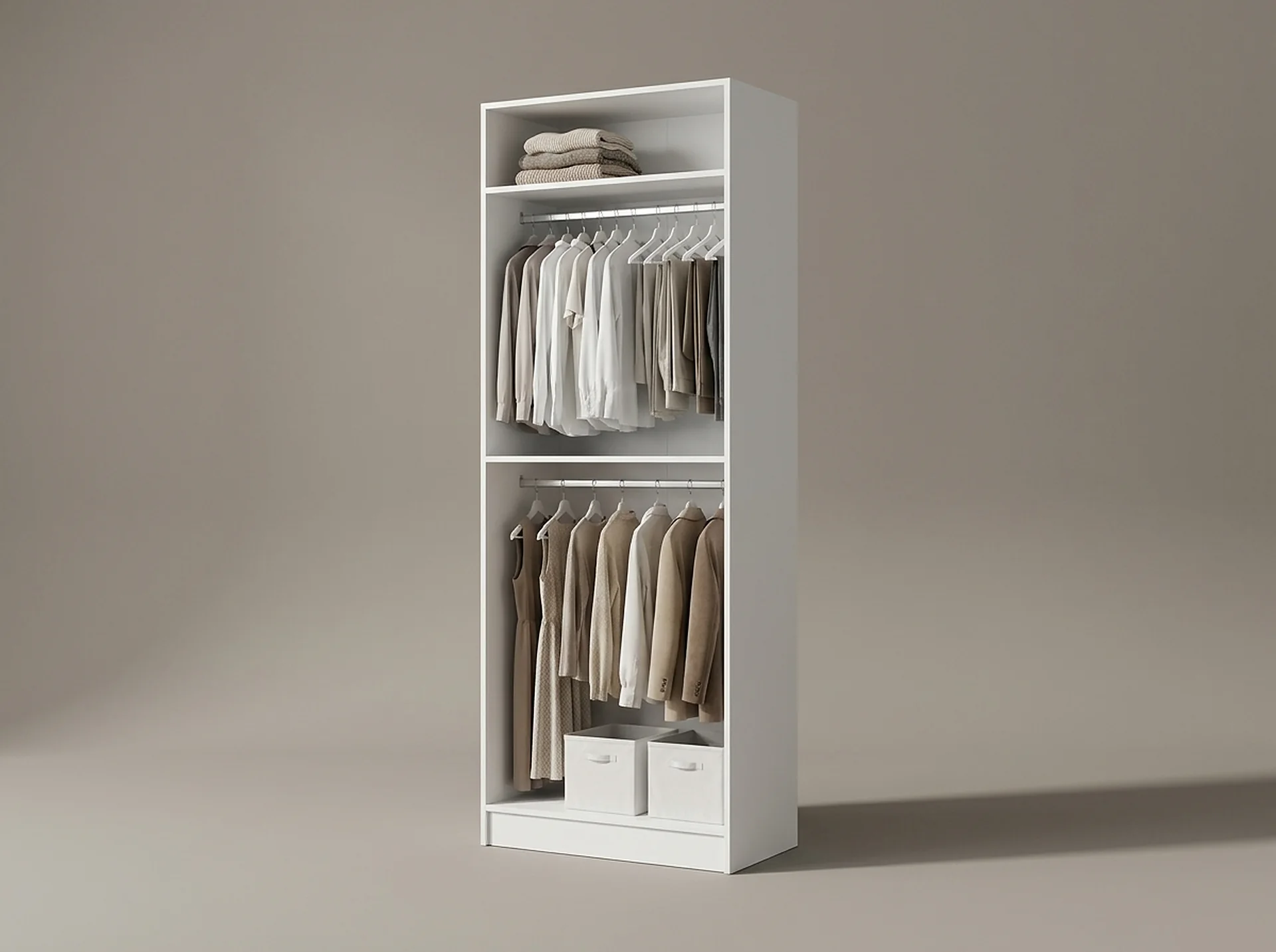
A double-hang bay carries two rods, the lower at roughly 40 inches and the upper at roughly 82. Forty inches is set by what hangs beneath the upper rod — shirts, folded trousers, jackets — all of which finish above it. Eighty-two inches is set by the top: it is the highest a rod can go and still be reached without a step, and it leaves the space above free for the shelf that closes the bay.
Where long garments hang — coats, dresses, garment bags — the bay takes one rod at 66 inches instead of two. A dress needs roughly 60 inches of drop; 66 gives it that with the hem clear of the floor.
| Rod | Height | What it is set by |
|---|---|---|
| Lower rod, double hang | 40 in | The garment above it must finish clear |
| Upper rod, double hang | 82 in | Reachable without a step |
| Single rod, long hang | 66 in | A 60-inch drop with the hem off the floor |
| Distance from back wall | 12 in | Half of a 24-inch bay — shoulders clear both ways |
| Bay depth, hanging | 24 in | A shoulder on a hanger is about 22 in |
| Bay depth, shelves | 15 in | The back of the shelf stays reachable |
Can you hang three rods?
Only for short clothes. Two rods at 40 and 82 inches already use the full reachable height, and each level needs roughly 40 inches of drop for a shirt or folded trousers. Three rods in the same height leave about 27 inches per level — enough for children's clothes, skirts or folded garments on hangers, not for adult shirts. In an adult closet the third level is better used as a shelf or a drawer base.
Clearance under the shelf
The rod hangs below the shelf above it, not flush with it. Enough room has to remain for the hanger hook to come off the rod without catching — about two inches in our bays. It sounds trivial until you are pulling a coat out one-handed with the other hand full.
What changes the numbers
Ceiling height changes the top, not the bottom. Under a 96-inch ceiling an 84-inch tower leaves a 12-inch gap that a ceiling cabinet closes; the 82-inch rod does not move. A reach-in with a shallow opening changes the depth question instead — below about 22 inches of clear depth a garment cannot hang square to the wall at all, and the bay has to turn or become shelves.
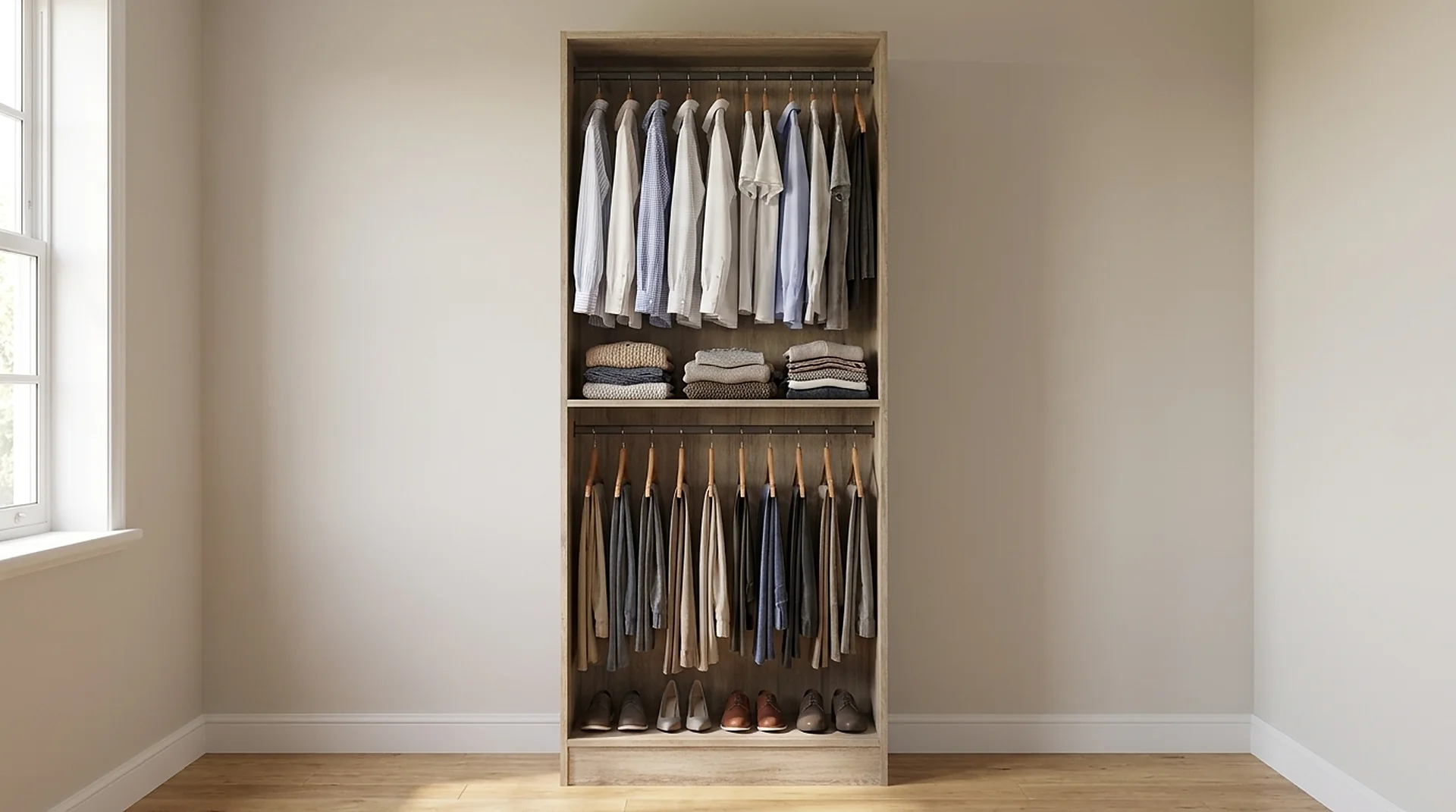
If you are laying a closet out from scratch, the rod numbers are only part of it — the full set of depths, walkways and tower sizes is on the dimensions cheat sheet, and how much rod you actually need is a separate calculation, both linked below.
Quick answers
About this topic.
How far from the wall should a closet rod be?
Twelve inches from the back wall, which is the center of a 24-inch-deep hanging bay. That leaves about 11 inches of clearance behind the shoulder and the same in front, so garments neither crease against the panel nor foul the door.
What is the standard closet rod height?
About 66 inches for a single rod carrying long garments, or 40 and 82 inches for the two rods in a double-hang bay.
How high should two hanging rods be in a closet?
Roughly 40 inches for the lower rod and 82 inches for the upper. The lower height is set by what has to finish clear beneath the upper rod; the upper is the highest a rod stays reachable without a step.
How high should three closet rods be?
Three rods only work for short garments such as children's clothes or skirts, because the reachable height of about 82 inches divides into roughly 27 inches per level. Adult shirts need about 40 inches of drop, so an adult closet usually takes two rods at 40 and 82 inches.
How much space do you need under a closet rod?
Enough for the garment plus clearance to the floor: about 40 inches of drop under a double-hang lower rod and about 60 under a 66-inch long-hang rod.
Start here
Tell us the room. We will tell you what fits.
A field measure, a dimensioned drawing and a fixed price — in that order, before anything is cut.