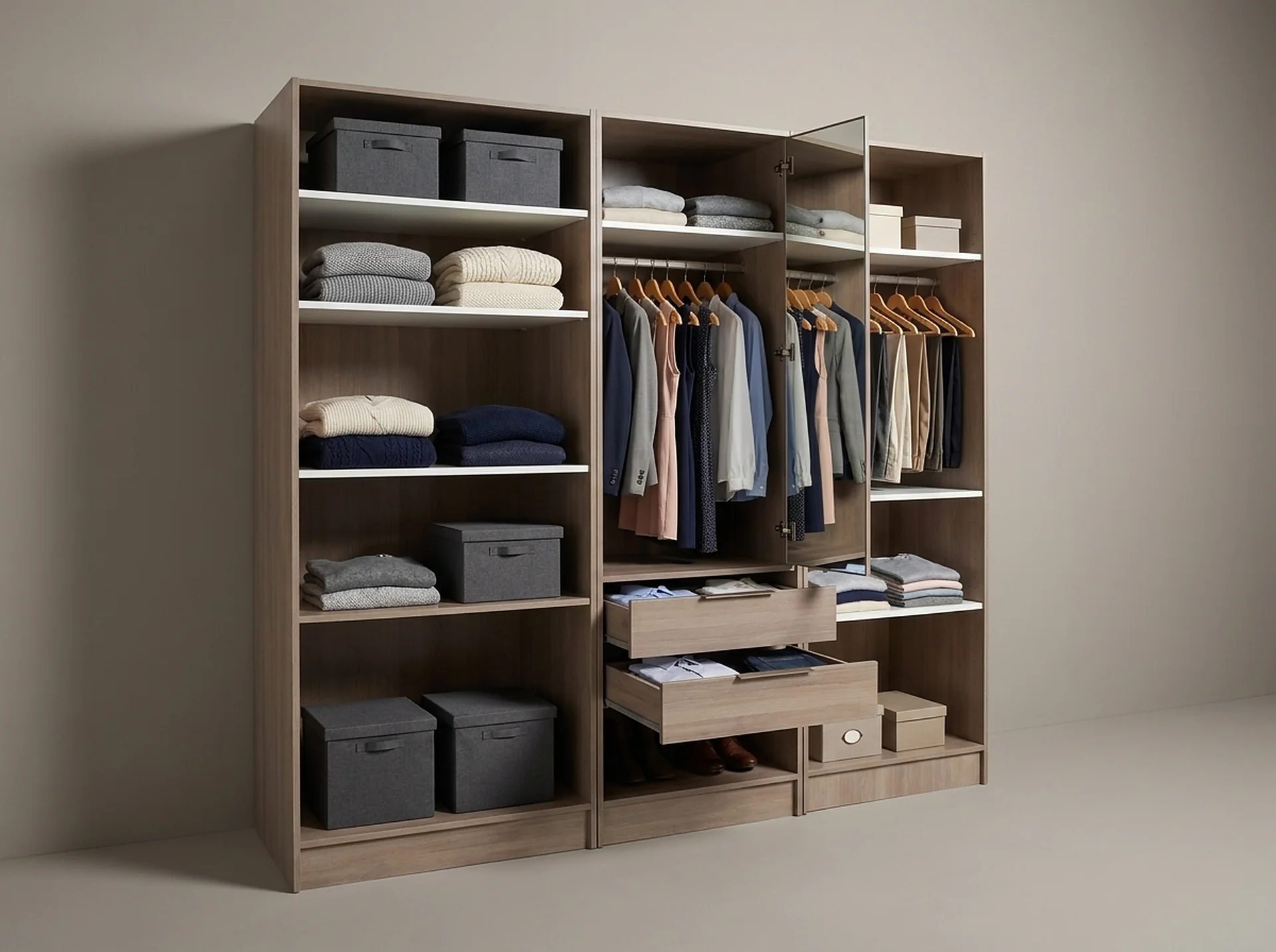
Design
Shelf Depth Explained: 15-Inch vs 24-Inch
Why the shallower shelf usually stores more, and the one case where the deep one is the only right answer.
Use 15-inch depth wherever you only stack or fold, and 24-inch only where a garment has to hang across the shelf — a deep shelf used for folding creates a back zone you stop reaching into.
Depth is the quietest decision in a closet and the one that most often wastes space. Deeper feels like more storage. In practice, anything past your forearm's comfortable reach becomes a place things go to be forgotten.
What each depth actually holds
| Depth | Fits | Typical use |
|---|---|---|
| 15 in | A folded sweater, a shoe, a stacked handbag | Reach-in closets, hallways, upper shelves, pantry |
| 24 in | A hanger turned across the shelf, a storage bin, a suitcase | Walk-in perimeter runs, hanging bays, deep storage above |
The dead-zone problem
On a 24-inch shelf used for folded clothes, the front 15 inches carry the stack and the back 9 inches carry whatever you shoved there in 2023. You cannot see it without moving the front stack, so you never move the front stack. That is nine inches of cabinet you paid for and do not use.
Where 24 inches is correct
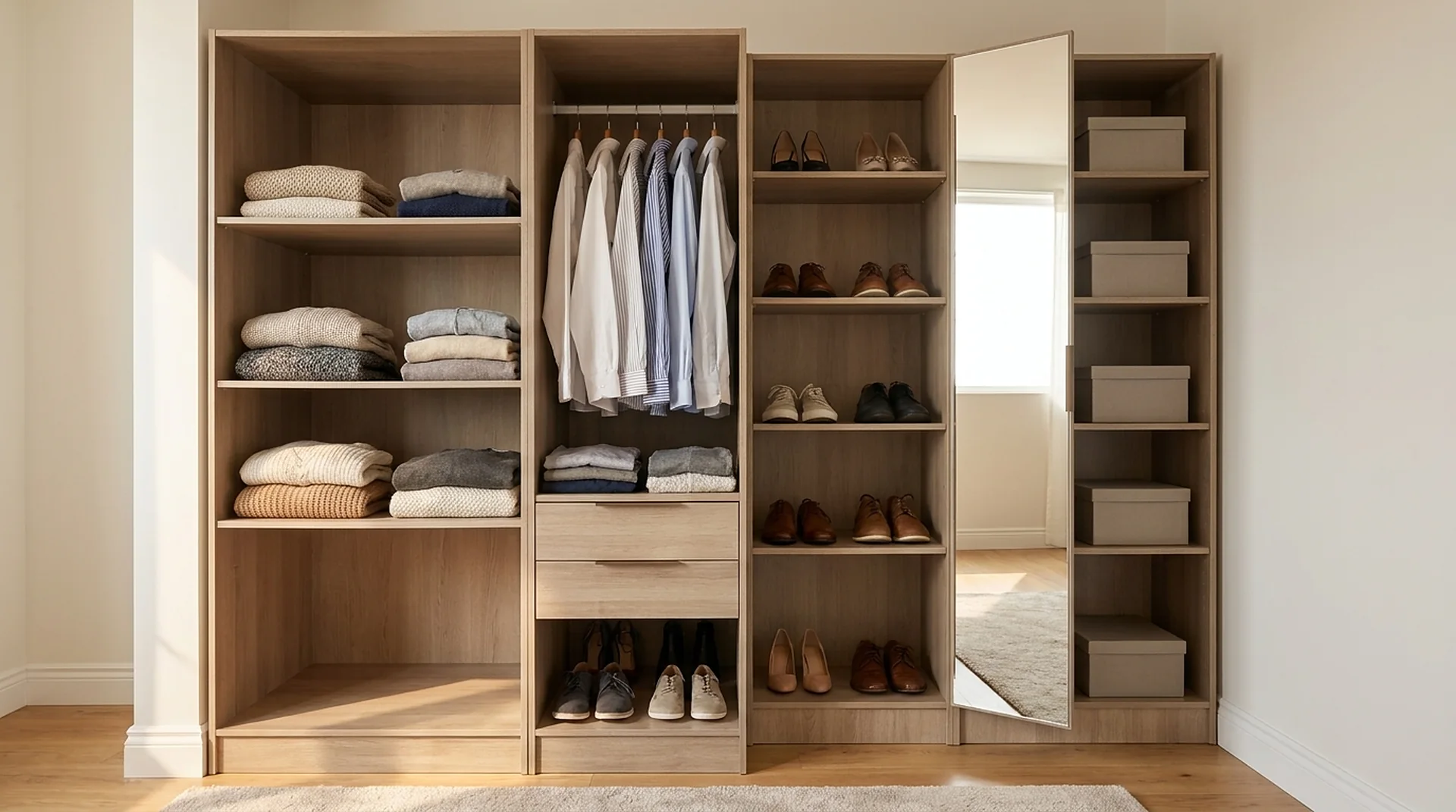
- Any bay where a rod runs across the tower — the garment needs the depth to hang without brushing the front edge.
- Above-rod storage for suitcases and seasonal bins.
- A walk-in perimeter where the aisle can absorb the projection.
Mixing depths in one run
The cleanest closets usually do both: 24-inch towers where garments hang, 15-inch towers where things fold, with the fronts aligned so the run reads as one plane. The shallower towers get furred out at the back rather than set forward, which keeps the face line straight.
Shelf spacing matters as much as depth
| Contents | Shelf spacing | Note |
|---|---|---|
| Folded shirts, knitwear | 12 in | Stacks above this topple |
| Bulky sweaters, denim | 14 – 16 in | |
| Shoes (flat shelf) | 8 – 10 in | Angled shelving is better |
| Handbags upright | 14 – 18 in | Depends on the bag |
| Folded bedding, bulk | 16 – 20 in | Best on a top or bottom shelf |
Shelves in the ClosetX program are adjustable on a fixed pin pattern, so these are starting points rather than commitments. What matters at the drawing stage is that the tower is tall enough to carry the spacing you will actually want.
Mixing depths without a stepped face
The cleanest way to run 15-inch and 24-inch towers in the same room is to align the FRONT faces and let the difference fall at the back. Shallower towers get furred out from the wall rather than set forward. The run then reads as one plane, which is what makes cabinetry look built-in rather than assembled.
One place deep really is better
Above the rod. A 24-inch shelf over a hanging bay is the natural home for suitcases, storage bins and seasonal bedding, and nothing there needs to be reached daily. Depth stops being a liability exactly when retrieval frequency drops.
Quick answers
About this topic.
Is 20 inches too shallow for a closet shelf?
Twenty is the wrong number in the other direction: it is deeper than folding needs and still too shallow to hang a garment across. Fifteen inches holds a folded sweater, a shoe or a stacked handbag, and that is the depth to use wherever you stack or fold. Twenty-four is the depth to use only where a hanger turns across the shelf, or for a bin or a suitcase. In between you pay for depth you cannot reach — on a deep shelf used for folding, the front fifteen inches carry the stack and the back nine become the zone you stop reaching into.
What is the standard closet shelf depth?
Fifteen inches for folding and stacking, 24 inches where garments hang across the shelf. Both are standard depths in the ClosetX program.
Can I use 24-inch shelves everywhere for more storage?
You can, but the back portion of a deep shelf used for folding becomes unreachable in practice, so the extra depth rarely pays back.
How far apart should adjustable shelves be?
About 12 inches for folded knitwear, 14 to 16 for bulky items, and 8 to 10 for shoes. Shelves adjust, so these are starting points.
Start here
Tell us the room. We will tell you what fits.
A field measure, a dimensioned drawing and a fixed price — in that order, before anything is cut.