Planning
Pantry Shelving Mistakes: Depth, Span and the Wire Problem
Most pantries stop working in the same few places: shelves too deep, spans too long, and wire where boxes and bottles need a flat surface.
The pantry shelving mistakes that cause most problems are shelves that are too deep, spans that are too long and wire where a flat shelf belongs. Past about 15 inches the back of a pantry shelf stops being visible, a loaded shelf needs shorter spans than a clothes shelf, and wire ridges tip narrow boxes and bottles.
Below are five pantry shelving mistakes and the fix for each one. Every fix is a choice about shelf depth, span, surface or adjustability.
Mistake 1: shelves that are too deep
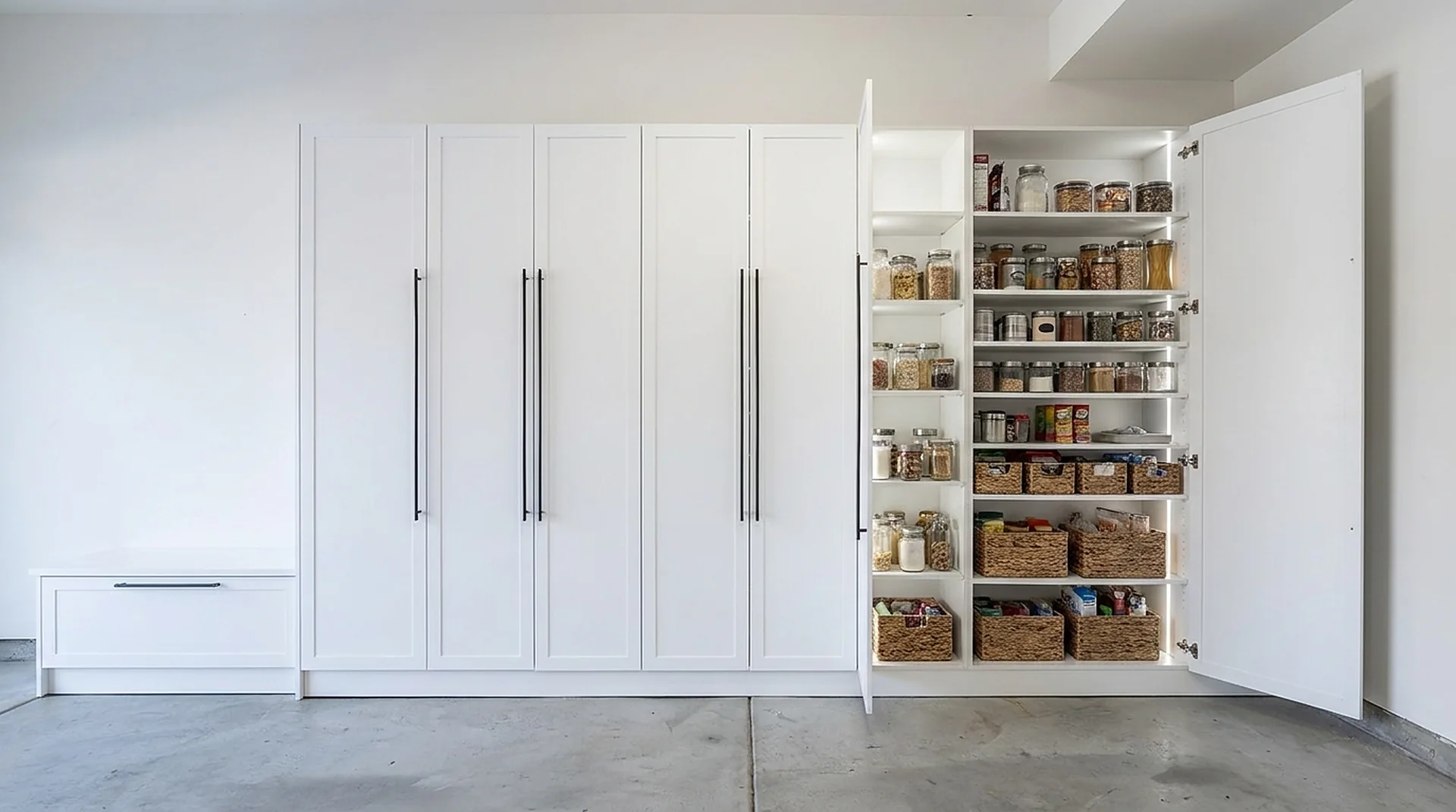
Depth is the decision that matters more than material. Past about 15 inches the back of a pantry shelf stops being visible and becomes where food expires. At 24 inches the back row disappears behind the front row, which is how a tin gets bought twice and thrown away once.
The fix is a shallower shelf, not a smaller pantry: keep the depth at 15 inches so nothing is lost at the back.
Mistake 2: one depth everywhere
The one exception to the depth rule sits at floor level. A single 24-inch shelf there takes cases, bulk buys and small appliances. Every other shelf stays shallow, which is why the deep shelf is worth having only once.
Mistake 3: spans that are too long
Deflection rises steeply with unsupported span: doubling the span does far more than double the sag. For a loaded 3/4-inch shelf, 36 inches is about the practical limit. Because a pantry carries weight, pantry shelves use shorter spans than that - the same panel, supported more often.
Thickness matters for the same reason. Half-inch shelving at a 30-inch span will bow under folded clothes, so a pantry shelf should not be thinner than the shelves in a closet.
Mistake 4: wire where boxes and bottles stand
Wire is the cheapest shelving and the most often replaced. In a pantry its weakness is specific: wire ridges tip narrow boxes and bottles, and the sag arrives fastest exactly where the cases sit.
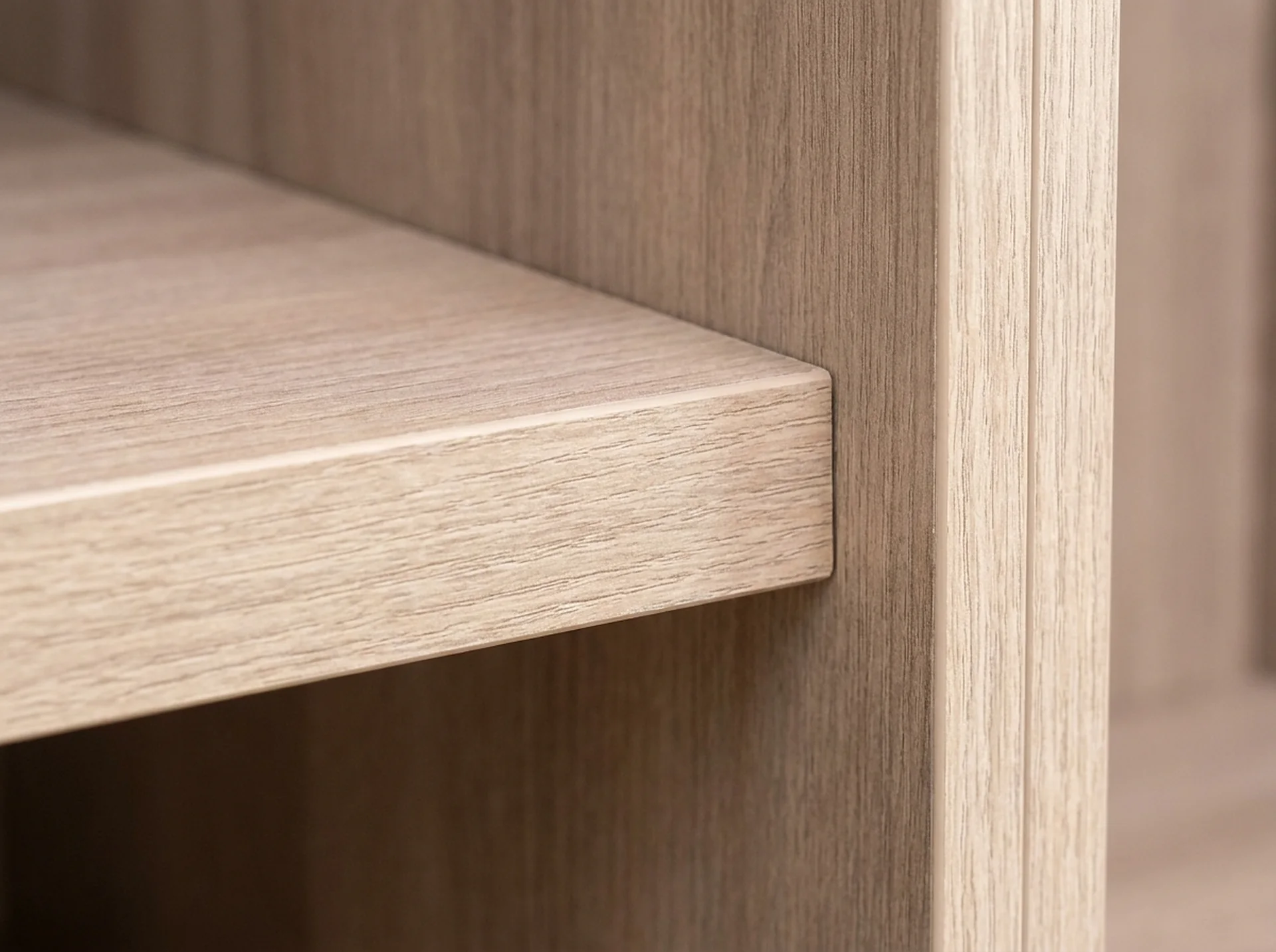
A flat, edge-banded shelf avoids both. ClosetX pantry runs are 3/4-inch cabinet-grade melamine with edge-banded fronts, the same panel the closet towers are built from. An edge-banded front face is what separates cabinet-grade panel from shelf board, because the exposed core is the part that fails first.
Mistake 5: shelf heights that cannot move
A pantry changes more than a closet does. The pin holes on a 32 mm grid are what make a fixed shelf movable later, so the spacing can follow what you buy instead of what you bought the year the shelves went in.
The five mistakes at a glance
| Mistake | What goes wrong | The fix |
|---|---|---|
| Shelves too deep | The back row disappears past about 15 inches | Keep the depth at 15 inches |
| One depth everywhere | Cases and appliances have nowhere to go | One 24-inch shelf at floor level |
| Long spans | A loaded shelf deflects | Shorter spans; 36 inches is about the limit for a loaded 3/4-inch shelf |
| Wire | Ridges tip narrow boxes and bottles | A flat, edge-banded 3/4-inch shelf |
| Fixed heights | Shelves stop fitting what you store | A 32 mm pin pattern |
What a pantry wall costs
In the ClosetX program a pantry wall typically runs $1,800-$5,000 installed, and a small reach-in pantry sits below that band. The pantry shelving page linked below has the details for the Atlanta area.
Quick answers
About this topic.
What is the most common pantry shelving mistake?
Shelves that are too deep. Past about 15 inches the back of a pantry shelf stops being visible, so food at the back expires unseen. Keep the depth at 15 inches and use a single 24-inch shelf at floor level for bulk items.
Why does wire shelving not work well in a pantry?
Wire ridges tip narrow boxes and bottles, and the sag arrives fastest where the heavy cases sit. A flat 3/4-inch edge-banded melamine shelf keeps boxes upright.
How far can a loaded shelf span before it sags?
About 36 inches is the practical limit for a loaded 3/4-inch shelf. Deflection rises steeply with span, so pantry shelves, which carry weight, use shorter spans than that.
Should pantry shelves be adjustable?
Yes. A pantry changes more than a closet does, and shelves on a 32 mm pin pattern can be re-spaced when what you store changes.
Start here
Tell us the room. We will tell you what fits.
A field measure, a dimensioned drawing and a fixed price — in that order, before anything is cut.